benedictine Life

Benedictine Life

“Listen my child with the ear of your heart.”—Prologue of Rule of Benedict

 I keep returning to the Rule of Benedict. “Listen with the ear of your heart” is in the first line of the prologue to the Rule of Benedict, a pattern of living in community written by St. Benedict of Nursia in the sixth century during the Dark Ages and is still used by Benedictines fifteen centuries later.

The rule is a balanced model of life, a radical alternative to an out-of-control culture. It was written for monastic life, but it has been translated to a way of life for any seeking a pattern of spiritual discipline for living a rule of life in the world. The day is organized around regular periods of private and communal prayer, sleep, work, recreation, hospitality, and study.

Joan Chitister’s book, The Rule of Benedict, a Spirituality for the 21st Century, is used by the Community of Hope International, a program equipping and supporting lay pastoral caregivers to be ministers to all conditions of people needing pastoral care. The Community of Hope International emphasizes developing skills and spiritual practices, immersing ministers in Benedictine spirituality in community. Chitister’s book can be used privately or in group discussions of the rule. She writes a thoughtful meditation and interpretation after each selected part of the rule, which can be read in daily segments.

 A busy Memphis lawyer, John McQuiston, has written another concise modern interpretation of the Rule of Benedict called Always We Begin Again. It is pocket-sized and easily carried with you during the day.

A third book is Spirituality for Everyday Living, an Adaptation of the Rule of St. Benedict by Brian Taylor. This is another offering to help those not living in a monastery experience Benedict’s rule of obedience and stability in relationships with others. This is living in the balanced tension of the paradox of turning our lives over to a higher power but trying to stay in relationship with others, not staying stagnant, but being able to change and grow.

Esther de Waal names it in the title of her book of reflections or meditations on Benedict’s Rule, Living with Contradiction. Esther de Waal also gives us in To Pause at the Threshold numerous Benedictine and Celtic reflections and prayers to practice when we cross the threshold of a door going from one room to another. She invites us to say a short prayer, trying to leave behind the “baggage” in our heads and being open to a new experience. This can be helpful when visiting the sick or homebound as we enter their hospital room or front door.  

 There are so many other books on Benedictine spirituality, but these five have made a difference in my life, and I give the ones I give to people seeking a more patterned or spiritual rule of life. Again, I would love to hear from you about the books on Benedictine spirituality that have made a difference in your life.

Joanna       https://www.joannaseibert.com/


Art of Not-Knowing

Guest Writer: Ken Fellows

Art of Not-Knowing

Iris Uncertainty Fellows

      In mid-1970, I began my career as an academic Pediatric Radiologist. With several other American radiologists back then, I helped pioneer a new sub-specialty, Pediatric Interventional Radiology. That endeavor was made possible by an explosive improvement in X-ray imaging. A new device –the image-intensifier –allowed especially clear fluoroscopic (real time) visualization of inner-human anatomy.

It was soon accompanied by other revolutionary imaging techniques, such as ultrasound (US), computed tomography (CT), and magnetic resonance imaging (MRI). All these provided new and extraordinarily precise imaging of the circulatory system, the heart, brain, and most other organs. Using this new imaging, interventional radiologists were able to insert local anesthesia, thin catheters, and other small devices into patients through needles (not incisions) to perform therapeutic procedures. No general anesthesia is needed –just sedation of the patient.  

     Using these devices, interventional radiologists began treating problems such as plugging bleeding vessels, closing holes in hearts, opening obstructed arteries and veins, doing biopsies, and draining abscesses, cysts, and other loculated fluids. The past 50 years have seen a vast expansion of these interventional techniques. I performed those procedures for the first 30 of those years.

     Following my retirement from radiology practice 23 years ago, I happened into a ‘second act’ as a watercolor painter and a memoir writer. I’ve sometimes wondered if any common thread exists between these very different eras of my life … any connection between doing interventional procedures and art, and the ‘uncertainty of outcome’ common to both?  

    Pondering this question in my aged rodent brain, a possible connection was suggested recently in the book Emergency Medicine by Jay Baruch, MD. In it, he describes his difficulty in discerning from some patients’ rambling histories and vague symptoms what the actual underlying problem is. He explains how this is a doctor’s challenge not usually addressed in medical training –this not-knowing –a circumstance so antithetical to medical practice.


     Dr. Baruch attributes the concept of not-knowing to a dated but still famous essay in which David Barthelme describes the act of writing, and the creative arts in general, as a process of dealing with not-knowing. Barthelme states, “The writer (artist) is someone who, when embarking upon a messy task, doesn’t know what to do.” He adds, “Problems are crucial to not-knowing, and not-knowing is crucial to art.” The essay opines, “Writing is a process of dealing with not-knowing, and that not-knowing is hedged about with prohibitions, with roads that may not be taken.” To this, Jay Baruch adds: “In any process of inquiry, our uncertainty is our ally.” I, in turn, propose that the ability to welcome uncertainty is often a critical part of being a doctor. Perhaps this idea is the connection I’ve been seeking between writing, painting, and performing interventional procedures.

       Whether a writer, painter, or doctor, problems causing uncertainty are usually most formidable when beginning an undertaking. The problems are generally a matter of ideas, imagination, or technique. For surgeons and interventionalists, clinical problems typically have either a traditional, patented solution or require an innovative approach, a new maneuver that needs to be created. Even during routine procedures, unforeseen complications and anatomic aberrations arise that require spontaneous and imaginative corrective action. For doctors, problems of selecting the best approaches to healing are the foundation of their uncertainty and not-knowing.

     In summary, not-knowing is a mental state common to making art and literature. Similar uncertainty often characterizes medical sleuthing, surgery, and interventional endeavors. Expanding the idea, I suspect this inherent doubting is not limited to art and medicine, but exists in many other fields. In various walks of life, uncertainty often enhances performance, fosters progress, and creates innovation. 

Ken Fellows

Joanna https://www.joannaseibert.com/
New Doors Opening

Change and New Doors Opening

Kidd: Spiritual Whittling
“There’s an old Carolina story I like about a country boy with a great talent for carving beautiful dogs out of wood. He sat on his porch whittling daily, letting the shavings fall around him. A visitor, greatly impressed, asked him the secret of his art. “I just take a block of wood and whittle off the parts that don’t look like a dog,” he replied….

In spiritual whittling, though, we don’t discard the shavings. Transformation happens not by rejecting these parts of ourselves but by gathering them up and integrating them. Through this process we reach a new wholeness. Spiritual whittling is an encounter with Mystery, waiting, the silence of inner places—all those things most folks no longer have time for.”—Sue Monk Kidd in When the Heart Waits (HarperOne 2016 )

This is also my experience of transformation. I constantly realize parts of my life that keep me “together” or keep me connected to God that are useful at one time, and later become tired and worn and need to rest. Our ministry or what we have to offer changes.

One of the most challenging changes for me was leaving my medical practice. That was my identity. But I wanted to do so many other things. It becomes more challenging to keep up with the constantly changing technical, medical world if we do not stay with it constantly. I learned that just because we are good at one ministry doesn’t mean we should always keep doing it. We may be keeping others from the joy of that ministry, and they may even do it better! Also, the wisdom we learn from one career or ministry is always useful for the next one. Nothing is ever wasted.

I am also learning to be more vigilant about habits that kept me safe during some parts of my life, which later became destructive.

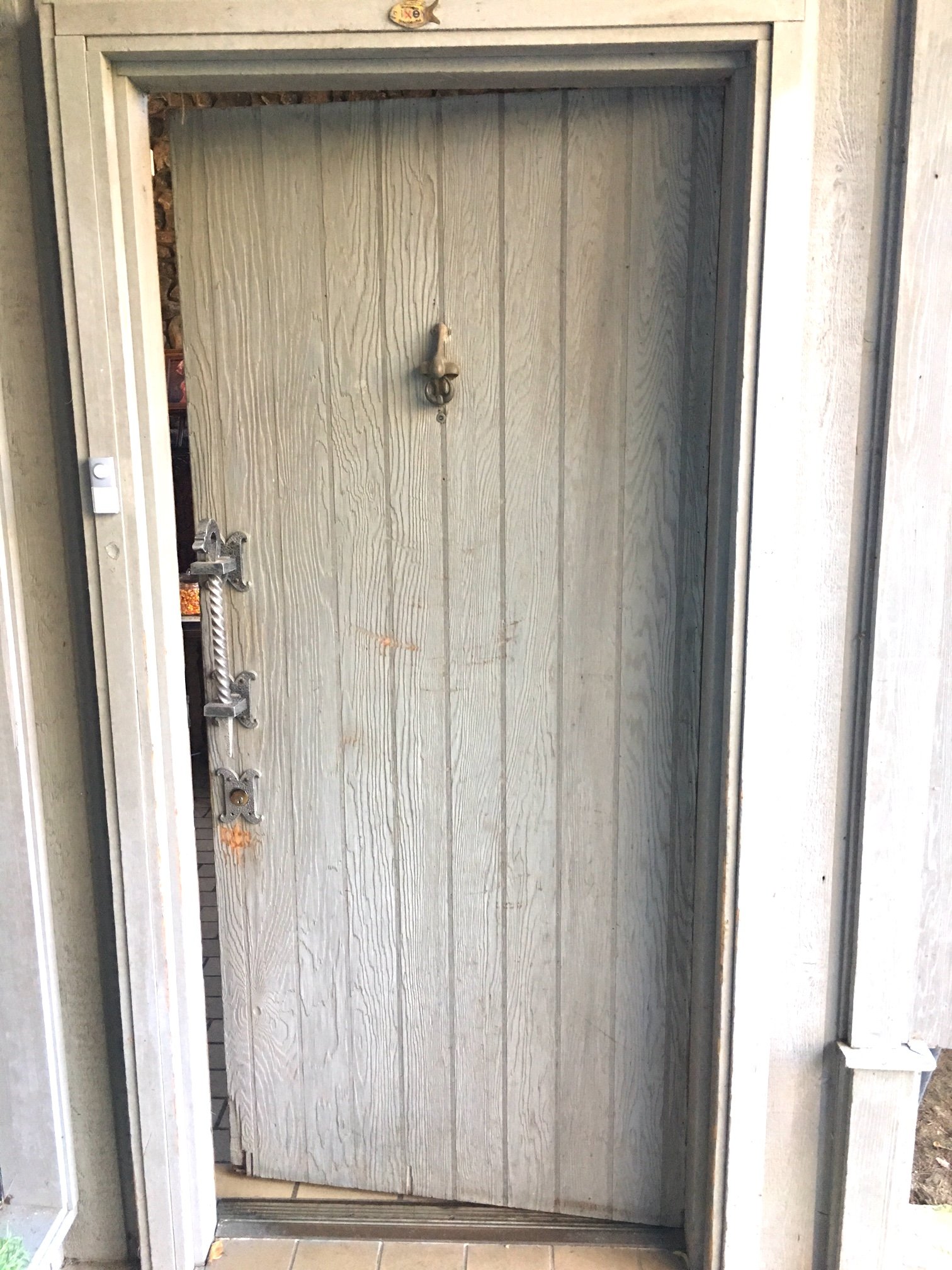
What am I trying to say? Life is about constantly giving up control or the illusion that we are in control. It is being open to change, letting doors shut, but being available to enter new doors or not being afraid to sit in the hallway for a while, waiting to hear the squeak of another door opening. Finally, it is about trusting, avoiding being stuck and stagnating, or thinking we are out of options.

What new doors will be opened to us this Lent?

Joanna   https://www.joannaseibert.com/