Wisdom from the Harp

Wisdom from the Harp

“For the elements changed places with one another,

as on a harp, the notes vary the nature of the rhythm,

while each note remains the same.”—Wisdom 19:18.

A friend recently reminded me of this scripture verse in morning prayer. I read the first part of the Wisdom reading that morning, but missed this last part. I hope I won’t miss it next time, for this ancient verse describes music well, especially the harp. I began a journey with this classical instrument over thirty years ago, when my daughter begged to get a harp for a year.

The strings are the piano’s white keys, so it is easy if you understand the piano. Next, you lean the harp against your body so you can hear the vibrations and feel the music within you.

The harp has taught me so many lessons about life, other than the discipline of trying to master a technique for following and plucking strings.

When one string breaks, it is challenging to continue playing. Part of playing is knowing the relationships of each string to the other. Now there is a gap, large or small, which changes the entire road map. I must take the time to replace the string as soon as possible.

Then, it takes days or weeks for that new string to stretch and be in tune. Then, finally, it must be “mentored,” so to speak.

Almost every atmospheric condition changes the harp strings. Constant tuning is mandatory. My husband loves the old joke about harpists. “We spend half our time tuning and the other half playing out of tune!”

On this musical journey, the harp has become an icon for living and working in community.

Its constant need for tuning reminds me how much I must try to stay current, learning, and staying in relationship with what is happening in the world around me.

If I don’t, I become “out of tune,” either too sharp or too flat.  

I would love to hear from others about life lessons they have learned from a musical instrument.

Joanna https://www.joannaseibert.com/



Remembering Mentors in Lent

Remembering Mentors this Lent

“Therefore, since we are surrounded by so great a cloud of witnesses, let us also lay aside every weight and the sin that clings so closely, and let us run with perseverance the race that is set before us.”–Hebrews 12:1.

Today, I honor a Mentor who died in May 2020 from coronavirus, an early victim of the virus. I still remember how moved we were to hear of the death of the Rev. William Barnwell, a priest in New Orleans. I treasure every minute I spent with him at the National Cathedral at the College of Preachers and through the adult education program, Disciples of Christ in Community, DOCC. He taught me, especially about literature and the Bible, preaching and standing up fiercely for those society has forgotten or never cared for.

 The New Orleans Times-Picayune calls William “the crusading minister of New Orleans.” I knew him most as the soft-spoken man with a rich New Orleans accent. Through his courses about the Bible and accompanying rich stories from modern literature, he led us to a greater understanding of the Bible through the lens of contemporary writers.

 I treasure the books he wrote that Henry Hudson gave me when Henry left New Orleans. Lead Me On, Let Me Stand, A Clergyman’s Story in White and Black. William also wrote Called to Heal and Brokenhearted, Stories from Kairos Prison Ministry International. Just the titles of these two books hint at his passionate ministry. It was indeed a God thing that a friend, Michael Hackett, invited William to dinner with us in January 2020 in New Orleans after a conference at nearby Solomon Conference Center. I will continually cherish the opportunity to have that last meal with him.

William served in the Coast Guard, but was most known as a community organizer against racism and injustice.

Lent can be a time to remember the lives of those who died from this virus, and thank them for what they brought to our lives. I will especially say prayers for William Barnwell, who almost died so many times as he fought to save and change the lives of others with his words from the pulpit, with his words through the Bible and contemporary literature, and with his words on our southern streets and in our southern prisons.

Give thanks for those who have mentored you. Continue their life by sharing with others what you learned from them. Call or write and thank them during this Lenten season.
Joanna
https://www.joannaseibert.com/

Voice of Nature

Nature’s Voice

“Happy are those who do not follow the advice of the wicked...

They are like trees planted by streams of water; which yield their fruit in its season, and their leaves do not wither.”—Psalm 1: 1, 3.

I remember watching the rain come across the lake at Whitefish. As it reaches our shore on a gentle breeze, the small leaves of the willows and aspen trees move back and forth, producing a unique swishing sound. The vibrations caused by the wind and the rain on the fluttering leaves sound like a message from the trees, the wind, and the rain.

 Is it a cry for help? Are these the sound of Nature’s tears? I don’t believe it is a thank you for how we have cared for our natural world.  

There is also a smell that comes with the sound of rain. It has been called earthy. It is thought to be the smell that comes as the rain moves the earth. Is it the fragrant perfume of the earth calling and enticing us to come and get to know it better and care for it?

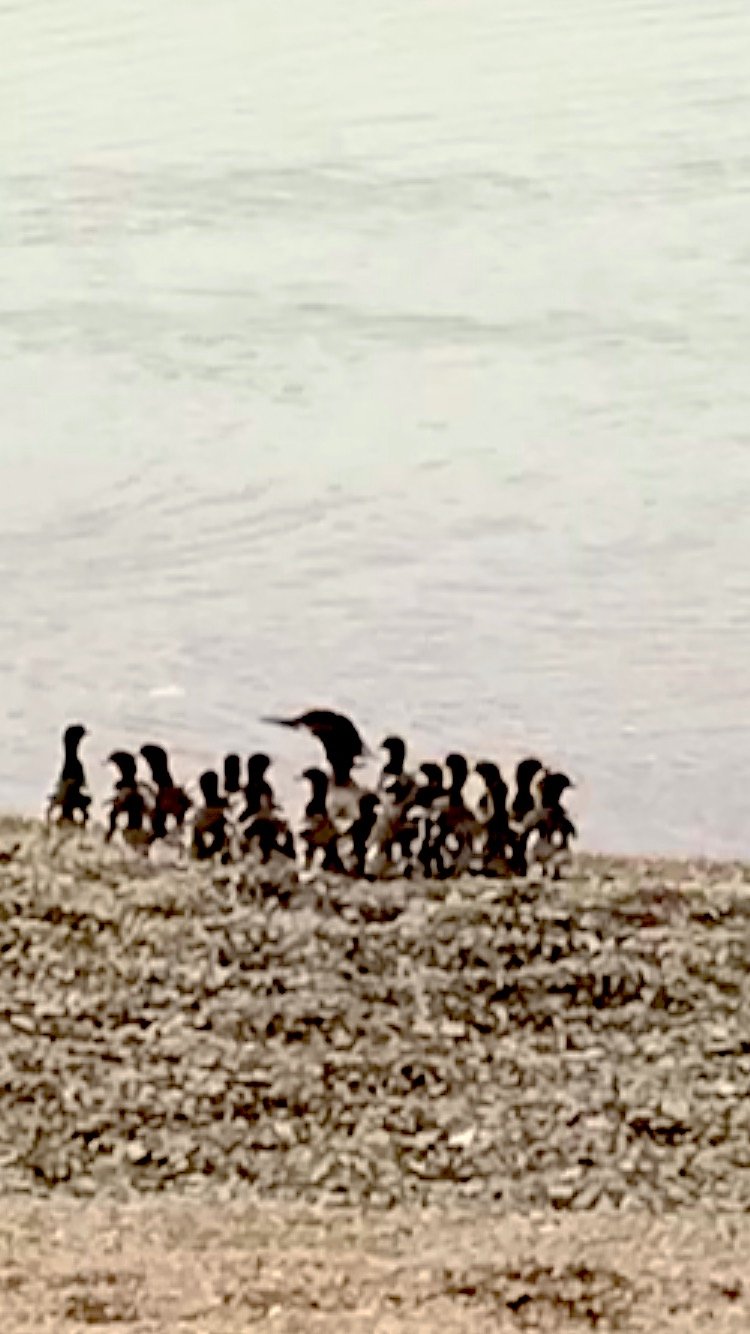
Almost every person I talk with affirms their feeling of God’s presence when they are outside in the natural world. The trees, the sun, the moon, the rain, the flowers, the animals, the mountains, the sea, and the earth are healers. They are mood changers. It is difficult not to be grateful looking across a peaceful lake in the cool mountain air and watching a mother duck care for and gather her eighteen ducklings as the rain stops. But, she also makes a distinctive sound, maybe telling her ducklings that there is still danger when we are around. 

We are called to care for our churches and places of worship where we experience God. We are called to care for our friends, who teach us about the love of God. We are likewise called to care for the natural world, which always calls us back to the Creator God.