Growning in Benedictine Spirituality

Growing in Benedictine Spirituality
“Together [the three vows] are not, as they might seem at first glance, about negation, restriction, and limitation. They involve us in the need to face a number of very basic demands: the need not to run away, the need to be open to change, the need to listen... And yet the paradox is that they bring freedom, true freedom.” —Esther de Waal in Seeking God: The Way of St. Benedict (The Liturgical Press, 1984), p. 55.

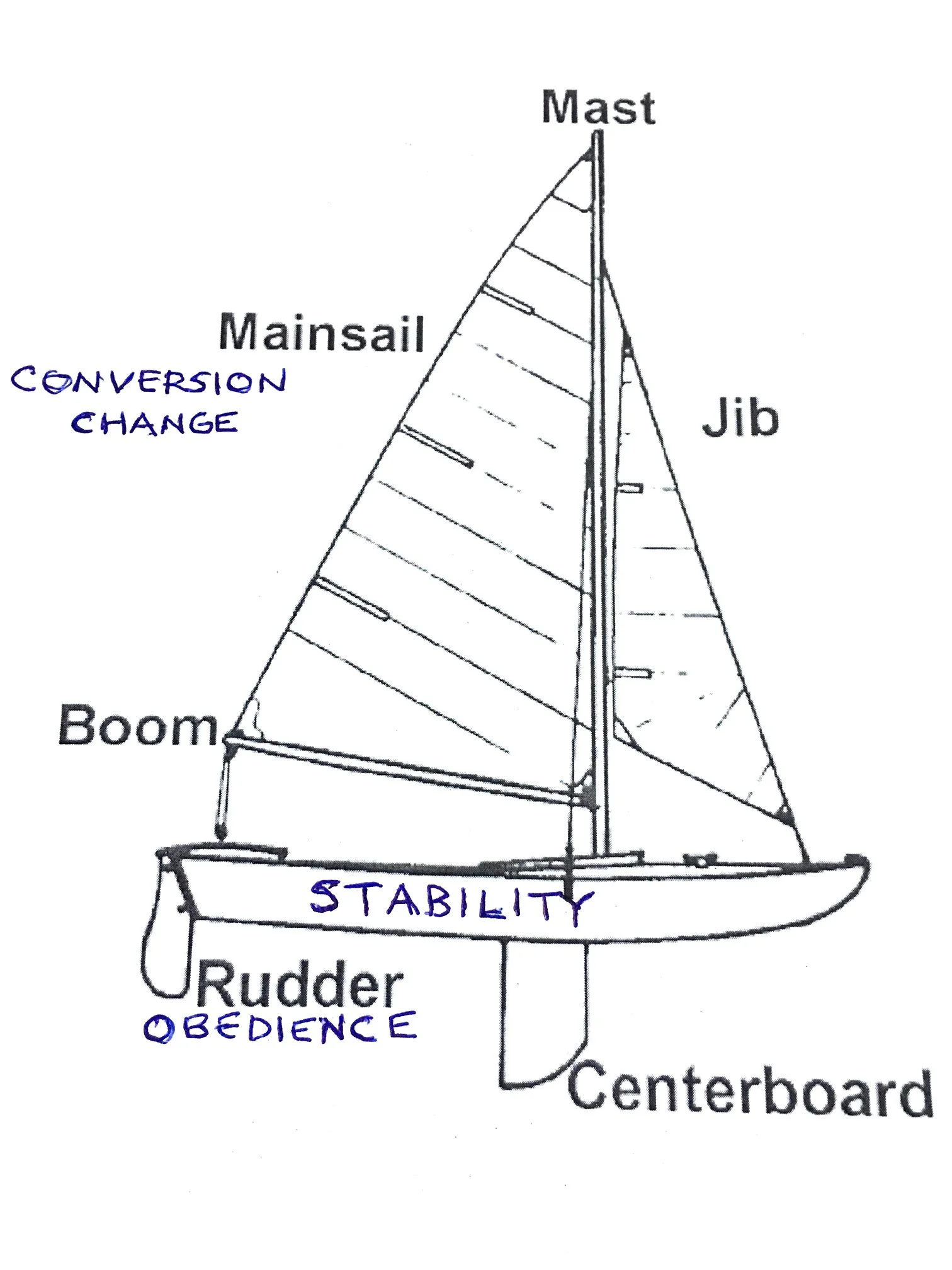
We reviewed The Rule of Benedict two years ago with an exceptional group from St. Mark’s Little Rock, St Mary’s Eldorado Episcopal Churches, and other churches. We learned to be pastoral caregivers through a program called Community of Hope International. Following a rule of Benedictine spirituality involves taking a vow to seek spiritual growth by connecting to three areas of support in our lives: conversion, obedience, and stability. Stability speaks to our connecting to a specific community, at work, at a place of worship, within a family, in a recovery group, and in the world. Obedience speaks to seeking the Christ in everyone we meet, especially in our community. Finally, conversion or change occurs through the Holy Spirit as we seek Christ in others in our community and begin to see and reflect Christ in each other. This mutual exchange then leads us to growth. 

A priest I worked with, Peggy Bosmyer, compared this concept to a sailing ship. First, we get into the boat. Then, we commit to being in the boat. That is stability. How we direct our boat is the rudder. That is obedience, diligently attempting to see the Christ in others. The Holy Spirit, the wind, then moves the sails, bringing about conversion—a change in movement as we begin to see and feel the Christ in ourselves and our neighbor. Seeing the Christ in our neighbor leads to and reflects the Christ within us, a process that leads to transformation into a new life for both ourselves and our neighbor.

One Lent, our Community of Hope chaplains shared what we have learned with our congregation during our forum.

Our recent pandemic called us to consider a Benedictine rule of life. After all, Benedict developed the Rule as he tried to stay connected to God while the Roman Empire was invaded.

Joanna  joannaseibert.com

Joanna. https://www.joannaseibert.com/


Slow Down

Slow Down… Waiting

“When I am told that waiting seems to belong to the heart of the spiritual life, I’m not pleased, for I want answers, direction, clarity—and I want them pronto.”—Robert Barron, “What Are You Waiting For,” in U.S. Catholic, Dec 2003.

Langley Abbey Lane

  Barron starts with that old joke about the pilot, who announces he has good and bad news. “The bad news is we are totally lost. The good news is we are making excellent time!”

My experience is that spiritual friends initially come to talk because they are consciously or unconsciously in some kind of pain and, like the rest of us, seek relief and answers, hopefully very soon. We soon remember times of awareness of staying connected to God, which required much waiting.

“Those who wait upon the Lord will renew their strength; they will mount up with wings as eagles; they shall run, and not be weary, and they shall walk, and not faint.” (Isaiah 40:31-1) This verse is known to most people and can help us remember about waiting when we are impatient. We will experience times when we will fly and walk and not be tired, but waiting is still a significant part of our relationship with God and each other. 12-step groups talk about not leaving before the miracle happens.

 I have learned a few exercises about waiting as a physician. I would often go to meetings or have patients or other doctors who would keep me waiting. I would have those tremendous ego experiences of “I am very important. You should not keep me waiting. Don’t you know how valuable my time is?” When overcome with these thoughts, I end up mad, arrogant, and testy when the person or group finally comes. This is never helpful for the interaction.

Gradually, by some miracle, I realize that waiting is an opportunity to pray for that person or group before we meet, or it is an opportunity to meditate and calm my soul before the meeting. Waiting becomes a gift from that person, making all the difference in my relationship with those I meet. The same is true about waiting for God.

 Goodness knows God spends a great deal of time waiting for us.

 Of course, centering prayer, meditation, contemplation, and Lectio Divina are also more exercises about waiting.

Spiritual writer Michael Vinson suggests a waiting exercise of remembering times in our lives when we wait and the miracle comes. For example, perhaps we wait before talking to someone about a situation until we hear the entire story. 

Another spiritual writer, Jane Wolfe, responds to Michael in his blog that God will always give us a nudge when it is time to respond and act after we wait.
 Jane reminds us of Mary giving Jesus that nudge at the wedding at Cana when it was now time for him to do something!

 “Sit and Wait,” Friday Food, jmichaelvinson.com, February 24, 2017.

Joanna joannaseibert.com https://www.joannaseibert.com/


Wiederkehr: Pressing the Space Bar in Our Lives

Wiederkehr: Pressing the Space Bar in Our Lives

“Long ago, when I was learning to type, I used to delight in typing letters to my friends without pressing the space bar. Now, when you don’t press the space bar, you’ve got a real mess, and there is much decoding to be done. It is the spaces in between that enable us to understand the message.”—Macrina Wiederkehr in The Song of the Seed: A Monastic Way of Tending the Soul (HarperOne, 1997).

I remember reading this message from Sister Wiederkehr more than twenty years ago, and it still jumps off the page for me. She reminds us that many forget to press the space bar in our lives. She calls it hurry sickness. We will rest after finishing this email, project, phone call, or meeting. But we always have something else to do, and the rest never happens. Macrina calls us to regular spaces of contemplation, meditation, or silence at intervals in our lives.

One of my favorite definitions of such a “space” is to stop what we are doing and attend a Quaker meeting in our heads. Macrina reminds us of a Native American admonition to listen, or our tongue will keep us deaf! I often experience this when I wake up in the morning, and suddenly, an answer or idea about my writing comes after that long rest during the night. Likewise, when I stop to say prayers at daily intervals, life is more peaceful. But I can so easily become the driver of a Mack truck coming down a steep hill without brakes, and hurriedly rushing during the day from task to task without stopping.

Today, my best help in “spacing” is looking up intermittently from my floor-to-ceiling window on the other side of my desk and watching the birds at my feeder. Sometimes, they actually speak and call me to prayer.

Our computers and iPhones are also speaking to us. Have you ever noticed how much bigger the space bar is than the letter keys?

Give thanks today for Macrina and the many lives she touched in Arkansas and worldwide.

Joanna. https://www.joannaseibert.com/