Rachel Held Evans: Searching for Sunday

Rachel Held Evans: Searching for Sunday

“This is what’s most annoying and beautiful about the windy Spirit and why we so often miss it. It has this habit of showing up in all the wrong places and among all the wrong people, defying our categories and refusing to take direction.”—Rachel Held Evans in Searching for Sunday (Nelson Books 2015), p. 196.

Our world still grieves the death of 37-year-old Rachel Held Evans on May 4th, 2019. She was a spiritual voice for many millennials and their parents and grandparents. I treasure that we met her on her podcasts, at writing conferences, and at our cathedral in Little Rock when they invited her to speak.   

Larry Burton recently reviewed her book, Inspired, on this blog about interpreting some of our favorite Bible stories as Rachel wrestles with some of our most significant questions about suffering and doubt.  

Today’s writing relates to a quote from Searching for Sunday, where Rachel struggles through the liturgical year, trying to find her faith and a church community as she journeys through the sacraments.

At Pentecost, I will remember that Rachel reminds us that the wind, the Holy Spirit Jesus describes to Nicodemus, goes even to this Pharisee. Nicodemus eventually hears the wind, speaks up for Jesus at his trial, and cares for his body when most of the rest of the world abandons him.

Rachel reminds us that the Spirit is both inside and outside the traditional church if we only have eyes to see and feel it.  

There is no corner of the world where God has abandoned God’s people, even when it is hard to see God in that place or with that group of people. Rachel reminds us that we will know the Spirit when we know and see the fruit of the Spirit: peace, joy, love, patience, kindness, goodness, faithfulness, gentleness, and self-control. 

Today, we may honor Rachel Held Evans as we pray that we may keep looking for God and the fruit of the Spirit in every possible place, as we talk about it in community and write about it as much as possible. 

Today, we saw the Spirit so easily in all those who cared for the sick during the pandemic.
Joanna. https://www.joannaseibert.com/

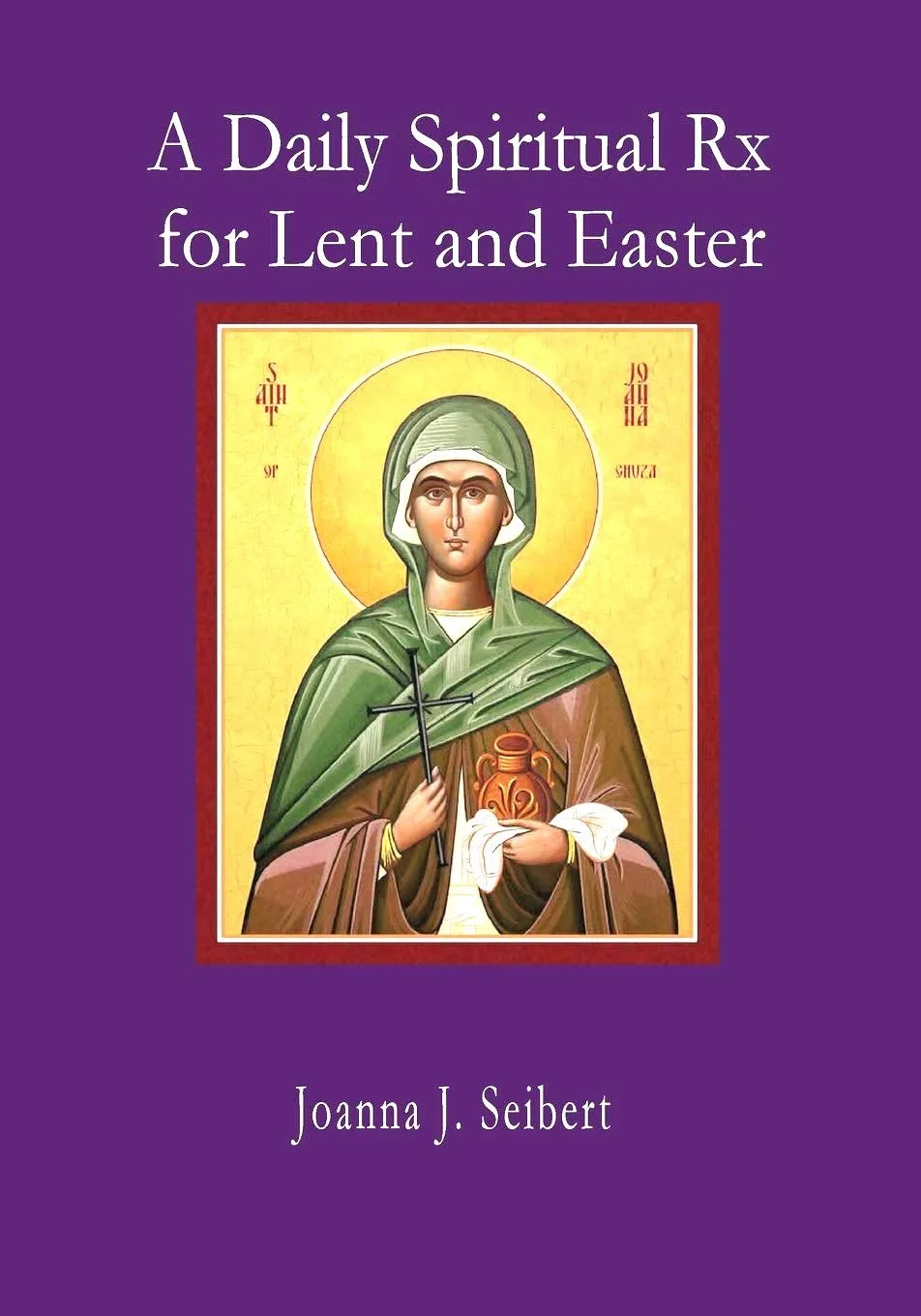
Bless you for supporting the ministry of our church and conference center, Camp Mitchell, on top of Petit Jean Mountain, by buying this book in the daily series of writings for the liturgical year, A Daily Spiritual Rx for Lent and Easter. If you like this book, could you briefly write a recommendation on its page on Amazon? More thank-yous than I can say!!!


Mothers

Mothers

“On this Mother’s Day, we give thanks to God for the divine gift of motherhood in all its diverse forms. Let us pray for all the mothers among us today; for our own mothers, those living and those who have passed away; for the mothers who loved us and those who fell short of loving us fully; for all who hope to be mothers someday and for those whose hope to have children has been frustrated; for all mothers who have lost children; for all women and men who have mothered others in any way—those who have been our substitute mothers and we who have done so for those in need; and for the earth that bore us and provides us with our sustenance. We pray this all in the name of God, our great and loving Mother. Amen.”—Leslie Nipps in Women’s Uncommon Prayers (Morehouse, 2000), p. 364.

Sarah Kinney Gaventa wrote an excellent piece in GrowChristians.org called “Liturgical Trapdoors: Preparing for Mother’s Day” about how difficult secular holidays such as Mother’s Day and Father’s Day can be for some people, and how the Church can compound their pain. Having all the mothers stand up in church can be painful for those during fertility procedures. People with unhappy childhoods may have difficulty comparing the love of a mother or father and the love of God. So many people come to spiritual direction to grapple with these very issues.

Gaventa offers this more universal prayer for mothers from Women’s Uncommon Prayers as a start. We know the love of God through other people, but when a standard is presented for a specific role for mother or father, and ours does not fit, we can become even more wounded.

Gaventa suggests we talk more about the feminine aspects of God and Jesus. We can discuss their caring for us as mothers without criticizing those human mothers who have fallen short.

She also reminds us that Ann Jarvis, the woman who started the Mother’s Day movement during the Civil War, was a peace activist. So perhaps one way of honoring all mothers might be to suggest an outreach project for peace, so that mothers would never again have to send their fathers, husbands, and sons to war.

Joanna joannaseibert.com. https://www.joannaseibert.com/


Difference Between Therapy and Spiritual Direction

The Difference Between Therapy and Spiritual Direction

“Converted anxiety is hope. Anxiety is dreadful expectation; hope is expectant desire. They are like cousins to each other. Pray for the conversion of your fretful anxiety into promising hope. If you are anxious now, you are almost already hopeful.”—Br. Curtis Almquist, SSJE, from “Brother, Give Us a Word,” Society of Saint John the Evangelist.

Sometimes, there is confusion between the ministries of a therapist and a spiritual director. We learn early in spiritual direction training that a therapist helps people deal with life on life’s terms.

A spiritual director is a caretaker of the soul, one’s connection to God. Sometimes leading people to realize their connection to God can help them deal with life on life’s terms. Learning to live with what life brings can reconnect us to God in a new way. But, on the other hand, becoming the person God created us to be—living a connected life—can sometimes make our path even more complicated and challenging.

A spiritual director will listen to what is going on in a person’s life, but they will be looking for the God connection at every pause. A therapist will look at every pause for ways to lead the person to find a solution or deal with pain. A spiritual director focuses on one thing: seeing God at work in that person’s life.

My favorite part of being a pediatric radiologist was caring for babies. When I meet someone for spiritual direction, I imagine that person’s soul as a newborn they have offered over to me for a brief time to be cared for and nurtured. Then, as they leave, I gently return it to them wrapped in a warm blanket—resting and smiling in peace.

Joanna. https://www.joannaseibert.com/