Handing it Over

Handing it Over

“You anoint my head with oil;

 my cup overflows.

 Surely  goodness and mercy shall follow me

all the days of my life,

and I shall dwell in the house of the LORD

my whole life long.” Psalm 23: 5b-6. NRSV
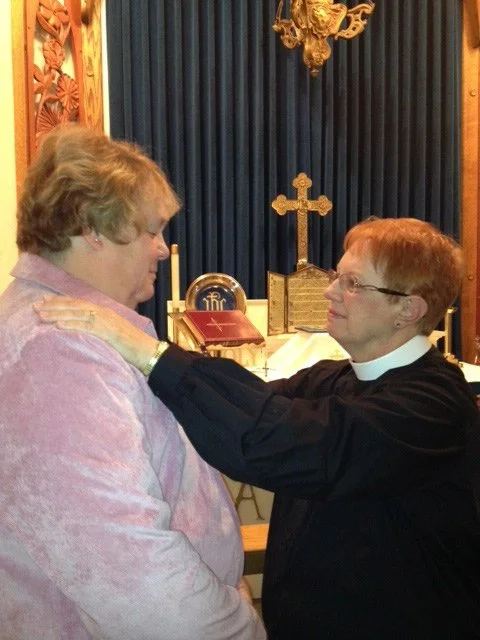
Recently, I was at a meeting where I was asked to lead a healing service. Usually, I can do almost all the parts and readings in the service, but I have been having difficulty with my voice after a long illness with deep coughing and hoarseness that damaged my vocal cords.

I am in speech therapy. My vice is improving, but still not strong. I knew I had to ask others to help. In the end, the only part I did was the short homily, and helped with the laying on of hands and anointing. There were two other deacons and a priest there, and I asked them to help with anointing.

 The service was beautiful, particularly as we heard many other voices. After the service, the two deacons and the priest approached me and told me they could not express how meaningful it was to do the anointing. One was almost in tears. I was moved by how passionately each spoke about how being involved in this sacramental rite of laying on hands and unction brought healing to them, as well as those they prayed with.

Suddenly, I knew I was now being called to learn how to hand over other ministries to others. That is especially true in the deacon’s ministry. We help others be involved in a ministry, and then hand it over to them. I am not giving up my call, but I am sharing it now with others. It is more than just delegating. It sacramentally invites others to participate in a ministry they are now called to do. This can be true in outreach and parish life ministries. In fact, it is a principal part of every aspect of ministry. We encourage and mentor others to become the person God created them to be.

Joanna Seibert https://www.joannaseibert.com/
Buechner: Birds

Buechner: Birds

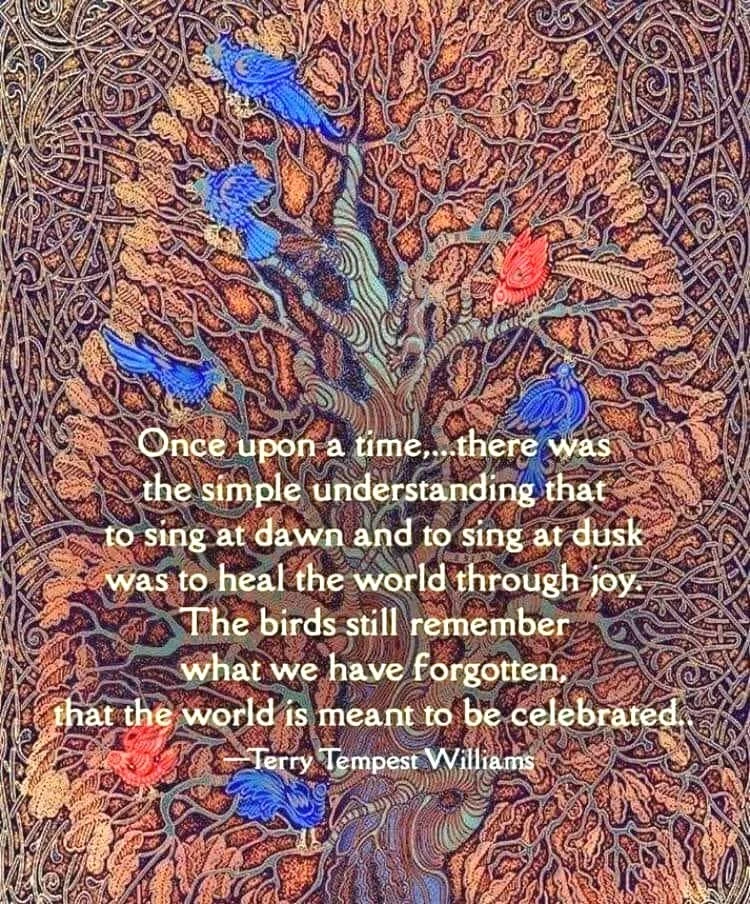
“Wheeling through the summer sky, perching in the treetops, feeding their young, birds go about their business as generally unconcerned with the human race as the human race is generally unconcerned with them. But every so often, they do something that catches our attention. Canada geese heading south in the shape of a V. A white-throated sparrow grieving over poor Sam Peabody, Peabody, Peabody. A cardinal darting through the shrubbery like a flame. For a moment or two, even the dullest of us dimly realizes the world would be a poorer place without them. 

One wonders if, from time to time, birds feel the same way about us. A man with an umbrella walking in the rain. A woman in a bathing suit picking peas. The patter song of a two-year-old in the sandbox. Do birds every once in a while see us as we see them, as basically irrelevant but occasionally worth the cocking of a beady eye, the flicker of a wing, the first few notes of a song?” —Frederick Buechner in Beyond Words.

The birds who visit the feeder just beyond my window save my life. As I write or read, their movement pauses me to look up from my page or computer and see the world outside my window. They call me to stop what I am doing and briefly say a short prayer of thanksgiving or a prayer for healing of someone I know who is in pain that day. They bring me to a power outside of my world that is consuming me to be greater than myself and any difficulties I might feel that day.

 I also see similarities between our lives and theirs. Some birds don’t like to share. Some are constantly vigilant to their surroundings, seeming to fear constant danger, almost as if they are so nervous that they only feed for a moment.

I try to name them, but most stay for such a brief time that I barely get to know them. So today, I give thanks for the many sparrows, the brown thrasher, the blue jays, the nuthatch, the tufted titmouse, the Carolina chickadee, the male and female cardinals, and especially the downy woodpeckers, the northern flicker, and the red-bellied woodpeckers who change my life every day.

Joanna Seibert https://www.joannaseibert.com/
Usable and Sing a Song of Six Birds

Usable and Sing a Song of Six Birds

Guest writer: Isabel Anders

“Editing and writing walk together, and they both require the eye and the ear.” —Found in the New Yorker (3/27/23).

It never failed. Every time I typed my name, Isabel, the spell-check function on my old computer would change it to “usable.” I laughed; but there was a kind of logic to it.

Eventually, it accepted my name as a valid entry rather than a typo. If you stick around long enough, you get written into the story. 

“Editors and their input are inconspicuous by design. … Editors work in service of their authors and are the invisible shepherds (or packhorses or midwives, pick your metaphor) of the books we read,” wrote Sara B. Franklin.

My primary vocation as an editor has suited me perfectly—requiring accuracy, diligence, solitude—and allowing a degree of independence as one works on a manuscript. If only life were like that—a page spread out with identifiable bumps (errors) and cracks (omissions) that could, at one time, be “fixed” by an editorial pencil—but now succumb to the electronic delete key that wipes away mistakes completely.

An editor’s work actually should be invisible, causing a piece to read and flow as though it had been written that way from the beginning. Injecting one’s own personal style is not the function of a responsible editor who serves the work.

Since I wrote books myself as well, on the side, I truly appreciated other editors who performed that usable function for me—because “everyone needs an editor.”

Perhaps workers in any helping profession can easily relate to this need for focus: “Attention,” the psychiatrist Iain McGilchrist writes, “is a moral act: It creates, brings aspects of things into being.” Those of us who are usable in some way are privileged to have a hand (though often an invisible one) in the process.

“Whatever your hand finds to do, do it with all your might” in this life, we’re told in Ecclesiastes 9:10. It’s likely when the scroll of life’s story rolls out complete, editors will not be needed.

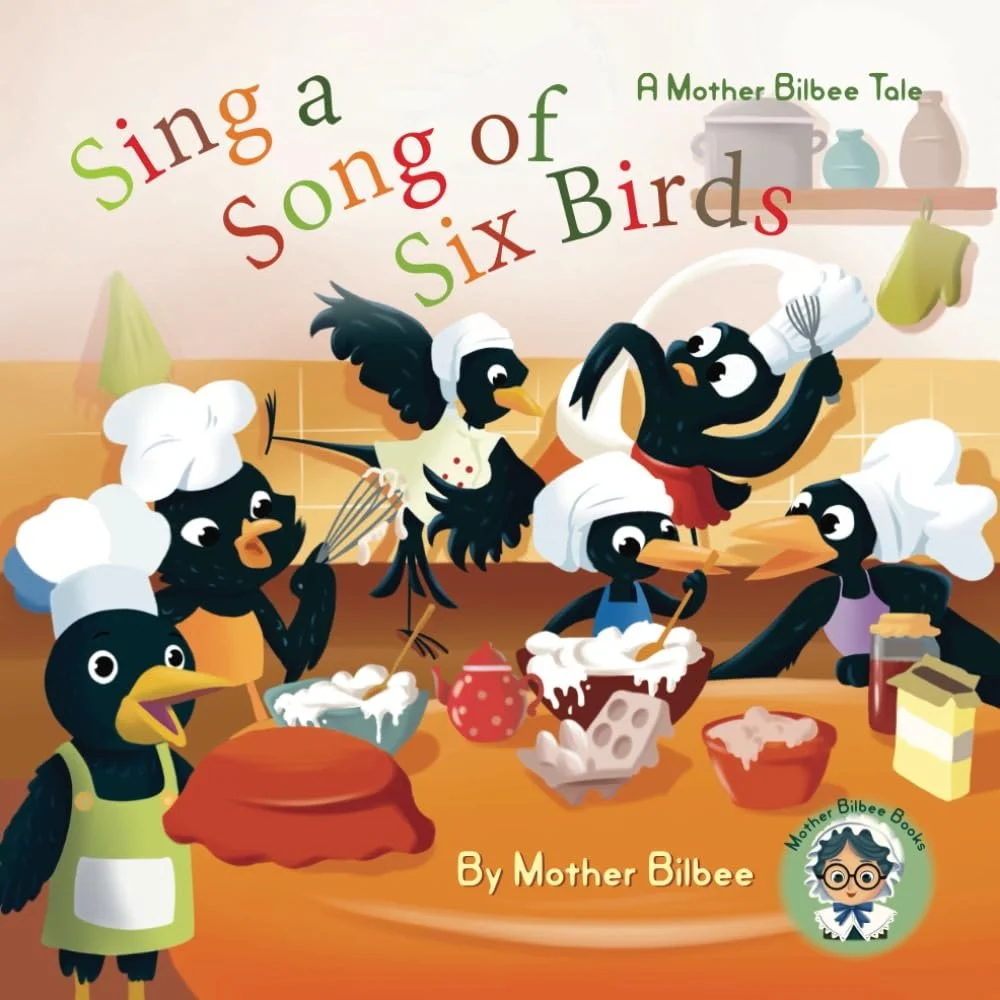
Isabel Anders’ forthcoming Mother Bilbee Tales is a collection of nursery rhymes and folktales with a twist that allows her editorial spirit to have a fun ride.

Sing a Song of Six Birds is now available on Amazon.

https://www.amazon.com/review/create-review/?channel=glance-detail&asin=B0D53LDWQ8

Isabel Anders

Isabel Anders

Joanna Seibert. joannaseibert.com https://www.joannaseibert.com/