Intercessory Prayer:The Empty Chair

De Mello: Intercessory Prayer, The Empty Chair

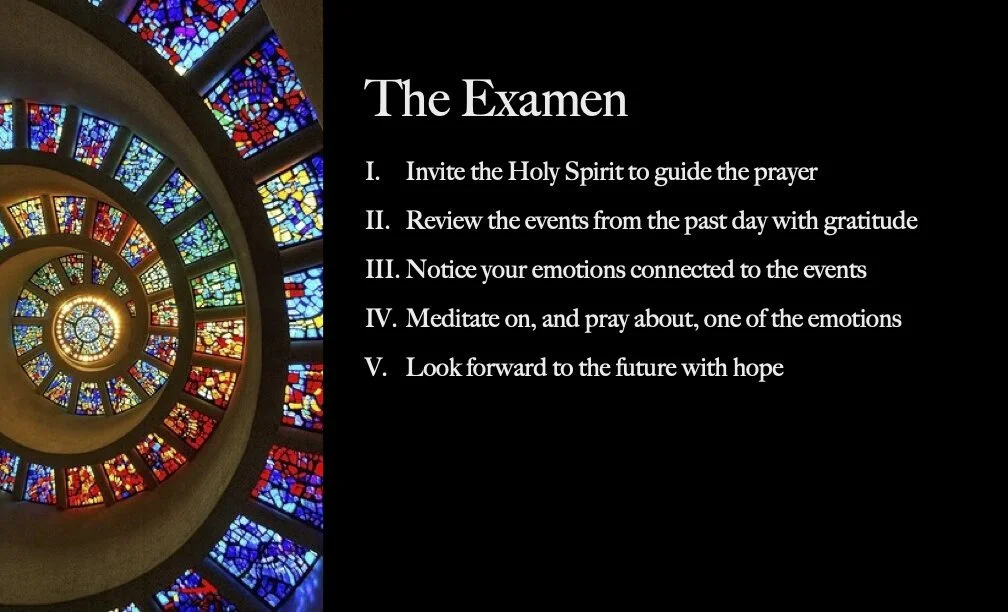
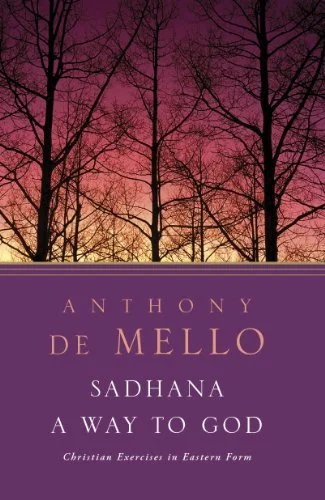
“It is extremely important that you become aware of Jesus and get in touch with him at the beginning of your intercessory prayer. Otherwise, your intercession is in danger of becoming not prayer, but an exercise of remembering people. The danger is that your attention will be focused only on the people you are praying for, and not on God.”—Anthony de Mello in Sadhana: A Way to God (Image Books), p. 126.

Empty Chair

De Mello’s book had a significant impact on my spiritual practices. The awareness exercises of my surroundings, my body, and my senses have been the most practical avenues for learning how to experience God’s presence. I knew of these exercises before and tried them without success, but they now have become an essential spiritual practice for me.

One more lesson to remember: Spiritual practices that were not meaningful in the past can become important later.

De Mello suggests that rather than envisioning the face or clothes of Jesus, we might seek a sense of Jesus in the shadows, calling him by as many names as we are led to. He recommends imagining Jesus in our prayers in an empty chair beside us. This can be one of the most consistent ways to experience the presence of Christ.

These intercessory prayer exercises can change how we pray and talk about prayer to others. We remember Jesus as the great intercessor, imagining Jesus’ presence directly beside us and visualizing those we pray for with Jesus laying hands on them.

The book’s last prayers deal with turning desires and prayers over to God one at a time—praising God at all times for everything, good and bad. This can also change our prayer practice and how we live our lives.

De Mello invites us to live and pray intimately, becoming part of the grand mystery of God’s love for us and all creation in the present moment. He believes this precious now, the present moment, is where God meets us.
The Examen

Schmidt: Ignatius, Examen

Guest Writer Frederick W. Schmidt

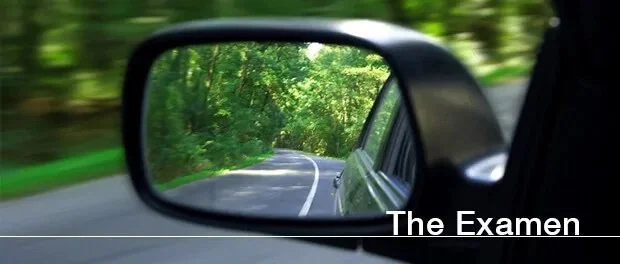
“The Examen builds on the insight that it’s easier to see God in retrospect rather than in the moment.”—James Martin in The Jesuit Guide to (Almost) Everything: A Spirituality for Real Life (HarperOne, 2010), p. 97.

“Rummaging for God” in our lives.

One of the central practices in Jesuit devotion—the one Ignatius of Loyola considered indispensable—was the prayer of Examen. Ignatius felt that the key to spiritual growth was cultivating awareness of when and where God had been present for us in the day’s course. It was so important, in fact, that he urged his followers to do the Examen, even if it cost them the little time they might have for prayer. 

One writer calls this “rummaging for God” in our lives. Rummaging is a wonderful, commonplace activity we have often resorted to when we have lost something: car keys, phones, and umbrellas have been among my favorites over the years.

The Examen is a practice that tells us something important about the spiritual life: Spiritual practice is preeminently about cultivating a sense of God’s presence. It isn’t about devotional piety or the number of hours we spend in overtly religious activity. It isn’t an anxious, endless effort to earn the love of God. The Spiritual life is about cultivating habitual awareness of God’s presence, which shapes and informs our lives.

Ignatius recommends two questions:

One: What were the events in your life today—the moments, conversations, and choices—that drew you closer to God and others in love?

Two: What were the events in your life today—the moments, conversations, and choices—that drove you away from God and others?

The answers to those simple questions invite us to evaluate our lives from a spiritual center. They are not about what feels good and what doesn’t feel good. Some things—such as addiction—feel good at first, but they invariably isolate us from God and others; by contrast, some things that don’t feel good, like asking for forgiveness, can draw us closer to God and those around us.

Instead, these questions raise our awareness of how patterns, habits, and choices shape our lives, and how, armed with that knowledge, we can learn to be more readily available to God and others.

Rummaging around in our lives for God can be the source of inspiration, encouragement, strength, gratitude, and a renewed sense of spiritual purpose. That’s not a bad result for an activity that usually leads to discovering dust bunnies and lost umbrellas.—The Rev’d Dr. Frederick W. Schmidt.

Tourist vs. Pilgrim

 Tourist vs. Pilgrim

Guest Writer: Karen DuBert

Two Travellers

Two Travellers

Dust we are—atoms from our world

transformed from minerals and chemicals

that swirled in the beginning

to coalesce into our radiant blue planet

our womb and home.


Living here—members of the same material—

separate by volition and movement:

creative spawners of cities to civilizations,

economies to technologies,

miniature images of Creation Genius

we live and move and have our being—a gift.


Striding or wandering

through an earth we cannot comprehend,

two paths appear.

Side by side the pilgrim and the tourist:

work, marry, breathe, grow, die

—hearts divergent.


The tourist walks weighty

to see, be attracted, entertained, impressed

an explorer seeking adventure and titillation,

leaving a litter-strewn wake:

debris of consumption and satiation.


Where tourists clump, trash and noise preside—

inhabitants mere local colour.

Selfies, rest stops, souvenirs, tickets

substitute for cooing doves,

early dawn breezes, daily rhythms.

Clattering cases on cobblestones—

spare no space for ponderous silence.


The pilgrim walks gently

to absorb, listen, smell, taste the awe

of each sacred place and time.

Finding the heart behind the beauty,

grieving history’s futile battles—

with bowed head

leaning into fratricide, oppression,

mountains of injustice

perpetuated by our very selves

in this our very home

on these our very sisters and brothers.


Seldom enhancing the economy—

a choice not to be laden with treasures

—lavishly given or discarded.

The pilgrim walks lightly, reflects deeply,

carries the essential,

guards the path, collects the litter,

brings the blessing, invites peace.


We leave footprints where we walk

it is our choice—

how we walk.

This poem is inspired by living in a tourism-driven city (Granada) and seeing the difference in the impact between those who are pilgrims and those who are tourists.  Some thoughts as so many travel during the summer.

(The image is ChatGPT, not copyrighted.)

Karen DuBert

Joanna Seibert https://www.joannaseibert.com/