Walking in Someone Else's Shoes

 Walking in Someone Else’s Shoes

“Within the best of us, there is some evil, and within the worst of us, there is some good. The person who hates you most has some good in him; even the nation who hates you most has some good in it; even the race that hates you most has some good in it.

And when you come to the point that you look in the face of every person and see deep down within what religion calls ‘the image of God,’ you begin to love in spite of. No matter what the person does, you see God’s image there.”—Martin Luther King, Jr., in “Loving Your Enemies,” sermon at Dexter Ave. Baptist Church, Montgomery, Alabama, 1957.
I once worked with another physician, whom I thought was incompetent. I felt her decisions did not make sense and were not helpful. She often talked almost in riddles, trying to look at many sides of a question—while I already thought there was an obvious answer that, beyond question, was right. Moreover, she was amazingly slow to make any changes.

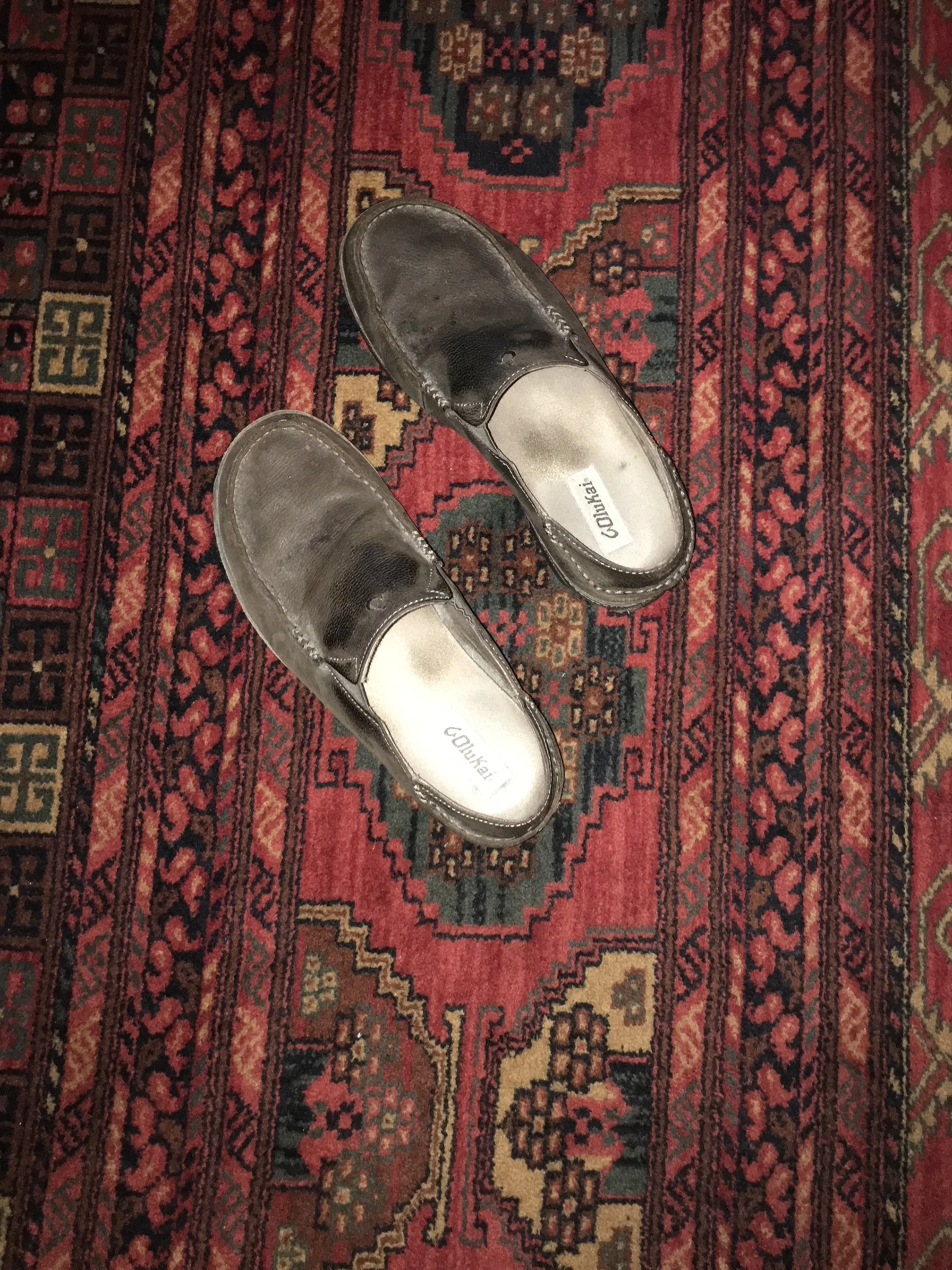
Then, one weekend, I had to do her job while she was on vacation. Overnight, I realized why she behaved as she did, the magnitude of her responsibility, and the endless number of real and imagined problems presented to her. I walked in her shoes, and it made all the difference.

Putting myself in her place led me to see God’s image in her, and so many others I had difficulty understanding.

A story also circulates that someone asked Mother Teresa the question, “How do you stand it when you have to serve some truly despicable person?” With a sigh, she replies, “I look deeply into their eyes and say to myself, ‘My Jesus, what an interesting disguise you are wearing today.”’Deborah Sokolove, Seekers Church, “Weekly Gospel Reflection,” Inward/Outward.com, Church of the Saviour.

Tangier Island

Tangier Island

“‘The margins, Nathan,’ he said when he started speaking again. ‘That’s what we’re losing. We’re losing the churches on the margins. We aren’t doing enough for them.’”—Loren Mead to Nathan Kirkpatrick at faithandleadership.com.

Tangier Island

Tangier Island is a disappearing island in the Chesapeake Bay, twelve miles equidistant off both the Maryland and Virginia coast, losing up to sixteen feet of its coastline a year, secondary to the rising sea level from global warming and soil erosion. The government believes the island will be uninhabitable to the over 500 people living there in twenty to thirty years. In fifty years, the island will be completely underwater.

The local islanders speak what is described as a unique Elizabethan British-like dialect combined with a southern drawl. They are primarily fishers of oyster and crab year-round, and tourist guides in the summer. The 1.2 square mile island is steeped in religious tradition and actually completely shuts down on Sunday morning.

Nathan Kirkpatrick, writing in the Duke Divinity School Leadership Education Center Alban Weekly (6/26/2018), recalls the above conversation with the founding director of the Alban Institute, Loren Mead, who compared the Church to Tangier Island. What does Dr. Mead mean by saying the Church is “losing its margins?”

Is he telling us the Church is shrinking because it is not paying attention to people on the fringes or margins of society—the poor, the weak, the hungry, the homeless, the tired, the sick, those who are the most different from ourselves? In the larger scheme, is he referring to our neighbors who border us that we do not care about? Our call to service comes from these margins. Through our prayer life, we hear that call.

I remember one of my favorite quotes from Bishop Barbara Harris: “The Church is like an oriental rug. Its fringes are what make it most beautiful.” This is our call to bring the needs of the world to the church.

In spiritual direction, I also ask people how the story of Tangier Island might relate to the care of their soul. There are so many possible answers.

One question is, “Do you ever feel your soul shrinking? Do you feel you are losing the margins, the borders, the uniqueness, the most inspiring and possibly the most interesting parts of your soul, the God, the Christ within you?” Many causes bring this on: no time for silence or prayer, becoming too busy, a loss of priorities, or losing our rule of life. My experience is this also happens when we serve the fringes without being led by prayer.

Seeing God in Each Other

Recognizing God in each other

“He who recognizes a king in disguise treats him differently from he who sees before him only the figure of an ordinary man and treats him accordingly. Likewise, souls who can recognize God in the most trivial, the most grievous and most mortifying things that happen to them, honour everything equally with delight and welcome with open arms what others dread and avoid.”—Jean-Pierre de Caussade in The Sacrament of the Present Moment (HarperOne, 1966).

I know people like this who seem to treat everyone equally. One person is no more important than another. All are human and divine simultaneously. They seem to see the Holy Spirit, the God, the Christ in each person they meet. They do not look merely at the outer appearances, political stature, wealth, or power a person represents. Christ indeed modeled this approach for us.

My experience teaches me that we cannot see Christ in our neighbor, because we cannot see Christ in ourselves. Consequently, we project onto others our unchristlike behavior that we do not realize is really within us.

How do we change? Along the way, someone comes into our life who treats us as if we do contain a divine spark, the holy within us—that is, they react to us with love. It is as though a spark becomes lighted. A light, a lightbulb, goes on inside of us. We begin to believe we are loved.

So, our mission as spiritual friends is to seek the light, the Christ, in each other.

I remember talking to a spiritual friend about a family member I struggled with. She helped me by asking me, “Tell me something good about her. Something she does well.”

My experience is also that I cannot see Christ in someone else when I live in fear. I realized this recently when attending a meeting at which I was uncomfortable. I wanted to look good. However, I did not know precisely what they expected of me. I was fearful that I might make a mistake. As an introvert, I did not interact with anyone I did not know. I only had concerns about what people might think about me. Was I making a good impression?

At our next meeting, I hope to relate better to others. My plan is, just before the meeting, to pray for each person who will be there, asking that we will see Christ within each other. I will let you know how it goes.