May You Live Long Enough

Guest Writer: Isabel Anders: Ricoeur and Anonymous: May You Live Long Enough

“I find myself only by losing myself”—Paul Ricoeur.

“It is always possible to argue against an interpretation, to confront interpretations, to arbitrate between them and seek an agreement, even if this agreement remains beyond our reach.”

—Paul Ricoeur.

My Grandmother Whaley and her sisters in front of her home

May you live long enough …

To be able to laugh at your most embarrassing moments in the past—sportingly owning the temporary title of “dunce”—before passing it on to the next clown in this dance of win-and-lose, hit-and-error called “life.”

To side with your former adversaries, if only for a glancing moment—to accept that in certain past disagreements or outright conflicts that cobble your past: “The other person had a point.”

To realize that even your greatest “triumphs” owe much to outside influences: others’ kind and diligent contribution, the coming together of circumstances, and “sparks” of grace flung from afar that happened to hit you at the moment.

To experience prayer as the automatic breathing of petitions for others’ good—urgently present in your heart before your own needs or requests enter your awareness.

To meet someone whose efforts or example—in any category—put you to “shame,” and feel the joy that such understanding, expertise, or goodness exists in the world apart from your receiving any specific personal gain from it.

To recognize that your “defeats,” by the world’s judgment, were blessed checks and balances in the larger arc of your journey toward maturity and self-acceptance.

To feel genuinely sad for people who seemed unfair and cruel to you for no apparent reason and to lament the conditions that must have made them that way—even when their cruelty caused you genuine pain.

To let go of any idea that we might be able to judge who is worthy or unworthy of anything that comes to them in this life, or in the life to come.

“We look not at what can be seen, but at what cannot be seen; for what can be seen is temporary, but what cannot be seen is eternal.”—2 Corinthians 4:18.

“We also boast in our sufferings, knowing that suffering produces endurance, and endurance produces character, and character produces hope, and hope does not disappoint us because God’s love has been poured into our hearts. …”—Romans 5:3-5.

Isabel Anders

Author of Circle of Days: A Church Year Primer--Years B and C: A Celebration of the Major Themes and Texts of the Church Year

Year A is out as well!

Joanna   https://www.joannaseibert.com/ 


Mary Magdalene Courage

Mary Magdalene Courage

Courage

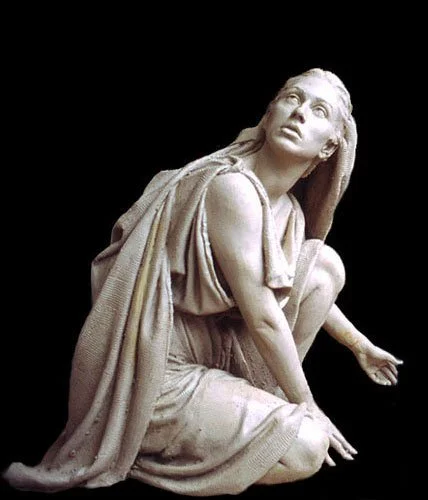
Robert Lenz ofm iconographer

“The other disciples left, “but Mary stood weeping outside the tomb.” This is where we see Mary Magdalene’s courage. Not the courage to take up a sword, but to stand, to remain in her grief and loss and fear. This is a common, unheroic kind of courage – the vulnerable courage of waiting and trusting when hope seems gone, when we have no other hope than that God will provide.”—Br. Lain Wilson, SSJE

We recently celebrated the Feast Day of Mary Magdalene on July 22. Mary Magdalene weeping at Jesus’ tomb is our icon for a very different kind of courage. It is the courage that stands by, waits, does not run away, and stays still. It is the kind of courage we see in people who are grieving who decide to stay with the grief, not try to anesthetize grief with alcohol or drugs or work, or shopping, or whatever coping mechanism that allows them to escape instead of feel and work through the deep pain.

This is also the courage that comes to those who sit and wait with that friend who is grieving, not trying to say words that bring no comfort. It is that person who can cry with their friend. This is the courage we have when our friends are in trouble, and we stand by them when the world mocks them. We don’t condone their actions, but we stand by them. Often, this is the courage that comes to those who have made mistakes themselves and remember what it was like to have friends who stood by them. I see this in families whose teenagers got into trouble.

I will never forget the image of Dr. Joycelyn Elders standing and walking beside her son, who was in trouble, when she was Surgeon General. I see this also with adults who have made a mistake, whose friends are not afraid to walk with them. This is the courage of the women at the cross and the women who go to the tomb on Easter Sunday. They put themselves in a position for possible ridicule and danger in order to support someone the world judges.

This is courage that does not shout or make a scene. Biblically and traditionally, this has been a characteristic of courage seen in women, but we are increasingly seeing it in men. This is courage that has said its prayers and then stands or sits beside the person in need. This is courage that changes the world by its healing presence.

Joanna  joannaseibert.com


Discerning Your Path

Ignatian Discernment, Peace of God

Guest Writer Lowell Grisham

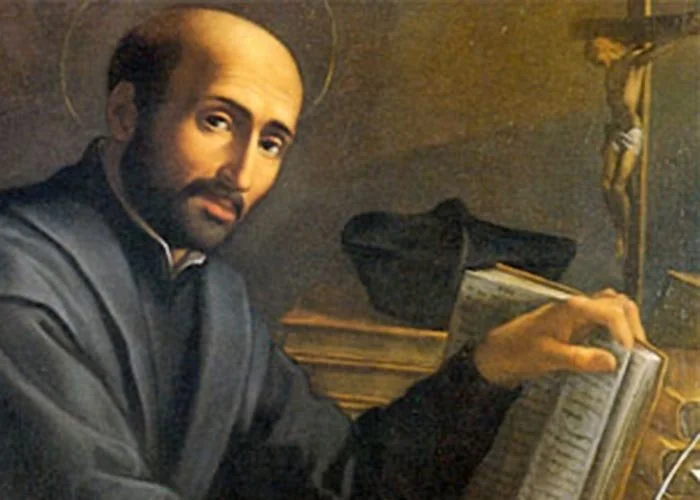
We recently observed the Feast Day of St. Ignatius on July 31.

Loyola Jesuit Institute

No one has done more work on the discipline of discernment than the Jesuits, the monastic descendants of Ignatius of Loyola. Although I can’t recall who taught it to me, for many years, I’ve used an Ignatian discernment method from time to time when I’ve faced a choice between two options. Here’s the way someone gave it to me:

wwwjuesiuteast.org

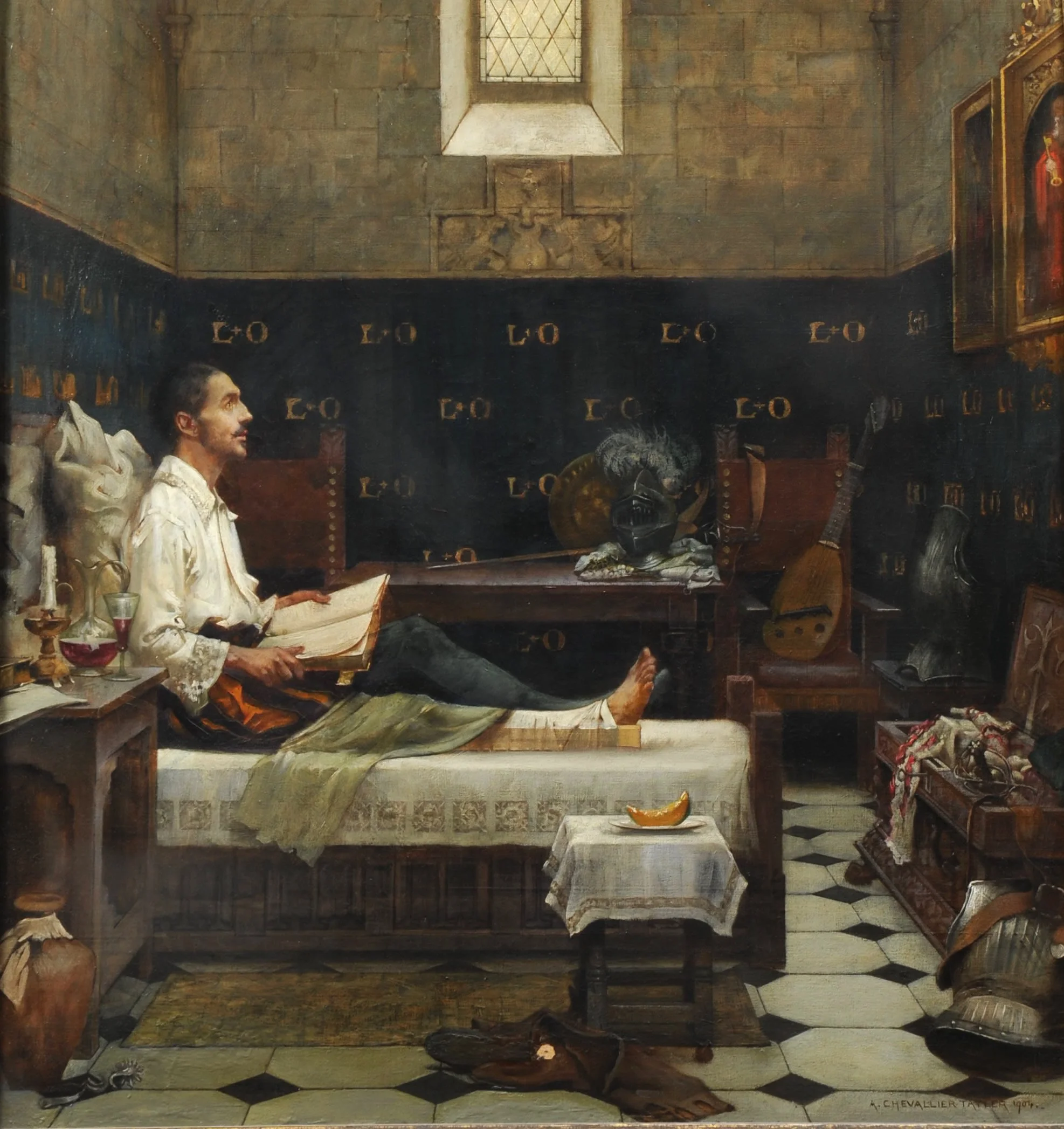
In a battle in the early 1500s, Ignatius was seriously wounded. (I believe an artillery shell shattered his leg.) He spent months of painful convalescence. However, he found that his pain was sometimes relieved when he went into periods of active imagination.

He imagined his life when he was healed and released from the hospital. He made up stories about his future life, using all his senses to place himself in the future. He created scenes from his imagined future and experienced them vividly—with sight, sound, touch, taste, and smell—thinking and feeling what his alternative life might be. 

Whenever Ignatius was actively imagining, his pain decreased, and the time seemed to pass more quickly. He discovered that his imagination gravitated toward two narratives. In one narrative, he would experience becoming a great, chivalrous knight, doing valiant deeds of courage, and winning the hand of a noble maiden. In the other narrative, he would experience becoming a knight for Christ, boldly taking the gospel into the most remote, challenging, or needed places.

While in active imagination, Ignatius experienced relief with either narrative. But he noticed a significant difference in where his spirit went afterward, when he was just taking care of business in a normal state of consciousness.

He noticed in the hours following his narratives about becoming a noble warrior knight that he experienced a sense of turbulence, discomfort, and even desolation. But he became aware in the hours following his imagining of becoming a knight for Christ that he experienced a sense of consolation, harmony, and peace.

Ignatius interpreted the sense of peace as the presence of God, drawing him into God’s will for him and helping him discern the direction of his future. So, he embraced the vision of that second narrative and became a noble knight for Christ, seeking to undertake his most outstanding service possible to the Church and the world.

The presence of peace is a sign of God’s will. In the chaos and storm of a decision, I sometimes use a form of Ignatian discernment practice when there are two potential options or directions. First, I’ll set the two options before me. Then, one day, I will spend some time actively imagining myself living in the first option, using all five senses to create scenes from that future possibility.

Then, I will go about my regular daily activity, but I’ll keep a bit of attention directed to notice where my spirit goes. Another day, I’ll spend time in active imagination, living with the other option. Then, I will pay attention to my spirit, mood, and intuition during my daily ordinary work. What after-effect is there following each separate scenario?

If I sense some form of consolation and peace in the ordinary time following active imagination with one narrative, and if I perceive turbulence in the ordinary time following imagination with the other narrative, I’ll accept that as a sign of God’s will. The presence of peace is the key. 

Where does the peace of Christ lead us, especially when our boat seems tossed and we’ve lost control of our direction? A sense of peace can give direction toward God’s will for us and for the maximum exercise of our creativity, courage, freedom, and service. Sometimes, a little active imagination can lead us toward discernment.

Lowell Grisham

I use this in my life to discern directions for ministry and offer it to others discerning a path on this journey. It was loaned to me by Lowell Grisham, retired Rector of St. Paul’s Episcopal Church, Fayetteville, Arkansas.

Joanna https://www.joannaseibert.com/