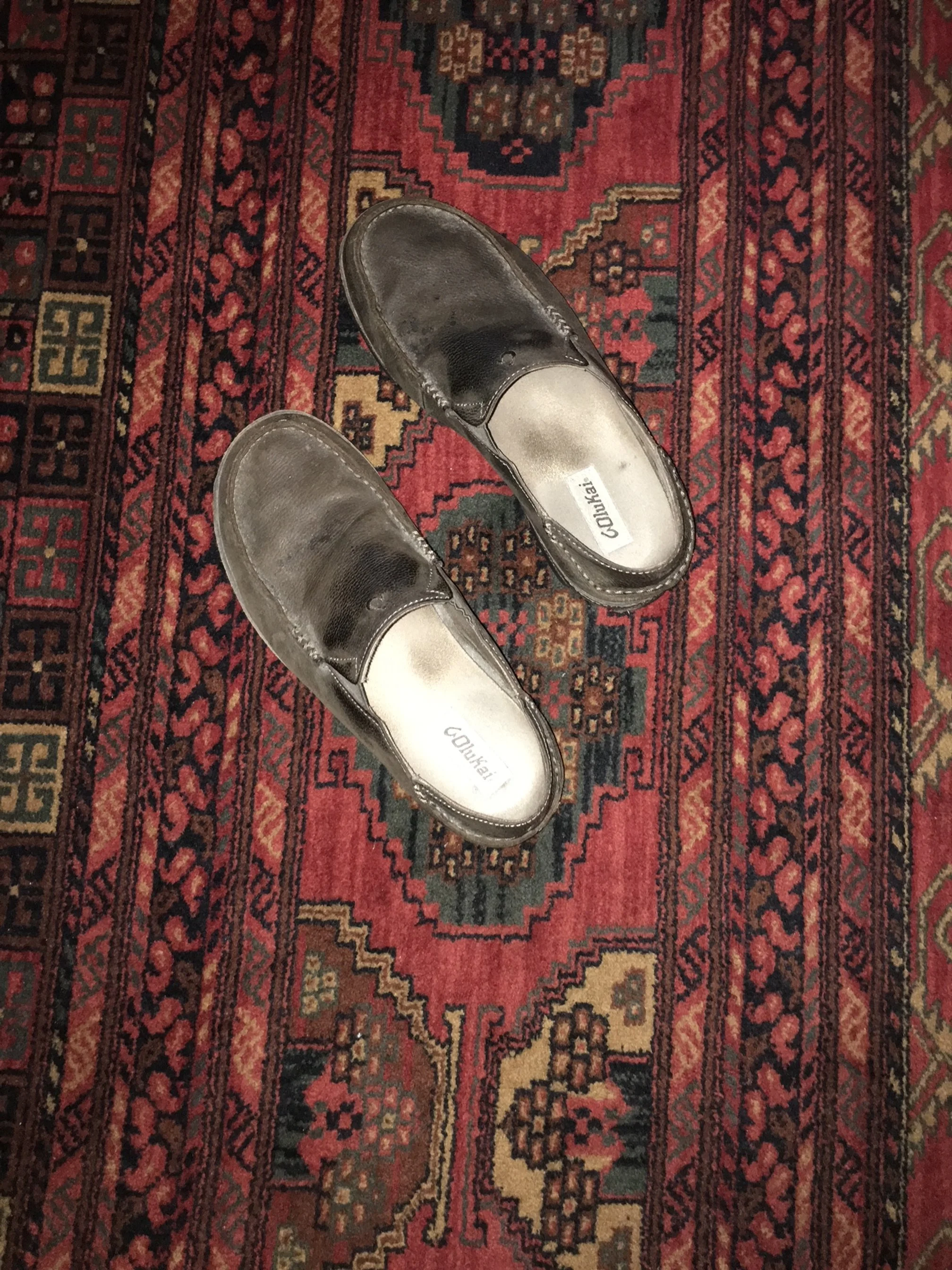
Transfiguration

Transfiguration August 6

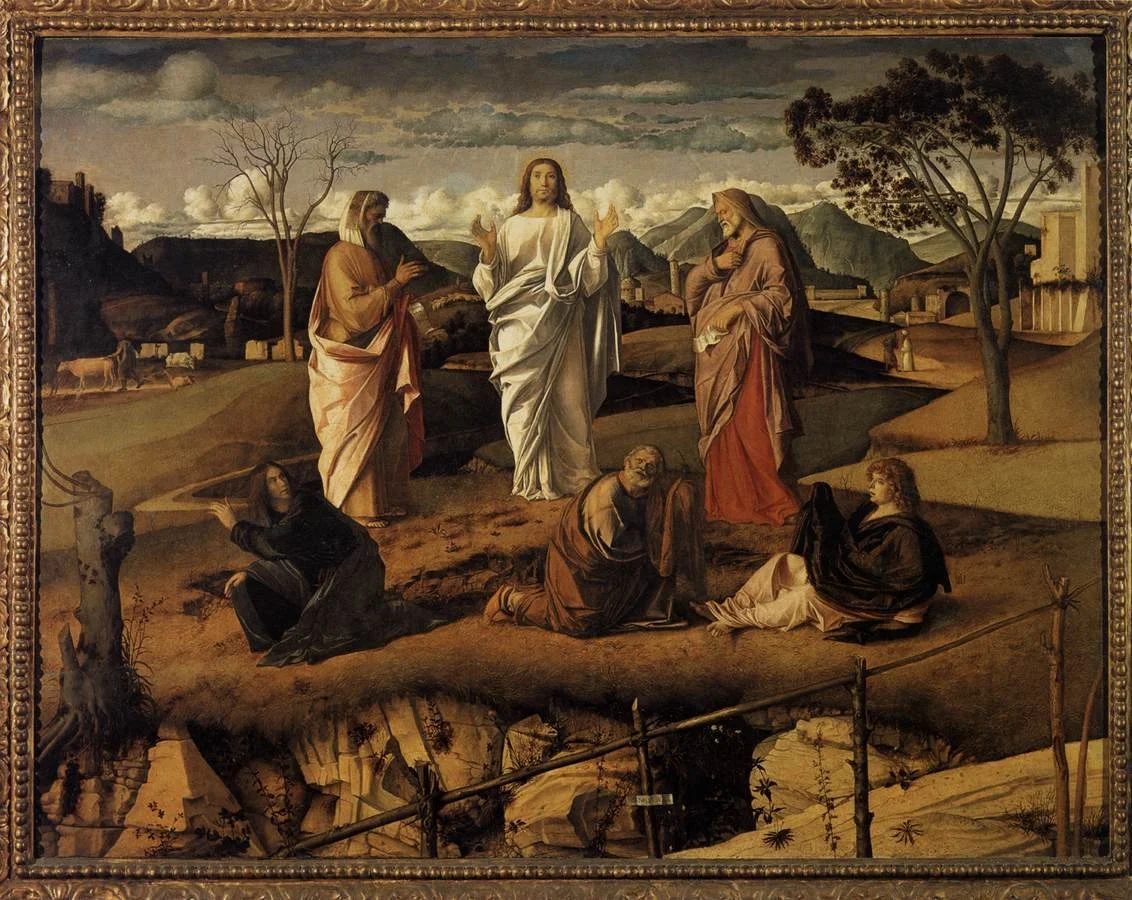
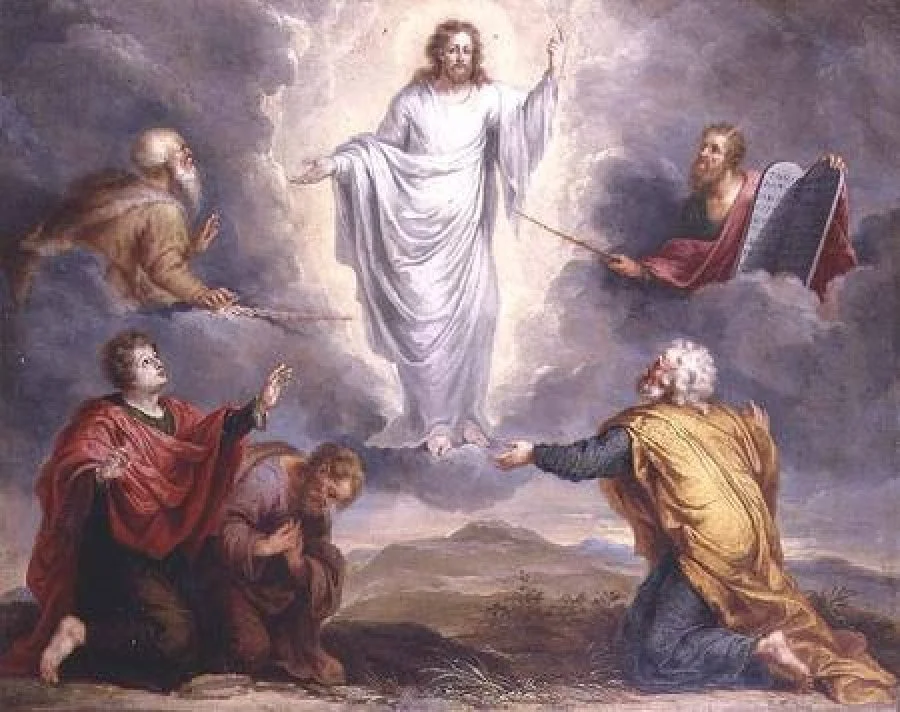
“Jesus took with him Peter and John and James and went up on the mountain to pray. And while he was praying, the appearance of his face changed, and his clothes became dazzling white. Suddenly, they saw two men, Moses and Elijah, talking to him…Just as they were leaving him, Peter said to Jesus, “Master,.. let us make three dwellings, one for you, one for Moses, and one for Elijah” ..While he was saying this, a cloud came and overshadowed them; ..Then from the cloud came a voice that said, “This is my Son, my Chosen; listen to him!”— Luke 9:28-36
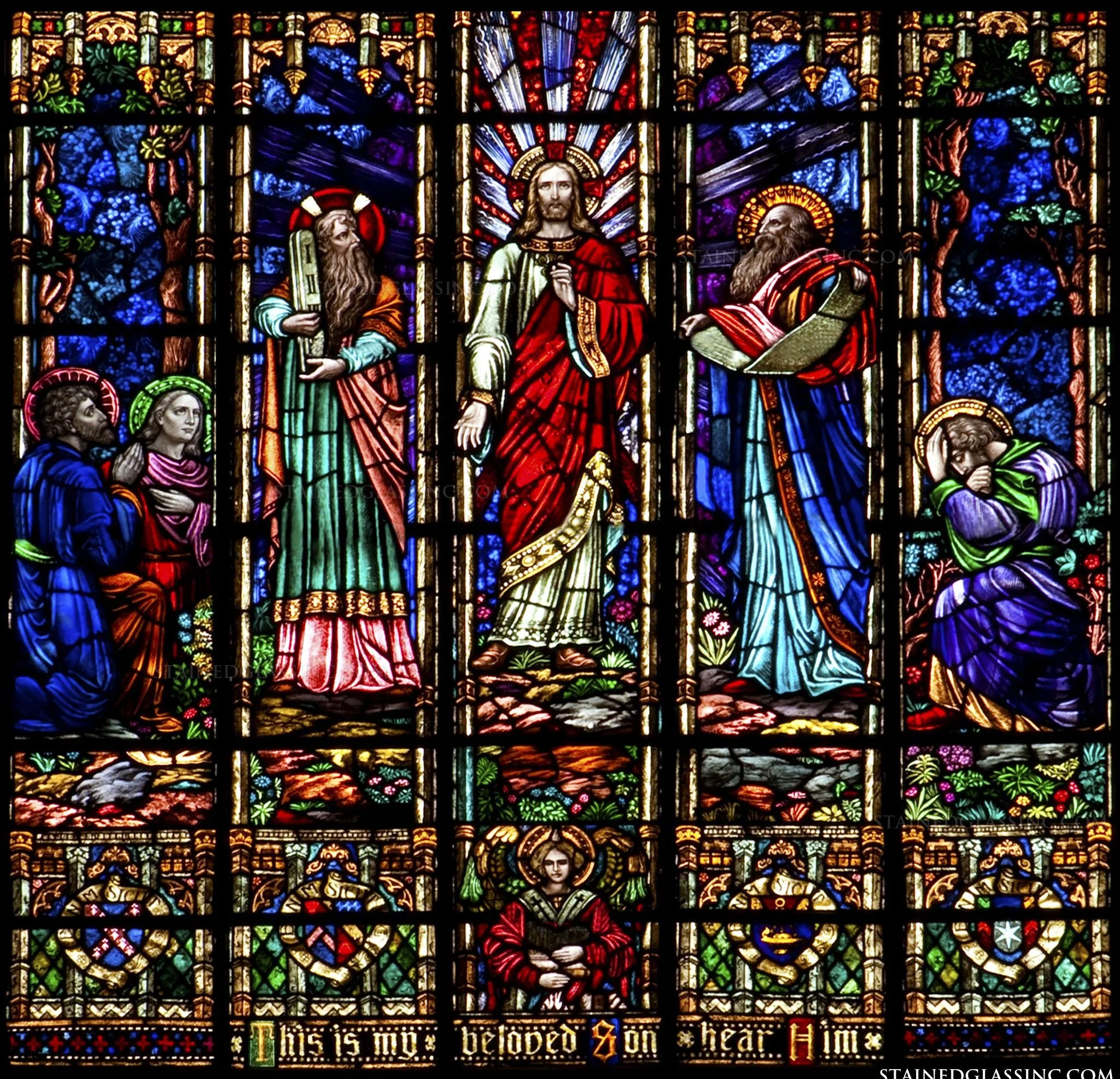
Yesterday, we celebrated the Feast of the Transfiguration, where we listened to the story of Jesus being revealed on a high mountain to three of his disciples as the incarnation of God. Anyone in 12-step recovery can identify immediately with transfiguration, seeing the light, a moment of clarity, and encountering the God who has been there all along within us and others. Still, we never saw this before because we were too busy making “dwellings” for other idols, alcohol, food, drugs, work, etc.

Moments of transfiguration occur when we are transported from a deep unconscious sleep to a moment of conscious bright light when we see, feel, taste, and touch God’s presence. Transfiguration is about experiencing our true nature, the part of God inside ourselves and others. It is the moment when the veil of all else starts to fall away, and we connect to the presence of God within us, and eventually desire to turn our life and our will over to the care of God. That is the moment when we let go and let God.

Richard Rohr believes we cannot see God in others until we first see God within ourselves. That moment of clarity speaks from within us that we are better than the life we are leading. So, recovery is seeing that spark of God first within ourselves, which leads us to see God in others. We encounter the person who once annoyed us and caused us to harbor resentment, and we begin to notice a tiny glimpse of the face of God in our neighbor, and we can possibly respond in love./

“If we want to find God, then connect to God within ourselves, and we will always then see God beyond us. For it is only God in us who knows where and how to look for God.” 1
Frederick Buechner reminds us that as we see God within ourselves, we then begin to see God in situations we never saw before: “the face of a man walking his child in the park,  a woman picking peas in the garden,  sometimes even the unlikeliest person listening to a concert, standing barefoot in the sand watching the waves roll in, or just sitting with friends at a Saturday football game in September. Every once in a while, something so touching, so incandescent, so alive transfigures another human face that it’s almost beyond bearing.” 2
If you are having difficulty seeing the face of God, stop for a moment and look at our young children. God’s presence seems to burst forth from them. I have been overwhelmed by a heavy dose of God’s presence this week in the 90 children at our Vacation Bible School at Saint Mark’s.
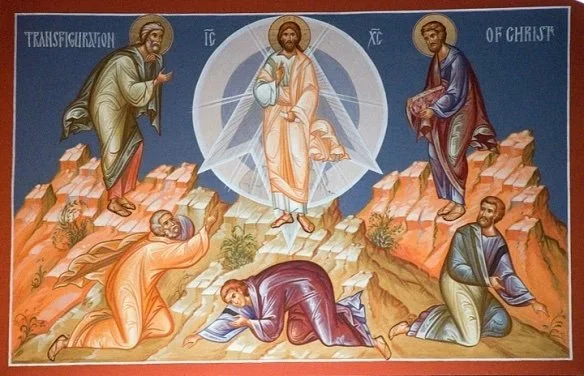
Transfiguration is the message and the promise of recovery, seeing the face of God first in ourselves and then in others. Each day, we celebrate the transfiguration that recovery continually brings to our lives and the face of every person we encounter. Transfiguration is a daily living reality.

1 Richard Rohr Adapted from The Naked Now: Learning to See as the Mystics See (The Crossroad Publishing Company: 2009), 159-161.

2Frederick Buechner in Whistling in the Dark (HarperSanFrancisco 1988), p. 120.
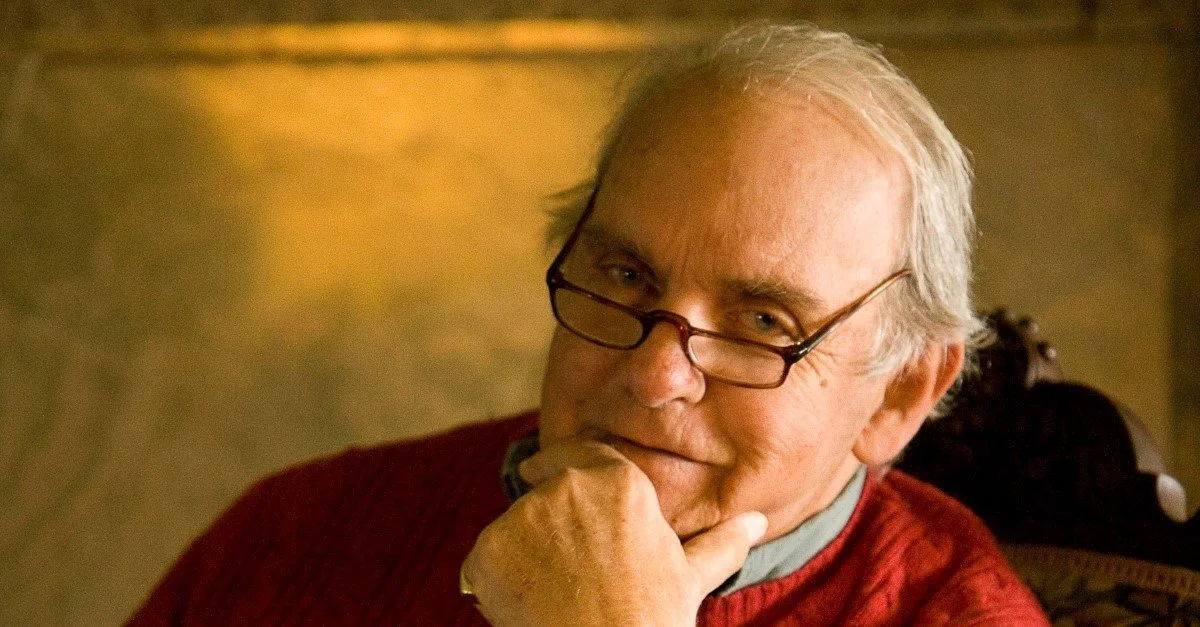
 

Frederick Buechner's Thoughts on Life After Death

Frederick Buechner: Life After Death

Guest Writer: Larry Burton

“So, what do you think about life after death?”

  As an Episcopal priest, I have heard that question, or others like it, more times than I care to count. I’ve come to think that the Resurrection event may not cover the question of what happens when we die like I would have thought it did. “But,” a friend said, “that was Jesus. This is me.”  Fair enough.

A group of us has been reading Frederick Buechner’s A Crazy, Holy Grace. Buechner, who died at age 96 in 2022, was a prolific author and theologian many of us greatly admire. In part of this book, he imagines a conversation with his beloved grandmother, who has been dead for more than forty years. She tells him that death is like stepping off a trolley car. However, life doesn’t stop but instead continues to a deeper understanding of God’s grace and love. That imagined conversation stopped me in my tracks.

For most of my life as a theologian, I have thought (and taught) something similar, but it was far more abstract and ultimately not entirely satisfying. Buechner has his grandmother put humanity on my abstractness and offers an image of continuity in God that, as I said, stopped me flat. Did I believe what I had been teaching? Yes. No question. But now, the abstract has taken on a form that both challenges and delights. 

So, I had my own conversation with my preacher father and stepmother. Both are dead. But they were delighted to talk with me. “Sorry you had to wait so long to understand,” Dad said after I told him about Buechner’s book. (My father was a Buechner fan, so he was way ahead of me. My stepmother added her two cents worth: “I always thought suddenly I’d ‘get it,’ but it didn’t happen that way. There are always new layers or new heights, and my heart! My heart just continues to open wider and wider.”

My words in their mouths? Or their words in my mouth? Buechner’s grandmother challenges her grandson, just as I am challenged. Buechner’s primary point is that memory can be an incredible portal into the wonders of God. So, what do I think about life after death? I am more convinced than ever that, as a beloved child of God, access to the reality of God’s love is far more cosmic, mysterious, and wondrous than I had imagined. It is more than Resurrection; it is a continuing transformation moving toward God’s very heart.

Larry Burton

Joanna https://www.joannaseibert.com/

Frederick Buechner’s birthday was last month on Monday, July 11th. (Also, Stuart Hoke’s birthday. Also, the Feast day of St. Benedict)

Walking in Someone Else's Shoes

 Walking in Someone Else’s Shoes

“Within the best of us, there is some evil, and within the worst of us, there is some good. The person who hates you most has some good in him; even the nation that hates you most has some good in it; even the race that hates you most has some good in it.

 And when you come to the point that you look in the face of every person and see deep down within what religion calls ‘the image of God,’ you begin to love in spite of. No matter what the person does, you see God’s image there.”—Martin Luther King, Jr., in “Loving Your Enemies,” sermon at Dexter Ave. Baptist Church, Montgomery, Alabama, 1957.

I once worked with another physician, whom I thought was incompetent. I felt her decisions did not make sense and were not helpful. She often talked almost in riddles, trying to look at many sides of a question, while I already thought there was an obvious answer that, beyond question, was right. Moreover, she was amazingly slow to make any changes.

One weekend, I had to cover her job while she was on vacation. Overnight, I realized why she behaved as she did, the magnitude of her responsibility, and the endless number of real and imagined problems presented to her. I walked in her shoes, and it made all the difference.

Placing myself in her shoes led me to see God’s image in her and others, whom I had previously found difficult to understand.

A story also circulates that someone asked Mother Teresa the question, “How do you stand it when you have to serve some truly despicable person?” With a sigh, she replies, “I look deeply into their eyes and say to myself, ‘My Jesus, what an interesting disguise you are wearing today.”’Deborah Sokolove, Seekers Church, “Weekly Gospel Reflection,” Inward/Outward.com, Church of the Saviour.

This is also how Benedictine Spirituality calls us to see others. It is called radical hospitality. We are to look for the light of Christ in others. Often, if we are having difficulty with others, it is because we are having trouble finding the light of Christ, our God hole in ourselves. We have strayed from our path of staying connected to God in our own lives. We have lost the “light” in our lives that directs us to the light in the lives of others.

Having difficulty with others is always a “stop sign” to try to find the light of Christ within ourselves, and maybe even ask someone else for help. Walking in someone else’s shoes is always a good starting point in seeing others in a new light.