Sacraments, Meditation, and Thin Places

  Meditation and Sacraments and Thin Places
Dissolving the Membrane Between the Spiritual and Actual World

‘If you compare the mind to a balloon, meditation as a religious technique is the process of inflating it with a single thought, to the point where the balloon finally bursts, and there is no longer even the thinnest skin between what is inside it and what is outside it.”—Frederick Buechner— in Wishful Thinking.

Buechner’s thoughts on spirituality take us out of the box. Indeed, in meditation, we hope to enter that thin place where the spiritual and the actual worlds are only a thin layer away. Buechner tells us that meditation can dissolve and break that membrane wide open, so no barrier exists. That especially happens when we see Christ in our neighbor, and our neighbor sees Christ in us.

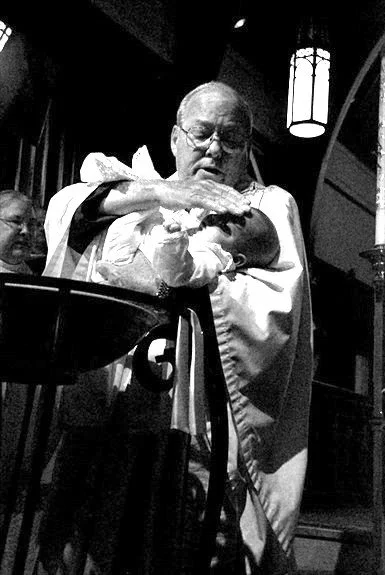
This explosion occurs when we see the sacredness in the secular world, honor every human being, and care for “this earth, our island home.” That barrier is often broken in the sacraments, especially Eucharist and Baptism. We recently saw it at our church at the baptism of three adults, but this mystery also happens with infant baptism. Earthly holiness breaks through, all wet, sometimes with screaming.

I like the balloon bursting, because we never know when it will happen. Balloons, like meditation practices, come in all sizes and colors. Some balloons do not seem to burst. Some break with little effort. Again, it is a mystery.

Breaking a balloon can also produce chaos. Yet, that is where God most often meets us—and creation begins.


Moving Against the Current

Going upstream

“We are very reasonable creatures, but to feel the grace of God, one must forget about reason and go on a pilgrimage to a place where we no longer ‘see as through a glass darkly,’ to a place where we can see with eyes of gratitude, rather than with eyes of conquest.”—George Grinnell in A Death on the Barrens.

Barge on the Mississippi near Natchez. Mary Seni

I remember sitting recently by the Mississippi River near Memphis, watching barges travel slowly upstream on a cold, windy late December morning.  The few dog walkers and runners along the shore move faster than the endless barges churning white water as they move against the current.

The barges are pushed by towboats or tugboats, which are identified by their flat or V-shape hulls. Some covered barges traveling upstream ride high on the water. They must be empty, but are still straining to travel upstream to be filled more inland on the banks of this mighty river. They move slightly faster than the full barges.

Barge on the Mississippi at Memphis

I wonder where their destination is. St. Louis? What are the filled barges carrying?

I hope to remember these barges slowly being pushed upstream against the current. I enjoy leading my life more easily, moving downstream, going with the flow, and not making waves.

Sometimes, however, I am called to go against the crowd and navigate upstream. It will help if I remember that the journey is easier when I travel lightly, not taking myself so seriously, not carrying a lot of my baggage, and not being on a right-or-wrong quest, but just speaking my truth.

The barges teach us that the journey upstream always moves more slowly than the journey downstream. Moving upstream means speaking our truth against the current culture. I pray that the boat pushing us upstream is the Holy Spirit, not our own ego. Grinnell also reminds us that a heart of gratitude can help discern our path and motives and keep us connected to that greater power, leading us on this more difficult journey.

Plain Speaking and Writing and Hymns and Water Coloring

Plain Speaking*

Guest Writer and Artist, Ken Fellows 

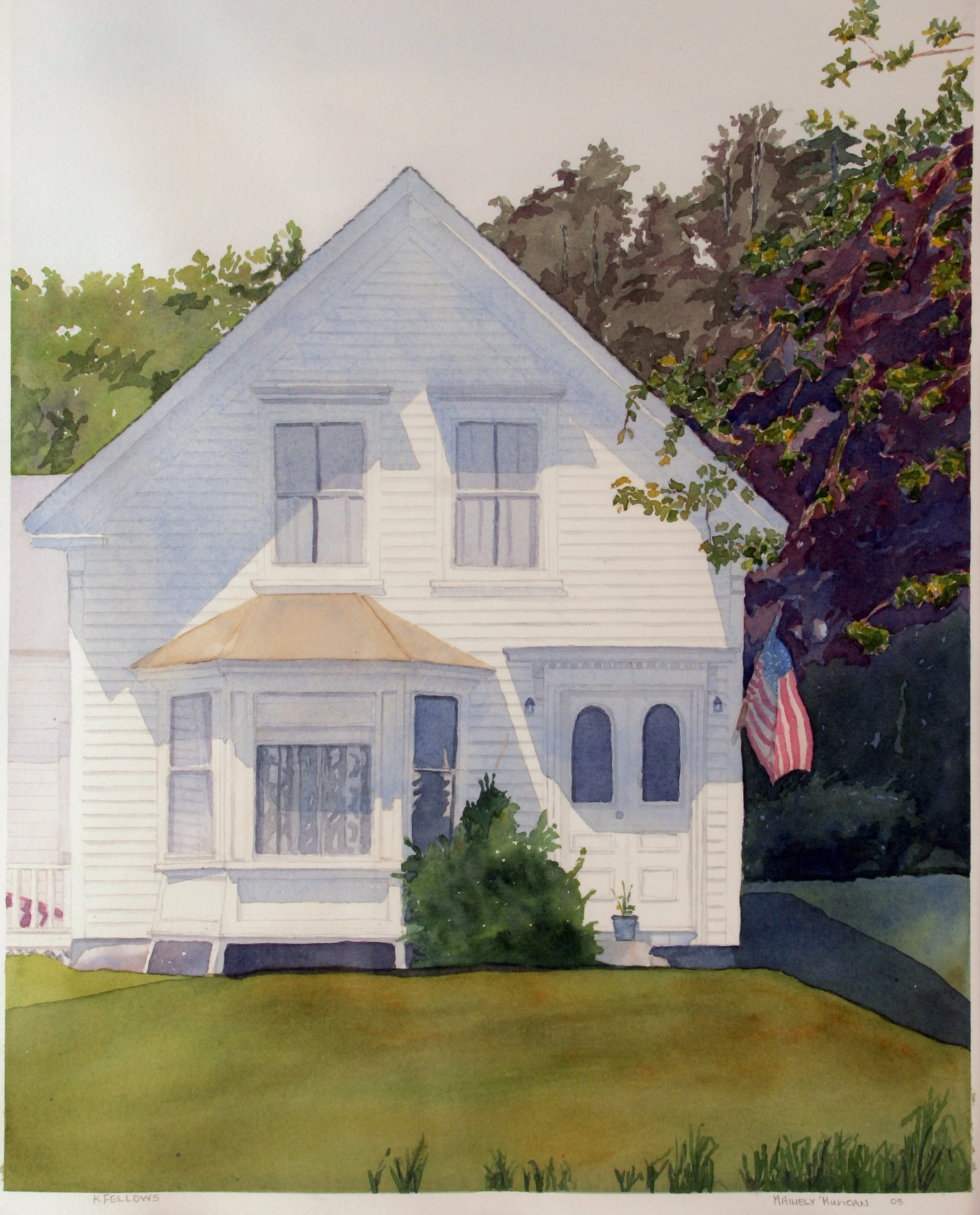
Stonington House

     Communication is the transmission of thought –and we should do what we can to reduce confusion and not introduce new barriers to understanding. We should all write the exact manner that we speak, and it isn’t all that hard once you get the hang of it. Gustave Flaubert, the French novelist, said: “Whenever you can shorten a sentence, do. And one always can. When we speak, we almost always avoid compound sentences. It is only when we write that we swell up and get pompous …. lawyers and doctors more so than most.”


     Many years ago, Stinnett came into possession of a book called The Art of Readable Writing, by Rudolf Flesch, and was captivated by two points it made. One was a list of “empty” words ---participles, prepositions, conjunctions, adverbs –that had worked their way into language and made up more than 50% of all commonly used words. The list included “for the purpose of” (for), “for the reason that” (since, because), “in order to” (to), “in the neighborhood of (about), “with a view to” (to), “with the result that” (so that), and a few dozen more, all enemies of simplicity and clear speech.


     Flesch’s other thing was his vigorous defense of an author’s ending sentences with a preposition, which he said unfailingly turned stiff prose into idiomatic prose. Stinnett added that he personally likes a good prepositional ending and was delighted to read that the President of the National Council of Teachers of English had said that “a preposition is a good word to end a sentence with.”


     Stinnett’s own concern over abuse of the English language came at an early age when his mother took him each Sunday to St. Luke’s Episcopal Church in a small Virginia town. A popular hymn at the time went, “And He walks with me, and He talks with me, and He tells me I am His own.”

Stinnett wrote he never cared for the hymn because he never knew who Andy was, although he thought about him a lot, searching for clues.


     Peter DeVries, the novelist, must have suffered a similar bewilderment as a child. In one of his books, he wrote that he first  heard a hymn called “Oh, What a Cross I Bear.” What was so unusual, he wondered, about a cross-eyed bear that a hymn should have been written about it?


*Excerpted from “Get Me a Translator” by Caskie Stinnett in his book: Slightly Off Shore


Ken Fellows

Joanna Seibert joannaseibert.org