Silence, Waiting for Dolphins, Chant

Silence, Waiting for dolphins, Chant
“When chant music stops, sometimes quite abruptly, an audible silence reverberates throughout the room, especially in the high arches of the oratories in which it is sung...If we listen carefully, we discover that chant inducts us into this silence that is the ground of our being.”—David Steindl-Rast, O.S.B., The Music of Silence.

We sit silently on a balcony overlooking the Gulf in the early morning, watching, waiting for the sunrise and the dolphins to make their first run. Then we wait for a line of pelicans to sweep silently by.

The rhythm of the waves is like a heartbeat. Today, it is a slow heart rate. At home in Arkansas, when the weather is warmer, we sit with our son and his family on his back deck as the sun sets behind the trees of his backwoods, and wait for the hummingbirds to come and feed before they finally rest for the evening.
Nature seems to call us to wait, to wait. Our heartbeat slows. Our bodies seem to connect to something greater than ourselves. Our mind wants to repeat Julian of Norwich’s famous words, “And all shall be well, and all shall be well, and all manner of things shall be well.”

We are ready for whatever comes. We think. Maybe. The dryer stops working. We know who to call for help, and we wait again for the repair workers to arrive. We pray to take time between tasks and breakdowns.

What do we do between sunrise, dolphin, pelican, sunset, and hummingbird times?
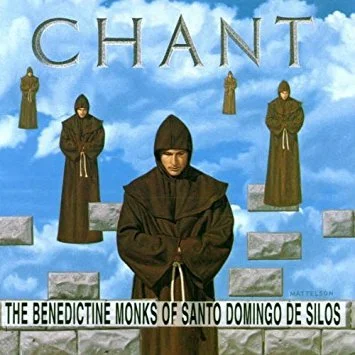
Another suggestion is to wait for the heartbeat of the music, especially the “silence between the notes” of the Gregorian chant. One of the earliest popular versions is CHANT by the Benedictine monks of Santo Domingo de Silos.
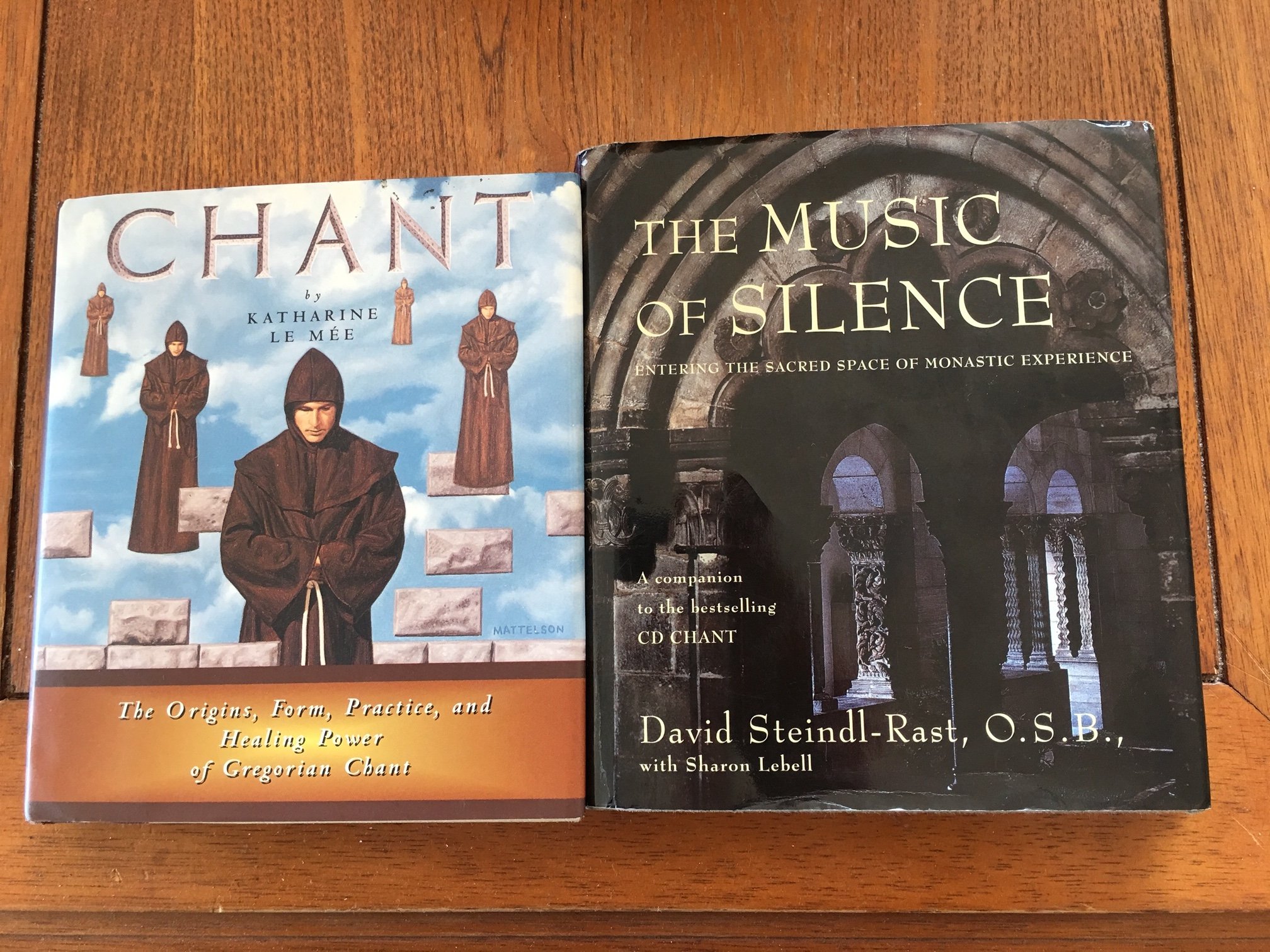
 If you get “hooked,” you can read their companion book, The Music of Silence, by Brother David Steindl-Rast, O.S.B., which may lead you to a desire to follow in some form the canonical hours or seasons of the day. Another book is simply called CHANT, by Katharine Le Mee, which explains the origins, form, practice, and healing power of Gregorian Chant.

It is incredible where silence can lead us!

Joanna https://www.joannaseibert.com/
 

Benedictine Life

Benedictine Life

“Listen carefully, my child, to my instructions, and attend to them with the ear of your heart.”— Prologue to Rule of Benedict.

In the 6th century, Benedict of Nursia tried to follow a spiritual path on his own and realized he had to do so in community. From his awareness, we now have the Rule of Benedict, a way to find and follow God in community, balancing work, study, sleep, worship, prayer, and recreation. Members of Benedictine monasteries have used this rule for centuries.

Today, people are developing ways to follow a rule as they live in the secular world, still connecting in community with spiritual friends and spiritual directors.

This prologue to the rule is my favorite part. “Listen with the ear of your heart.” This is the call to the spiritual life, a way to live in the world still connected to God. First, we are to listen and pay attention. We are to use the ear of our hearts. We are to connect to something outside ourselves, hearing and loving. We hear about and learn from love in a community outside ourselves.

There are many outstanding books about the Rule of Benedict. I will share three favorites, but I would like to hear from others about the books that have been most helpful as you try to find your rule of life.

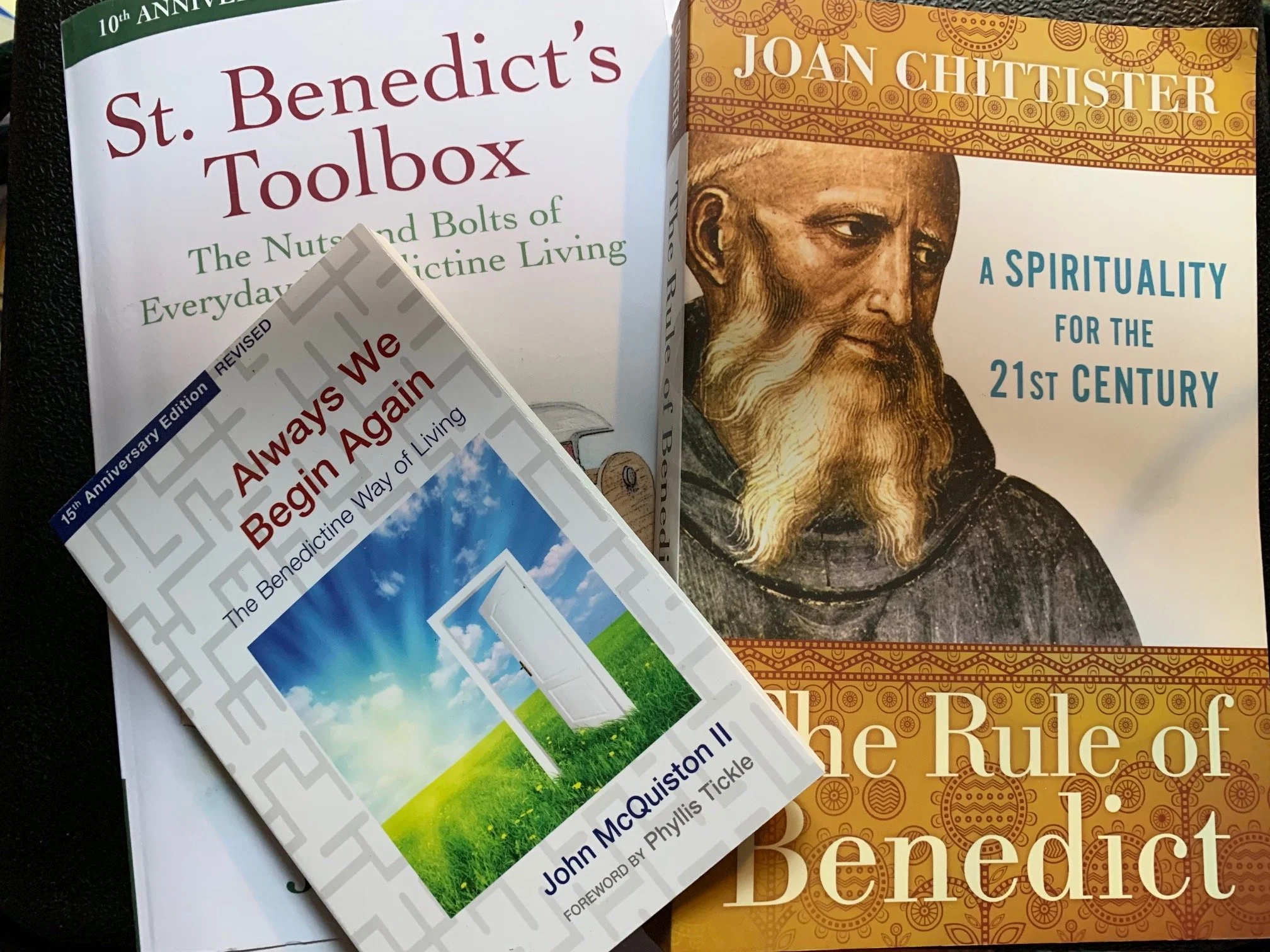
The Rule of Benedict, A Spirituality for the 21st Century, by Joan Chittister, is used by the International Community of Hope to train lay pastoral caregivers, immersing them in Benedictine spirituality. Joan Chittister writes a short meditation after each part of the rule and applies it to everyday life.

Always We Begin Again, The Benedictine Way of Living is a pocket-sized book someone can carry daily. Memphis lawyer John McQuiston II wrote this modernization of Benedict’s Rule and included a sample rule of life.

St. Benedict’s Toolbox is precisely what the author, Jane Tomaine, calls it in her subtitle, The Nuts and Bolts of Everyday Benedictine Living.

All three books are outstanding to read together in community, learning and supporting each other.

Joanna https://www.joannaseibert.com/

Walking Meditation

Walking Meditation: Thich Nhat Hanh

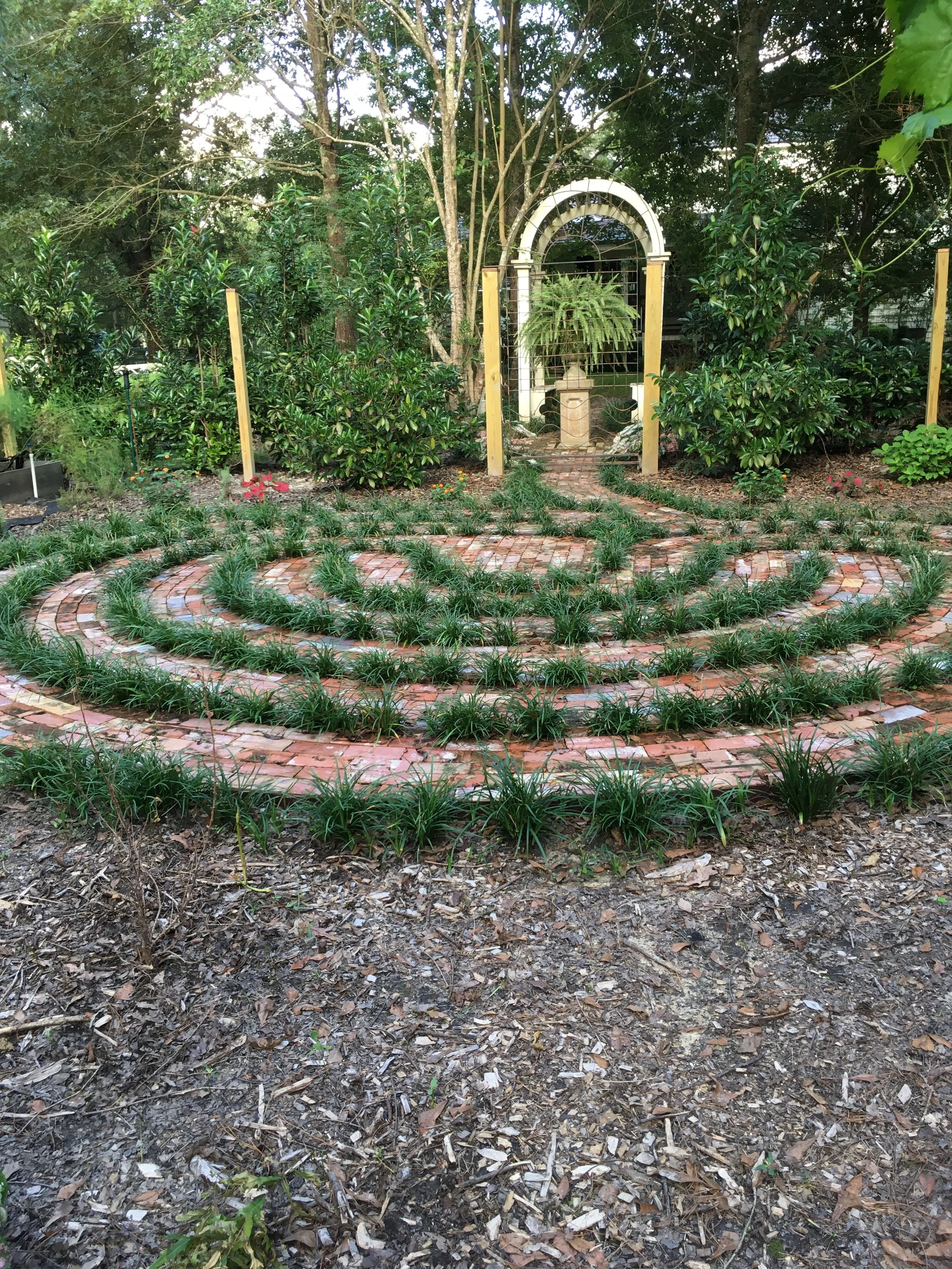
Murfee Labyrinth

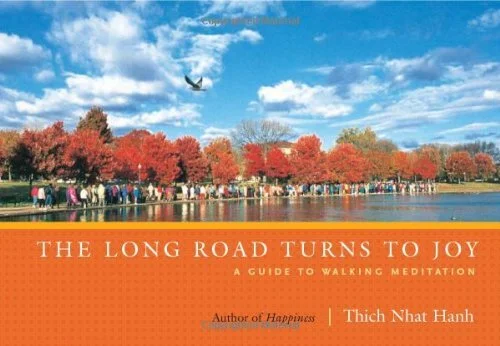
“People say walking on water is a miracle, but to me, walking peacefully on the earth is the real miracle. The Earth is a miracle; each step is a miracle. Taking steps on our beautiful planet can bring real happiness.

As you walk, be fully aware of your foot, the ground, and the connection between them, which is your conscious breathing.”Thich Nhat Hanh, The Long Road Turns To Joy, a Guide to Walking Meditation.

For many years, I would walk around the block in my neighborhood for twenty minutes before going to work at the hospital. The quiet walk calms the committee meeting in my head. Putting my feet on the earth, even the pavement of the street, appears to reconnect my head to my body as I become “grounded.” When I am outside, I always realize there is a world more significant than the one I live in.

There is a power greater than myself. I have trouble meditating by simply sitting, but some movements, such as walking, can lead me into that meditative journey. The Vietnamese Buddhist Thich Nhat Hanh is one of the most well-known meditative walkers. This pocket-sized book contains simple mindfulness exercises to think about as we walk.

Thich Nhat Hanh introduces us to several methods of following and listening to our breath as we walk. My pattern became to breathe in on the right foot and breathe out on the left. This was similar to walking the labyrinth and paying close attention to the path. In mindful walking, as I stayed with my breath, I saw no more rooms available for that committee to meet in my head.

Thich Nhat Hanh compared walking to eating, nourishing our bodies with each step. With each step, we massage the Earth. When the baby Buddha was born, he took seven steps, and a Lotus flower blossomed under each step. Thich Nhat Hanh suggests we imagine a flower blooming with each step.

We can also practice mindful walking anywhere, between meetings, in hospitals, at airports, and when walking to your car. The Buddhist monk also offers several poems to recite while walking: “I have arrived, I am home, in the here, in the now. I am solid. I am free. In the ultimate, I dwell.”

Joanna. joannaseibert.com