Hillesum: Finding Answers in Emotional Difficulties

Hillesum: Finding Answers in Emotional Difficulties

“Thinking gets you nowhere. It may be a fine and noble aid in academic studies, but you can’t think your way out of emotional difficulties. That takes something altogether different. You have to make yourself passive then and just listen. Re-establish contact with a slice of eternity.”—Etty Hillesum in An Interrupted Life, Daily Quote, June 29, 2018, Inwardoutward.org, Church of the Saviour.

Etty Hillesum, a Jewish writer who died during the Holocaust, shares her formula for finding a way through difficult emotional situations. Those who make decisions using their thinking (T) function, what is reasonable, will probably disagree. Considering the importance of relationships, those who make decisions using their feeling (F) function may agree with Hillesum. They both are right. We need both thinking and feeling when making decisions.
Looking beyond personality types takes us to another level. Hillesum is trying to tell us to let the committee in our heads rest by whatever means we use: reading, meditation, music, walking, praying, writing, or just being. She tells us to connect with the God within us, especially after the silence that follows our spiritual practice. Jake Owensby also recently wrote about Hillesum and her experience of feeling God’s presence.1  He reminded us that hope in times of great difficulty is not a spiritual achievement on our part.

We do not generate hope with our practice. Instead, spiritual practices open us to the source of hope: to the God who is always already present to us and with us.

 We are to try to find an answer from something greater than ourselves, our God who is always beside us. We may not know the exact answer. We will recognize it because we know it will have something to do with love.

1 Jake Owensby in “A Hope-Shaped Life,” The Woodlands: A Place for Exploring the Spiritual Life, February 13, 2026.

Joanna  joannaseibert.com   https://www.joannaseibert.com/

 

Charleston: Stll Being Watched Over By Those Who Have Gone Before Us

 Charleston: Watched Over

“They are watching over you, the ones who have gone before, the ones who know you best, the spirits of a love that never dies, your ancestors of hope and courage, those bright souls who shaped your life and gave you life and showed you what life really was.”—Bishop Steven Charleston, Daily Facebook Page.

I know I am watched over by loved ones who have died. I do not doubt it. There are times when I can do things I know I could never do alone, without help and care from others.
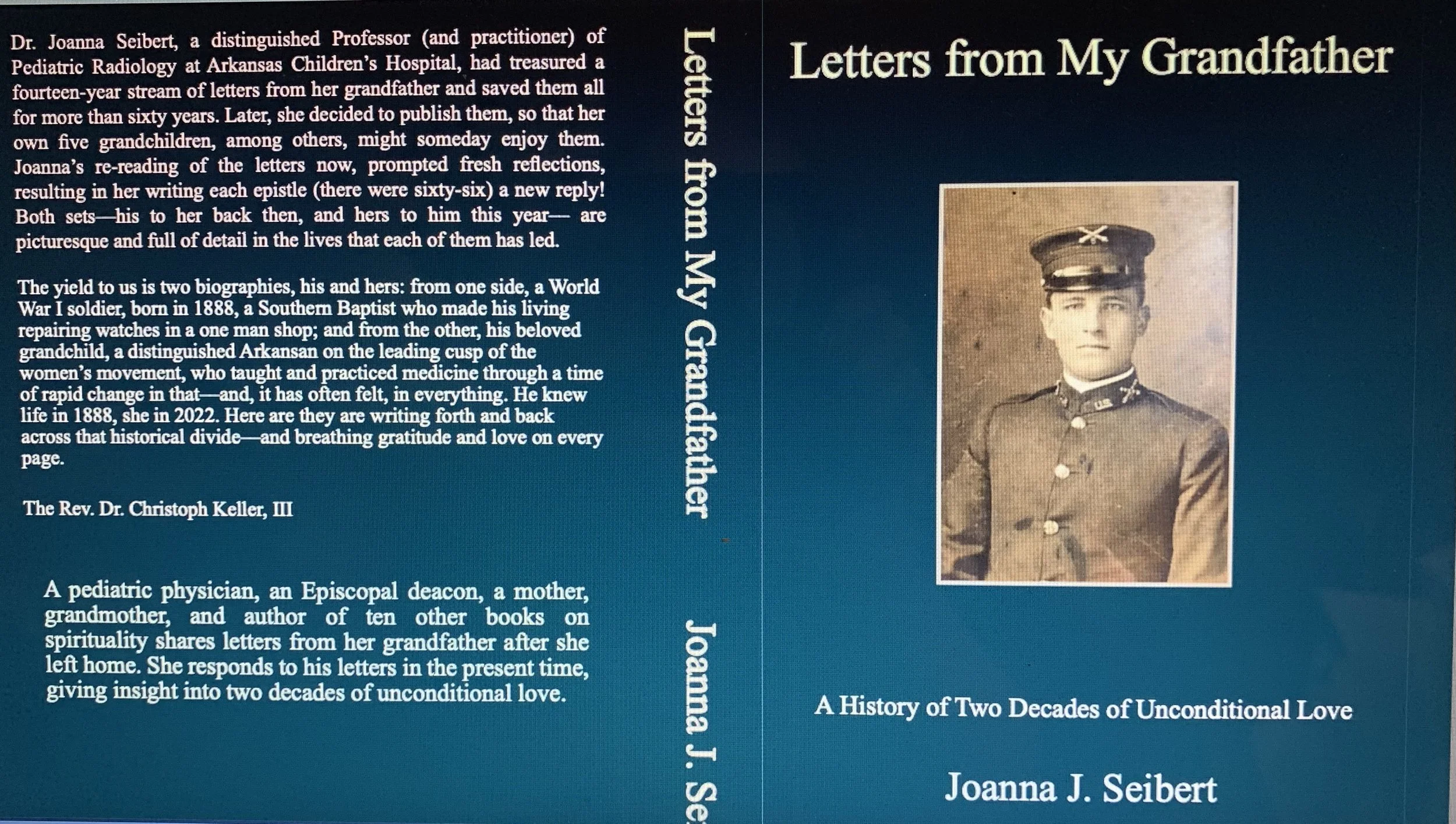
My grandfather was the most significant person who taught me about unconditional love in my growing-up years. When he died, I was devastated. I wanted to do something to honor him. I knew he did not like my smoking. I had tried to quit many times without success. Quitting smoking for me was a spiritual experience. I have not had a cigarette since December 7, 1979, the day of my grandfather’s funeral. I have written a book about how my grandfather loved me while he was alive, and saved my life after he died—Letters from my Grandfather, A History of Two Decades of Unconditional Love.

One New Year’s Eve, I walked the labyrinth at Christ Church. It was a cool evening, and I wore a long black shawl with fringes like the ones you sometimes see over pianos. Suddenly, during the walk, I felt my grandmothers holding and surrounding me like the shawl I was wearing around my shoulders.

This weekend, I dreamed of receiving a letter from my former spiritual director, Peggy Hayes. I knew it was from her because of the address and writing, but I woke up before reading the handwritten message on the short, folded-up letter. My prayers have been asking what was in the letter. I plan to ask my dream group about it this morning.

Joanna https://www.joannaseibert.com/


Transfiguration on the Last Sunday of Epiphany

Transfiguration and Last Sunday of Epiphany

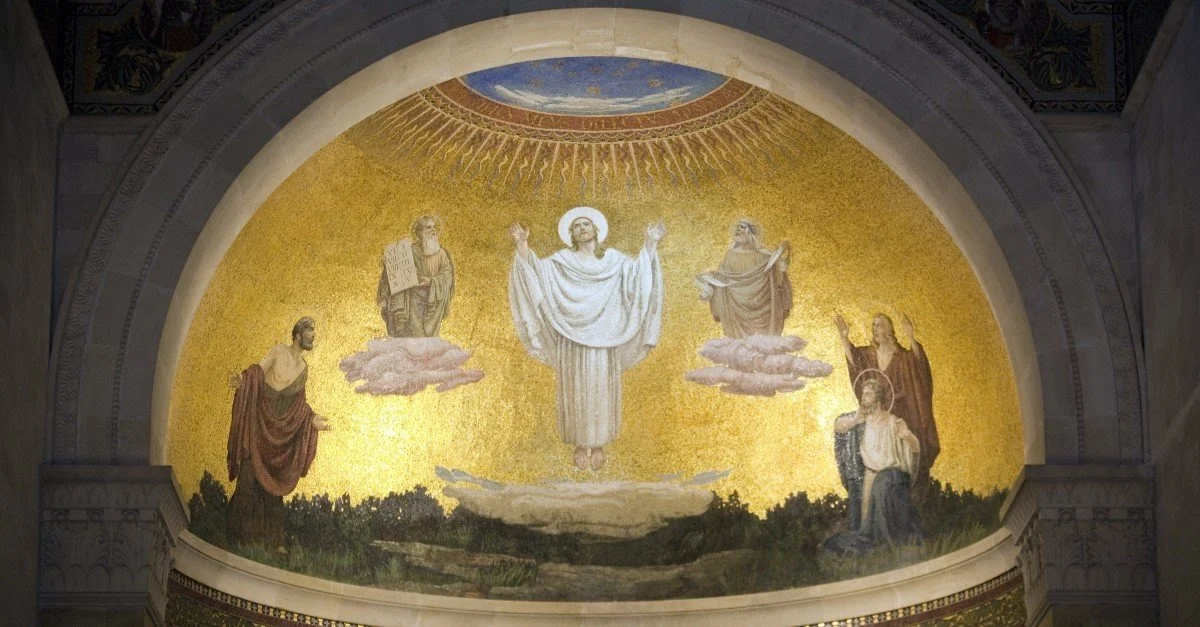
Church of Transfiguration Mount Tabor

"If we want to find God, then honor God within ourselves, and we will always see God beyond us. For it is only God in us who knows where and how to look for God."­—­­ Richard Rohr Adapted from The Naked Now: Learning to See as the Mystics See (The Crossroad Publishing Company: 2009), 159-161.

Today is the last Sunday of Epiphany, where we say goodbye to Alleluia and prepare for Ash Wednesday and the first day of Lent. On Sunday, we hear the story of the Transfiguration of Jesus when he is revealed on a high mountain to three of his disciples as the incarnation of God. Anyone in 12-step recovery can immediately identify with transfiguration, seeing the light, a moment of clarity, encountering the God who has been there all along within us. Still, we never saw the light within because we were busy making "dwellings" for other idols, alcohol, food, drugs, work, etc.

Moments of transfiguration occur in our lives when we are transported from deep unconscious sleep into conscious awareness, when we see, feel, taste, and touch God within. Transfiguration is about experiencing our true nature, the part of God inside ourselves. It is the moment when all else falls away, and we are simply of God and desire to turn our life and our will over to the care of God. It is that moment when we let go and let God.

Richard Rohr believes we cannot see God in others until we first see God within ourselves. So, recovery is seeing God first within ourselves, which leads us to see God in others. We encounter the person who once annoyed us. We notice a tiny glimpse of the face of God, and our only response is now love.

Frederick Buechner reminds us that as we see God within ourselves, we begin to see God in situations we never saw before: "the face of a man walking his child in the park, a woman picking peas in the garden, sometimes even the unlikeliest person listening to a concert, standing barefoot in the sand watching the waves roll in, or just sitting with friends at a Saturday baseball game in July. Every once in a while, something so touching, so incandescent, so alive transfigures the human face that it's almost beyond bearing." 1

Transfiguration is the message and the promise of a new way of living, seeing God's face in others and ourselves.

God’s presence is always there. We only have to open our eyes, our ears, our minds, and our hearts to see the ever-present God, as did the disciples that day.

Today, we are gathered online across many miles to celebrate the new eyes that transfiguration continually brings to our lives and to the face of every person we encounter.

1Frederick Buechner in Whistling in the Dark (HarperSanFrancisco 1988), p. 120.

Joanna. joannaseibert.com. https://www.joannaseibert.com/