Slow Down and Waiting

Slow Down: Waiting

“When I am told that waiting seems to belong to the heart of the spiritual life, I’m not pleased, for I want answers, direction, clarity—and I want them pronto.”—Robert Barron, “What Are You Waiting For,” in U.S. Catholic, Dec 2003.

  Barron starts with that old joke about the pilot, who announces he has good and bad news. “The bad news is we are totally lost. The good news is we are making excellent time!”

My experience is that spiritual friends initially come to talk because they are consciously or unconsciously in some pain and, like the rest of us, seek relief and answers, hopefully very soon. We soon remember times of awareness of staying connected to God, which requires much waiting.
“Those who wait upon the Lord will renew their strength; they will mount up with wings as eagles; they shall run, and not be weary, and they shall walk, and not faint.” (Isaiah 40:31-1) This verse is known to most people and can help us remember about waiting when we are impatient. We will experience times when we fly and walk without feeling tired, but waiting remains a significant part of our relationship with God and each other. 12-step groups talk about not leaving before the miracle happens.

 I have learned a few exercises about waiting as a physician. I would often go to meetings or have patients or other doctors who would keep me waiting. I would have those tremendous ego experiences of “I am very important. You should not keep me waiting. Don’t you know how valuable my time is?” When overcome with these thoughts, I end up mad, arrogant, and testy when the person or group finally comes. This is never helpful for the interaction.

Gradually, by some miracle, I realized that waiting is an opportunity to pray for that person or group before we meet, or to meditate and calm my soul before the meeting. Waiting becomes a gift from that person, making all the difference in my relationship with those I meet. The same is true about waiting for God.

 Goodness knows God spends a great deal of time waiting for us.

 Of course, centering prayer, meditation, contemplation, and Lectio Divina are also more exercises about waiting.

Spiritual writer Michael Vinson suggests a waiting exercise: remembering times in our lives when we wait, and the miracle comes. For example, we could wait before talking to someone about a situation until we hear the entire story. 

Another spiritual writer, Jane Wolfe, responds to Michael in his blog that God will always give us a nudge when it is time to respond and act after we wait.
 Jane reminds us of Mary giving Jesus that nudge at the wedding at Cana when it was now time for him to do something!

 “Sit and Wait,” Friday Food, jmichaelvinson.com, February 24, 2017.

Joanna joannaseibert.com https://www.joannaseibert.com/
 

Investing in Friendships

Investing in Friendships

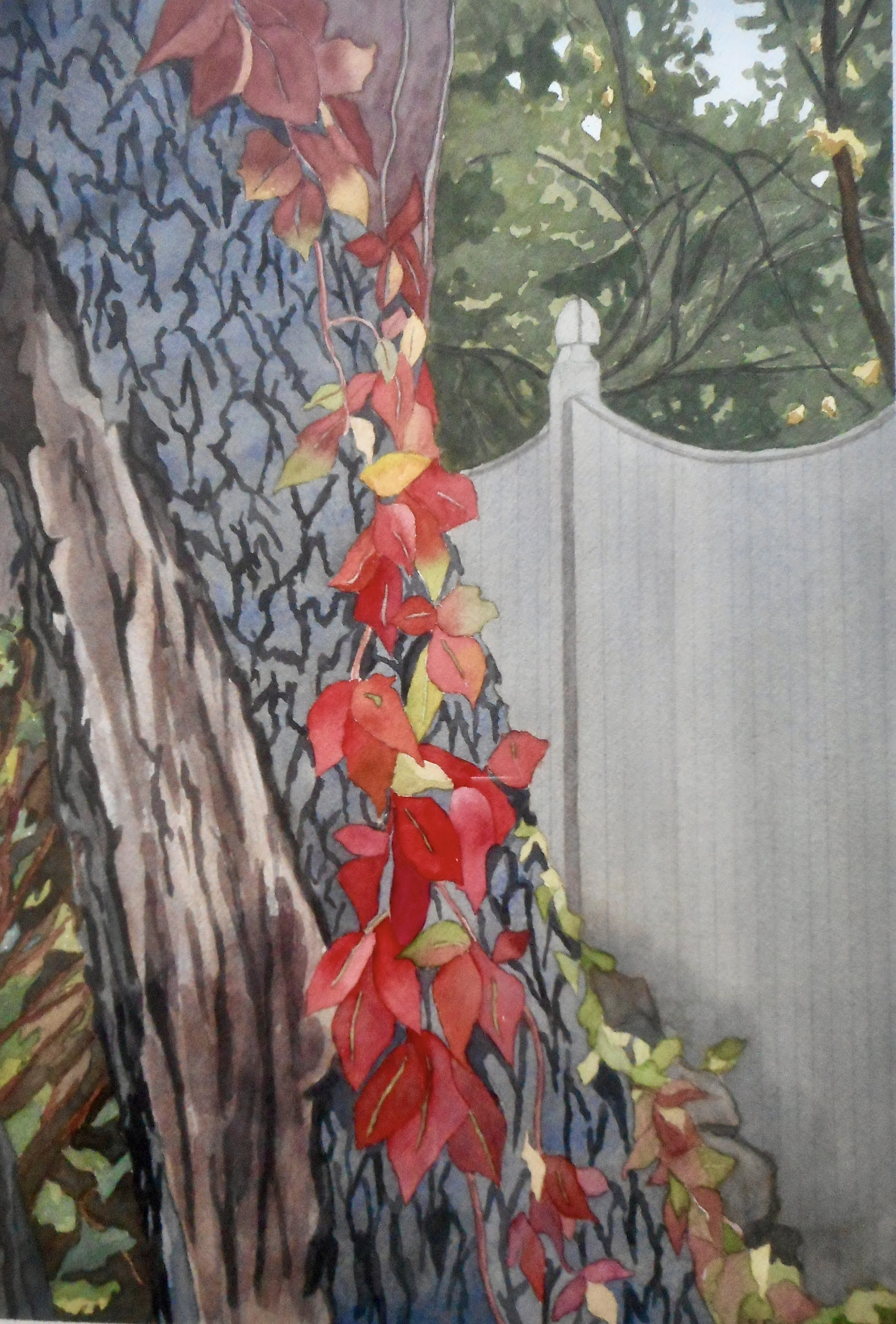
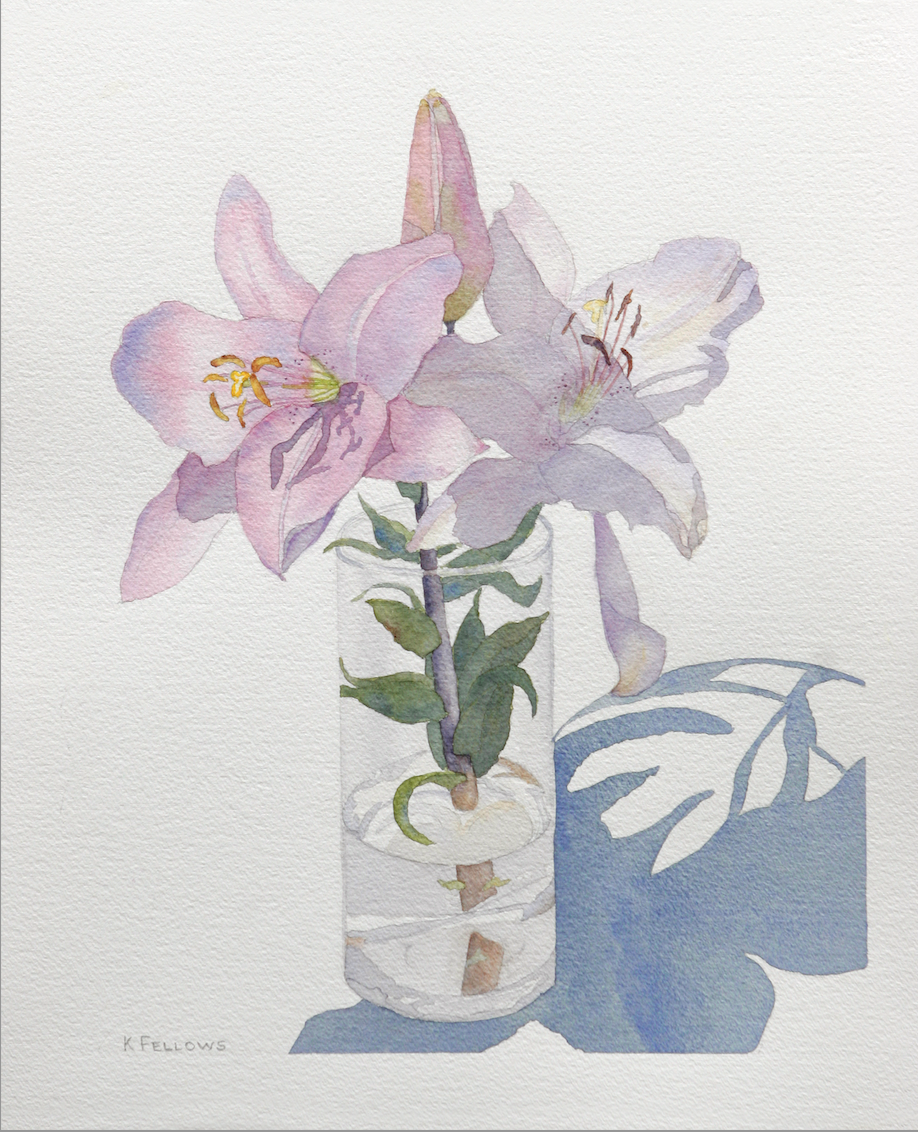
Guest writer and artist: Ken Fellows

      Over a lifetime, many human encounters occur. Some are brief and inconsequential, others intense, fulfilling, and enduring. Some special friendships thrive and compound like invested assets …and then, like investments, slip away from neglect, gaffe, or misfortune. In my 80s now, I often reflect on old friendships as having three stages, much like funds in a bank account: successive periods of accumulation, interest-bearing, and withdrawal.

 Accumulation:  The longest enduring friendships of my life began in my 20s after I became a physician and married. Some were friends from medical school in Michigan –one was a classmate, Dr. Bill G. (convivial med-student turned cardiac physician/researcher), and his family endured as friends and neighbors in Boston for 30 years. Several buddies arose from an intense internship in Oregon, where our mutual dependence was fostered by a year of being on-call every other night. My internship partner from those days was Dr. John W. A year later, we were conscripted into the US Navy together. We then attended each other’s weddings. Despite John’s life being far from me in California, he and I have corresponded and visited for 60 years.

     As an academic physician for 32 years in Boston and Philadelphia, I came to know many intelligent, stimulating, and fascinating individuals. Roy S., a fellow pediatric radiologist at Boston Children’s Hospital, was like a brother for six decades. Similarly, academic medical and personal family connections with colleagues, including Dr. Bob L., the humorous, Irish-bred cardiologist Barry K., and revered pathologists Richard and Stella V.P., have long endured.

     Teaching and lecturing at hospitals and medical gatherings occasionally arose for me across the USA. I also served as a visiting physician at university hospitals in Germany, Switzerland, India, China, and Australia. In many of those visits, I made new friends and revisited colleagues  I had previously worked with in Boston and Philadelphia.

     Another group of friends is the neighbors we’ve gained over many years of owning a retirement home in Kittery, Maine. My association with town committees, local organizations (particularly the Kittery Land Trust and local York Hospital), and public gatherings (for memoir writing, watercolor painting, and book groups) has provided several other good friends; in two instances, particularly close bonds began and still exist between two neighboring Kittery Point families, the Rowans and the Meads. With them, we’ve intimately shared all of life’s momentous events, from births and adoptions to illnesses and deaths.

Compounding Interest: Our bonds of local, national, and international friendships have been maintained and deepened through recurrent family visits, reunions at domestic and foreign medical meetings, and recurring exchanges of home visits with families throughout the US and other countries.


       Not only have the adults remained committed friends, but our children have stayed in contact, often as good chums, with the children of the other families. A poignant example occurred when our oldest son, Ian, died at 37. His lifelong friend, Michel W., a professional European musician, traveled from Switzerland to play a violin tribute at Ian’s memorial service. They had been buddies for nearly 40 years since our young families bonded in Boston. Another intimate connection was made back then with another Swiss, Dr. Christian F. He, his wife Catherine, and my wife Kristin and I have spent delightful times vacationing together in Basel, assorted French cities, and here in Kittery. Memorable effects of our diverse friendships are also the summer visits with us by the children of friends … young Debra from Utah, teen Olivier from France, and Rafael (aka “el dormido”.. because he mostly slept) from Spain. How fortunate we’ve been…. In building extended family alliances that have fostered mutual personal enrichment and fond memories.

Withdrawal:  The demise of good friends is a sad and inevitable part of old age. Sometimes, the individuals survive, but it’s the friendship that dies. The unceasing and progressive loss of friends and loved ones is depressing. While these personal losses may be considered analogous to the withdrawal of capital from one’s bank accounts, the psychological effects are largely incomparable.

      Naturally, the frequency of my friends’ deaths is accelerating. My closest chums from medical school and internship some 60 years ago are mostly gone. Of my many colleagues from Boston, only two still survive, both considerably infirmed. Here in our Kittery retirement, there have been losses, too. Of the 7 senior men who began meeting monthly for coffee and conversation 20 years ago, only one remains, and replacement candidates are scarce.

      It is possible that one can eventually become inured to the deaths of friends and loved ones, but not easily. I’m working on ‘forbearing resignation.’ In my most reflective moments, I assuage my discomfort with this quote from writer Robert Reich:  

     “You only have a certain number of old friends. A limited number have told you about their marriages, their kids, and their hopes and frustrations … and you have done the same with them. As they age and as you age, you have gone through changes together. It’s these cumulative understandings that give integrity and meaning to strong friendships. Old friends are irreplaceable. When they pass, a piece of you passes.”

Ken Fellows

Joanna  joannaseibert.com

Nouwen: Jesus Prayer

Nouwen: Jesus Prayer

“Lord God, Lamb of God, that takes away the sins of the world, have mercy on me.”

Previously, we read about the Jesus Prayer from Bishop Hibbs. Today, we learn more about it from Henri Nouwen. This prayer is a modification of the Agnus Dei recited or sung in the Eucharist or Communion service at the Fraction after the celebrant breaks the consecrated bread.

The prayer is also a modification of the ancient Jesus Prayer: “Lord Jesus Christ, Son of God, have mercy on me.” I have used this modification for years, awakening during the day—especially during difficult times and as I fall asleep. When we pray the Jesus Prayer or a modification continuously, it is considered a Prayer of the Heart: opening the heart with unceasing prayer, as Paul called for in Romans 12:12 and 1 Thessalonians 5:17.

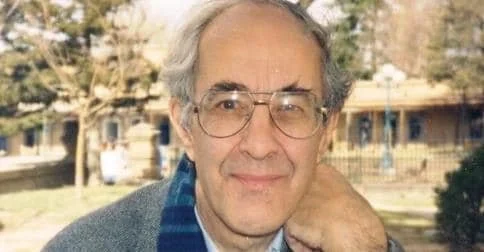
I have been to only one General Convention of the Episcopal Church. What I remember most is attending a special lecture by Henri Nouwen. I continually give thanks for taking time out of a busy day to go. I do not remember a word Nouwen said, but I remember his presence. It was loving, accepting, not centered on himself, at peace with himself, the closest thing I have experienced to a holy presence. I can still feel that holiness in his writings.

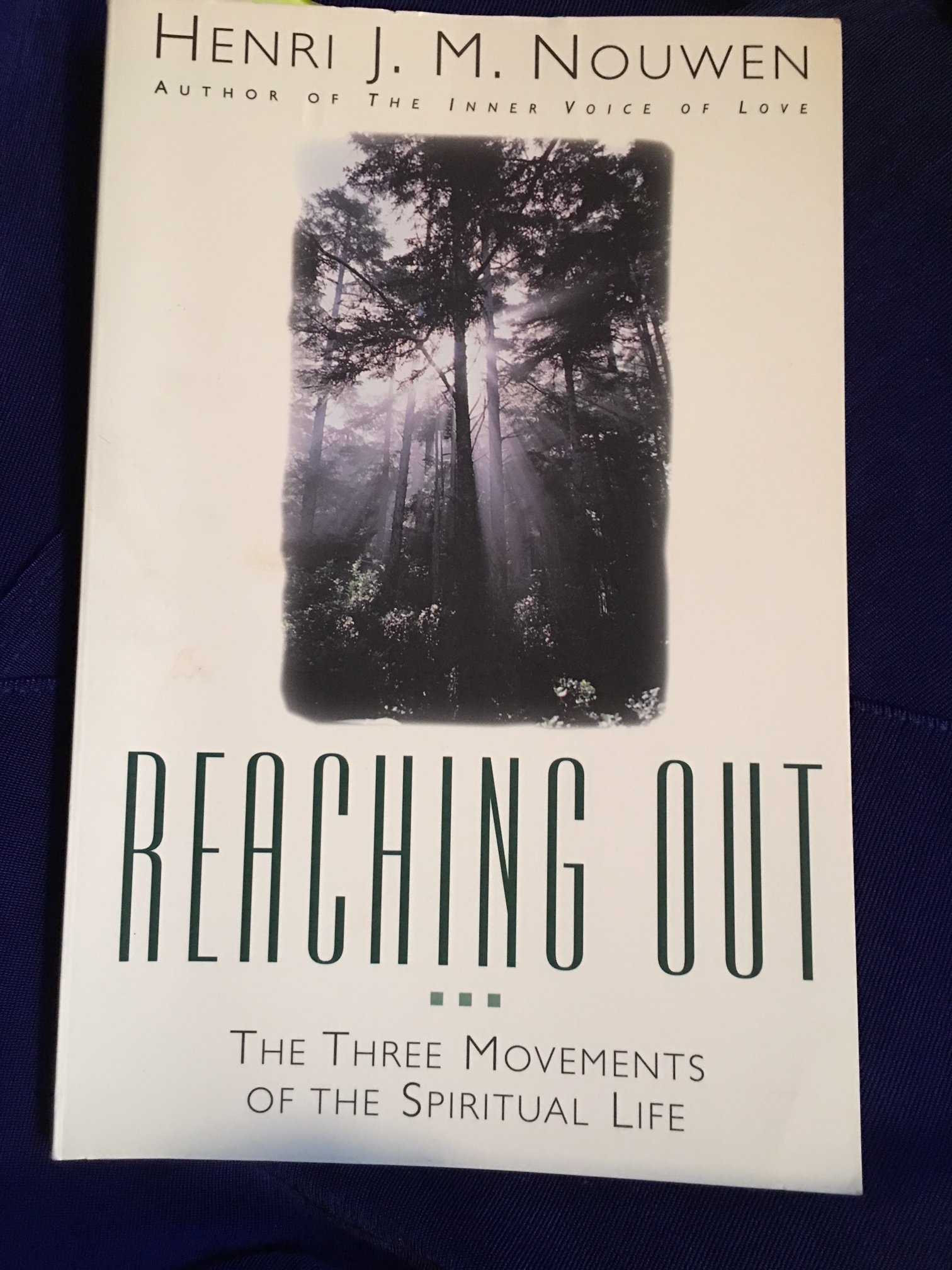
Nouwen’s theme of praying the Jesus Prayer, or Prayer of the Heart, is found in Reaching Out: The Three Movements of the Spiritual Life. Nouwen contends that practice moves our prayers from the head to the heart, as we realize that answers to questions and the presence of God are in our hearts. Nouwen’s thoughts remind me of the spiritual exercises of Anthony de Mello, who also recommends connecting our mind and body to our breath to move from our head to our heart and body.

The Jesus Prayer has been a part of my being, particularly when I find myself living in fear. I have never said it unceasingly 3000 times a day, then 6000, then 12,000 times a day, as the 5th-century Egyptian Desert Fathers and the 19th-century Russian monk recommended to the anonymous Russian peasant in The Way of the Pilgrim.

I confess that I pray the Jesus Prayer more often when I reach my human limits, indicating my powerlessness, rather than using the prayer on God’s terms.

Nouwen teaches about the paradox of prayer, learning to pray when we can only receive prayer as a gift. God’s Spirit, God’s breath, prays into and with us. Instead, I often use prayer, especially the Jesus Prayer, in times of weakness, as a support system, as a foxhole prayer, or when I can no longer help or control the situation and am desperate.

Nouwen reminds us to pray the Jesus Prayer at the point when we can reach out to God, not on our own terms and needs, but on God’s terms. This kind of prayer pulls us away from self-preoccupation and challenges us to enter a new world, a great adventure, praying to our God, who has no limits.

Nouwen’s book Reaching Out, about the spiritual journey and union with God using the Jesus Prayer, is one I keep readily available by my bed. I recommend it to those who come to me for spiritual direction if they are experiencing the absence of God. Nouwen writes that God is present, but God’s presence is beyond our human experience of being connected, which may be perceived as absence. Yet, paradoxically, God’s absence is often so deeply felt that it can lead to a new sense of God’s presence.

 Nouwen’s book is excellent for adult studies, especially during Advent or Lent.

The Way of the Pilgrim and The Pilgrim Continues His Way, a new translation by Helen Bacovin. (Image 1978).

Henri Nouwen in Reaching Out: The Three Movements of the Spiritual Life. (Image 1975).

Henri Nouwen in Desert Wisdom: Sayings from the Desert Fathers. (Orbis 1982).

Joanna. https://www.joannaseibert.com/