Art of Not Knowing

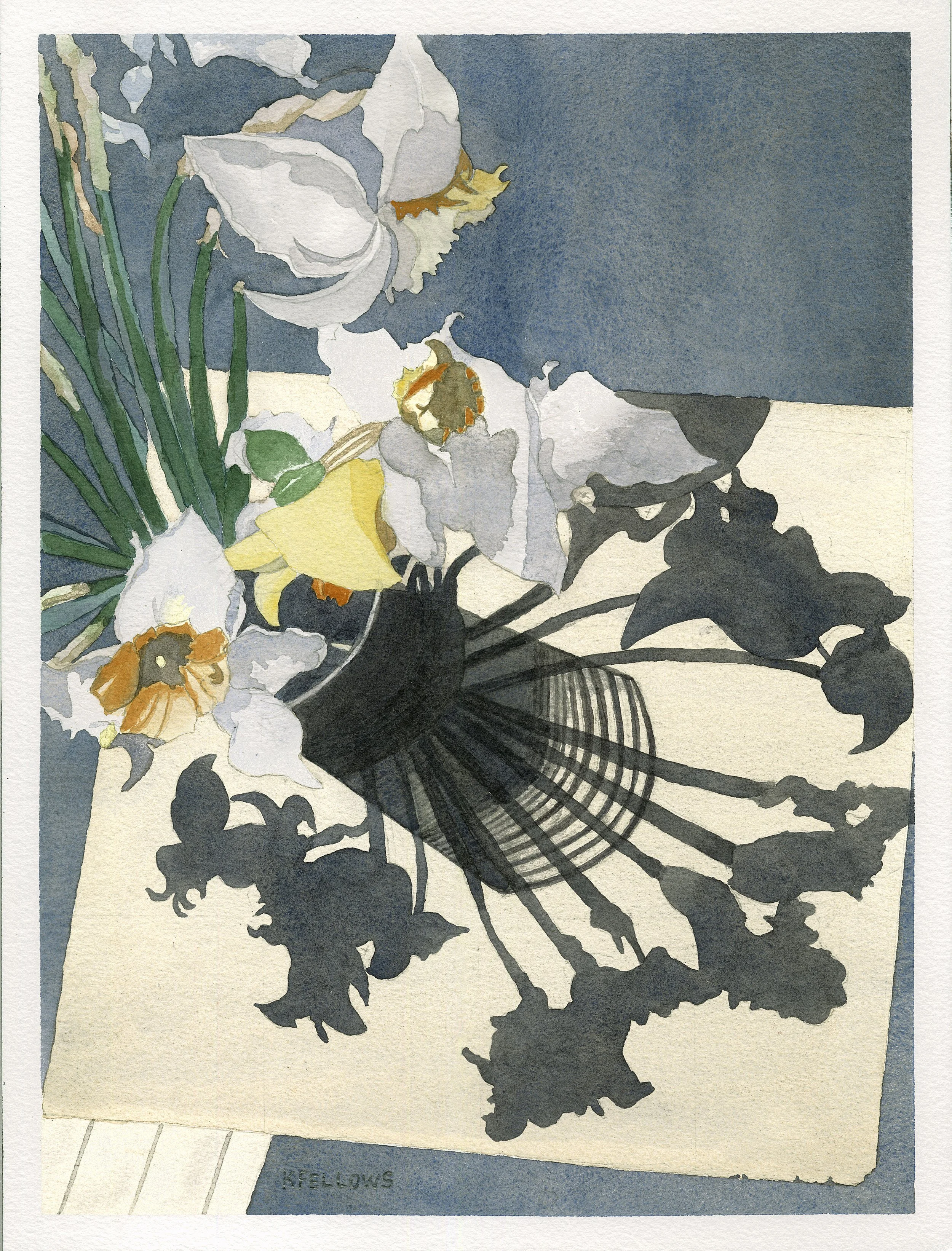
Guest Writer and Artist: Ken Fellows

Art of Not-Knowing
      In mid-1970, I began my career as an academic Pediatric Radiologist. With several other American radiologists at the time, I helped pioneer a new sub-specialty, Pediatric Interventional Radiology. That endeavor was made possible by an explosive improvement in X-ray imaging. A new device –the image-intensifier –allowed especially clear fluoroscopic (real-time) visualization of inner-human anatomy.

It was soon accompanied by other revolutionary imaging techniques, such as ultrasound (US), computed tomography (CT), and magnetic resonance imaging (MRI). All of these provided new,  extraordinarily precise imaging of the circulatory system, the heart, brain, and most other organs.

 Using this new imaging, interventional radiologists were able to insert local anesthetics, thin catheters, and other small devices into patients through needles (not incisions) to perform therapeutic procedures. No general anesthesia is needed –just sedation of the patient.  

     Using these devices, interventional radiologists began treating problems such as plugging bleeding vessels, closing holes in hearts, opening obstructed arteries and veins, performing biopsies, and draining abscesses, cysts, and other loculated fluids. The past 50 years have seen a vast expansion of these interventional techniques. I performed those procedures for the first 30 of those years.

     Following my retirement from radiology practice 23 years ago, I found myself in a ‘second act’ as a watercolor painter and a memoir writer. I’ve sometimes wondered if any common thread exists between these very different eras of my life … any connection between doing interventional procedures and art, and the ‘uncertainty of outcome’ common to both?  

    Pondering this question in my aging rodent brain, a possible connection was suggested recently in the book Emergency Medicine by Jay Baruch, MD. In it, he describes his difficulty discerning, from some patients’ rambling histories and vague symptoms, what the actual underlying problem is.

He explains how this is a doctor’s challenge not usually addressed in medical training –this not-knowing –a circumstance so antithetical to medical practice.


     Dr. Baruch attributes the concept of not-knowing to a dated but still famous essay in which David Barthelme describes the act of writing, and the creative arts in general, as a process of dealing with not-knowing. Barthelme states, “The writer (artist) is someone who, when embarking upon a messy task, doesn’t know what to do.” He adds, “Problems are crucial to not-knowing, and not-knowing is crucial to art.” The essay opines, “Writing is a process of dealing with not-knowing, and that not-knowing is hedged about with prohibitions, with roads that may not be taken.”

To this, Jay Baruch adds: “In any process of inquiry, our uncertainty is our ally.” I, in turn, propose that the ability to welcome uncertainty is often a critical part of being a doctor. Perhaps this idea is the connection I’ve sought between writing, painting, and performing interventional procedures.

       Whether a writer, painter, or doctor, problems that cause uncertainty are usually most formidable at the beginning of an undertaking. The problems are generally a matter of ideas, imagination, or technique. For surgeons and interventionalists, clinical problems typically have either a traditional, patented solution or require an innovative approach, a new maneuver that needs to be created.

Even during routine procedures, unforeseen complications and anatomic aberrations can arise, requiring spontaneous and imaginative corrective action. For doctors, the problem of selecting the best approaches to healing is the foundation of their uncertainty and not-knowing.

     In summary, not-knowing is a mental state common to making art and literature. Similar uncertainty often characterizes medical sleuthing, surgery, and interventional endeavors. Expanding the idea, I suspect this inherent doubting is not limited to art and medicine, but exists in many other fields. In various walks of life, uncertainty often enhances performance, fosters progress, and creates innovation. 

Ken Fellows
Joanna https://www.joannaseibert.com/

Love Stronger Than Death

Solomon and Wells: Presence, not Words

“Place me like a seal over your heart, like a seal on your arm, for love is as strong as death, its jealousy unyielding as the grave. It burns like blazing fire, like a mighty flame.”—Song of Solomon 8: 6.

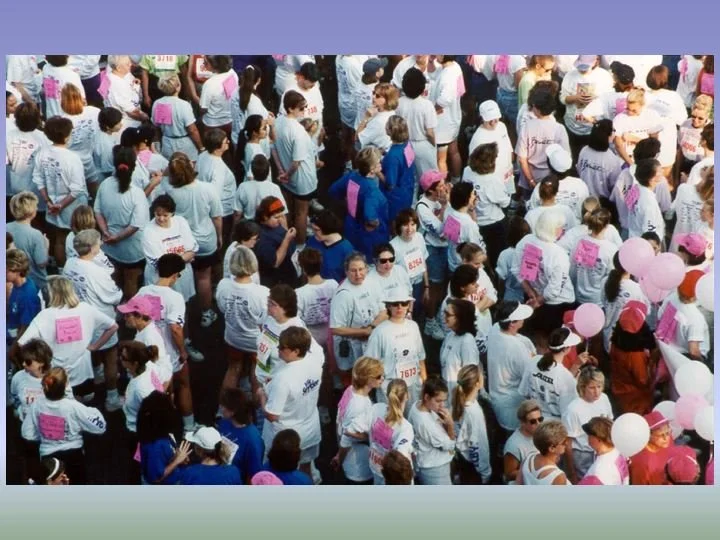
Running the Race for the Cure for Friends Who Have Died From Breast Cancer

Samuel Wells is the vicar at St. Martin-in-the-Fields in London and a frequent writer for Christian Century. He recently titled his article “Is Love Stronger?” 1 Wells tells the story of visiting with the husband of a wife who committed suicide, whom he did not know, and hearing their story, then delivering the homily at her service, suggesting that all is now well.

However, when he visited the husband a week later, he was met with anger about his sermon. All had not been well with the woman, who had a painful wasting disease, and all was not well with her husband. The husband said he told Wells that before the funeral.

 Wells said he learned from this experience that when being with people living with tragedy or in the aftermath of a disaster, all he has to offer is his presence beside them. There are no words to improve the situation, and attempts to clean it up do not address the difficulty. Wells believes his role is “not to make things better for someone. It’s being beside them as they face the truth.” This is what makes love stronger than death. It is a presence, not words.

This is also true when we meet with spiritual friends. Sometimes, trying to see God in any problematic situation is simply listening to our friends’ stories and letting them know we are beside them. We are not there to improve things or give answers but to be a loving presence beside them in a great storm. Eventually, we hope to lead them to see God’s presence in them, which has been present all along.

 In times of great tragedy, I remember people who just came and sat beside me, cried with me, and never said a word.

 Often, the person who can help the best is someone who has known a similar tragedy. They have walked in their shoes and understand that the presence of the listening heart is a more powerful healer than any words.

These are also people like women running or walking in the Race for the Cure for others, who show their loving presence with their feet instead of their mouths.

This is love stronger than death.

1 Samuel Wells, “Is love stronger?” Faith Matters, Christian Century, April 25, 2018, p. 35.

Joanna joannaseibert.com  https://www.joannaseibert.com/


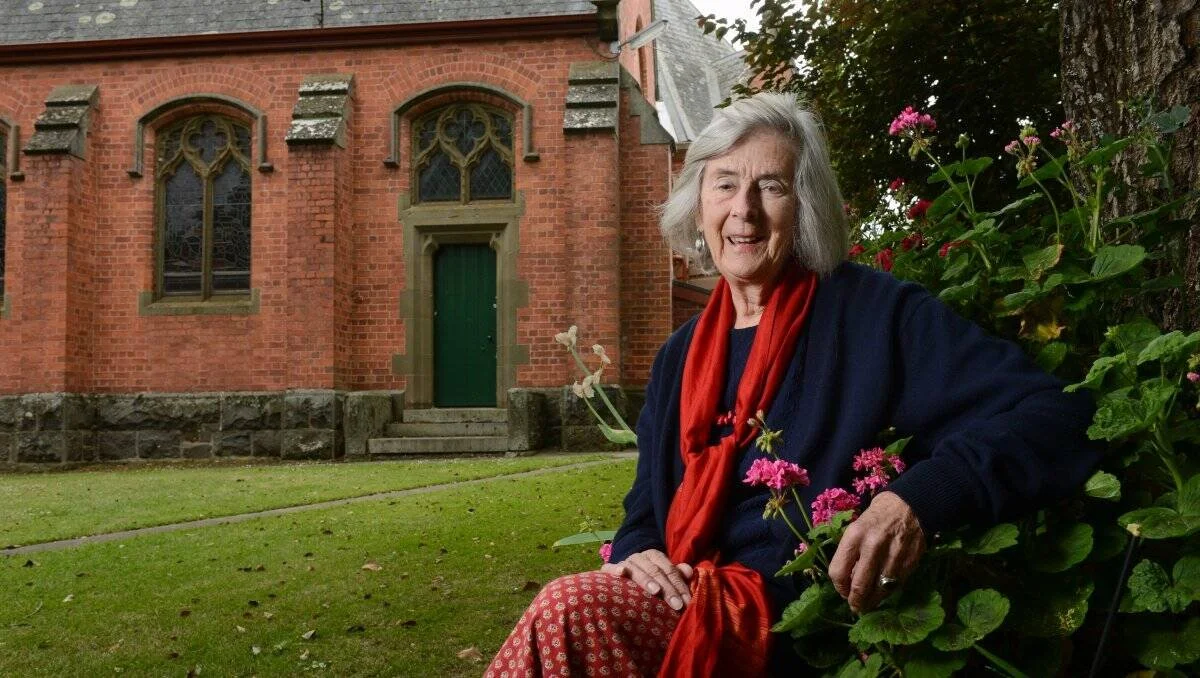
Esther De Waal: Living at the Threshold of Two Worlds

De Waal: Borders and Uncertainty

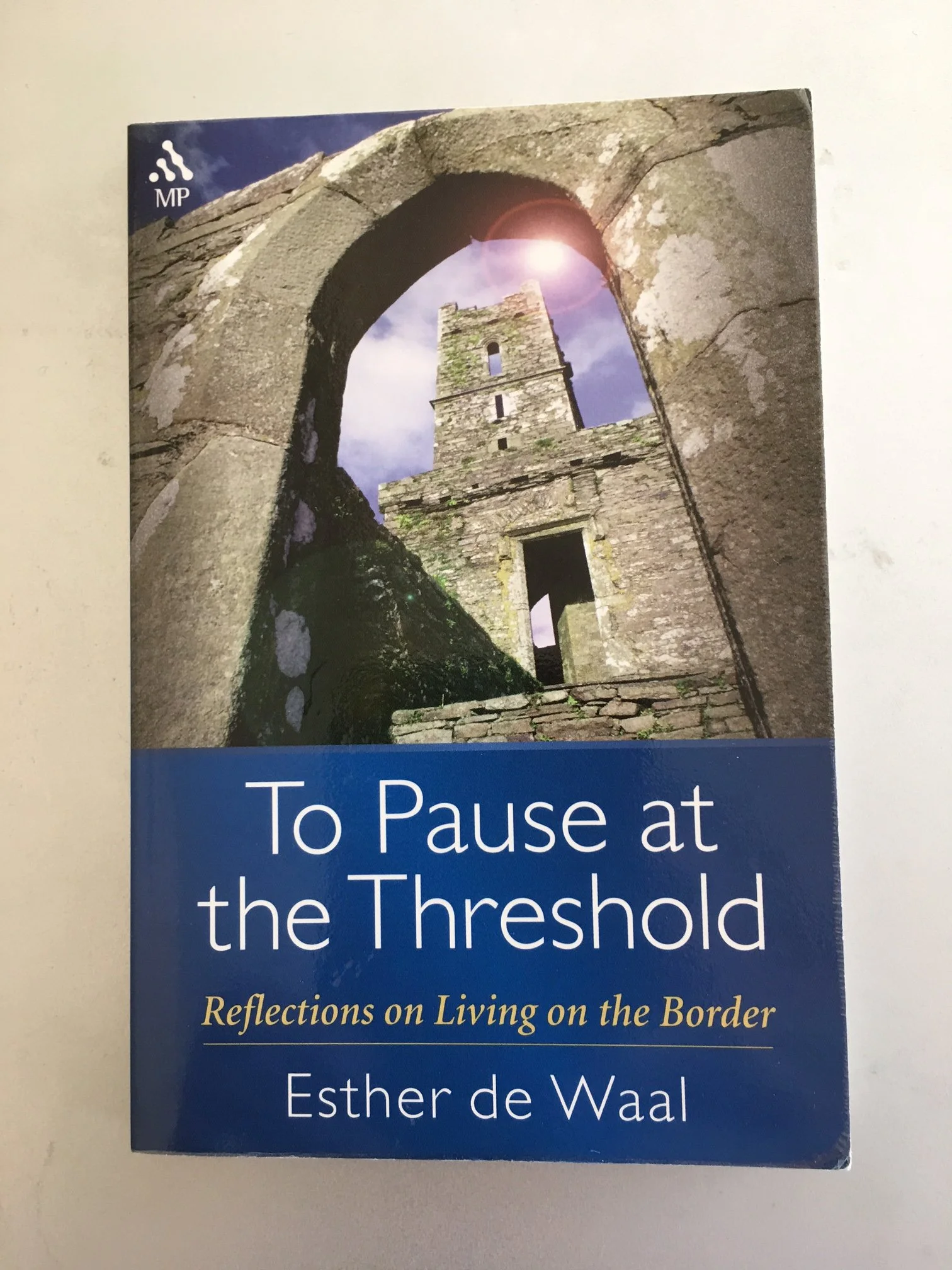
“The first step in listening, learning, and changing is to see that different is not dangerous; the second is to be happy and willing to live with uncertainty; the third is to rejoice in ambiguity and to embrace it. It all means giving up the comfort of certainty and realizing that uncertainty can actually be good.”—Esther de Waal, To Pause at the Threshold, Reflections on Living on the Border (Morehouse).

 When de Waal wrote this book, she had returned to the home where she had grown up on the border between England and Wales. I met this prolific Benedictine and Celtic spirituality writer at the College of Preachers at the Washington National Cathedral. She often took up residence there and was accessible to weekly pilgrims like me during mealtimes, seeking respite and learning in this sacred space.

This small pocket-sized book is a gem to read and re-read. De Waal discusses how we relate to borders and boundaries, having direct encounters with them in her day-to-day life.

Do we build walls, barriers, and fortresses, or do we engage in conversation and learn about something different, another culture?

She describes the world’s diversity as an icon to let us know God loves differences. She entices us to be like a porter waiting at the gate of a Benedictine monastery, standing at the “threshold of two worlds.” He welcomes those who ask to enter, no matter the time of day, treating each stranger as if they were Christ.

This resonates with me as a deacon. Our ministry calls us to move back and forth between two worlds: the church and the world outside the church.

De Waal also teaches us to honor the threshold between the two worlds and be open to the change,  uncertainty, and contradictions that the different worlds may present to us.

De Waal’s concept of thresholds has helped in visiting those in hospitals or at home. I have learned to pause as I cross the threshold of the hospital room. This is a time to wash my hands at the patient’s door. The threshold is a symbolic reminder that I am entering another world. Hand-washing is a reminder to leave my agenda at the door. I am there to honor that person, listen, and be present to them.

During the previous pandemic, I again encountered this ritual, with the many times we washed our hands. I tried to let loose or wash away the cares that previously consumed me. It was a reminder to live in the moment and be open to passing through a new threshold.

Sometimes, I continue to remember.

Joanna https://www.joannaseibert.com/