Travel: After European Trip Last Year

Travel

Guest Writer: Shannon Seibert

Post Europe Trip March 2025, final thoughts.
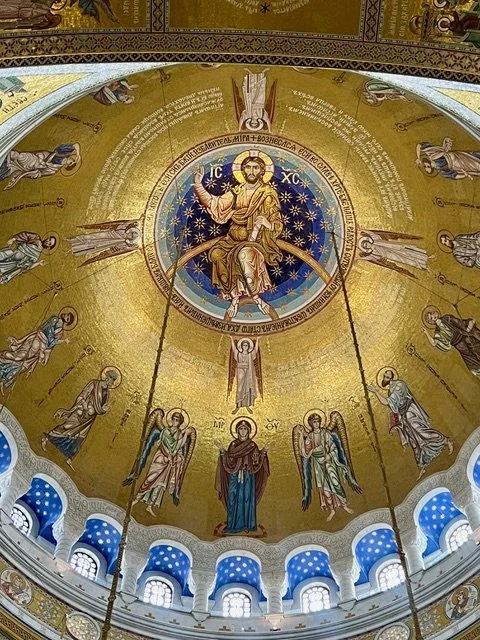
. Orthodox Church Belgrade Serbia

 "Travel is fatal to prejudice, bigotry, and narrow-mindedness, and many of our people need it sorely on these accounts. Broad, wholesome, charitable views of men and things cannot be acquired by vegetating in one little corner of the earth all one's lifetime." Mark Twain

Travel is the most excellent classroom where history comes alive, where art, architecture, food, and culture create new spaces in our minds, and most importantly, where we connect with people outside our little corner of the earth.
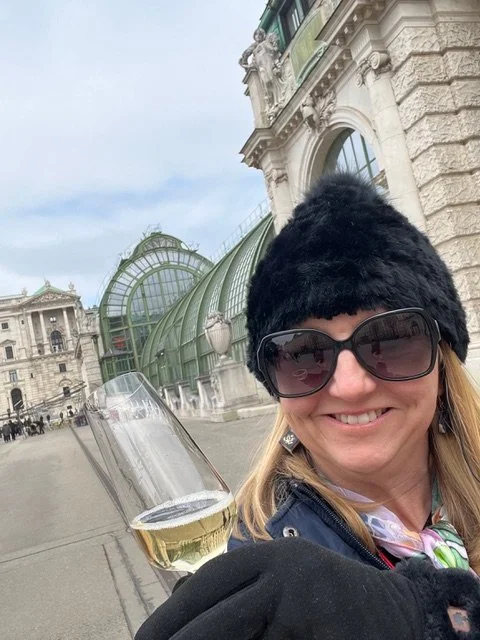
7. Shannon in Vienna

I learn, grow, and expand my worldview. My perspectives are challenged. My circle of influence is broadened. It makes me more humble, more grateful, and more curious.

I remember when Americans, as a whole, were proud that we were a melting pot of different people, cultures, religions, and customs. America wasn't just a dream but an IDEA, a way of thinking. We have forgotten and lost our pride in being a melting pot.

Historically, many wars, hate, and loss of life are about rejecting melting pots.

All nations, peoples, governments, and cultures have flaws and flawed histories. They all have their challenges, corruption, and failures. But what beauty do they offer?
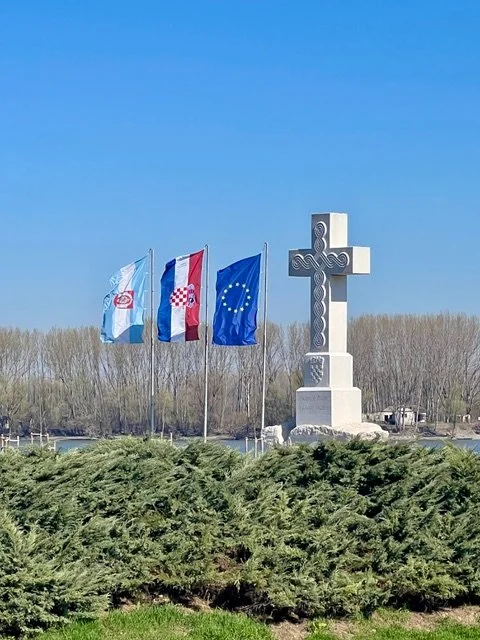
3. Memorial in Croatia

What are the lessons they teach?

What can I bring home to improve my own "backyard"?

Here are a few things I brought home this time; some are repeats of previous trips.

1. Slow down. Your work will still be there; no one is coming to take it away.

2. Sit with friends over a cup of coffee or a glass of wine, OFTEN, and for extended amounts of time.

3. Offer signs in multiple languages. In Serbia, signs were offered in FIVE languages to make things more accessible to a wider audience.

4. Church doors had many, many languages. One church had eight languages inscribed on its main doors! Churches offered services in two different languages at every service.

5. City centers are pedestrian, and all shopping is located in one area. Families and friends could gather here; kids ride bikes, and babies learn to walk. City centers are where life happens together.

6. FREE public transportation

7. Every city had a memorial/remembrance of the holocaust (probably the darkest stain on European history). They remember not to be ashamed, not woke, not DEI. They don't want to repeat history! They acknowledge it and REMEMBER so they don't repeat it.

8. There are anti-fascist monuments in every town.
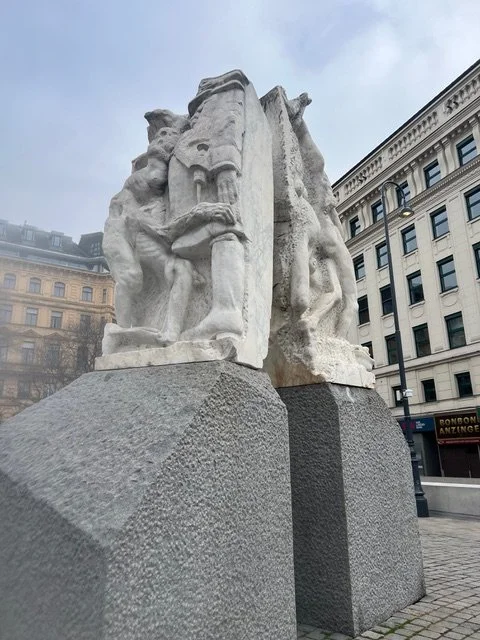
8. Monument against war and fascism in Vienna

9. Focus on doing ONE thing really well. Multi-tasking is overrated and reduces overall quality. Whether it's sausages, pastries, oils, wines, or beer, do that ONE thing really, really well.
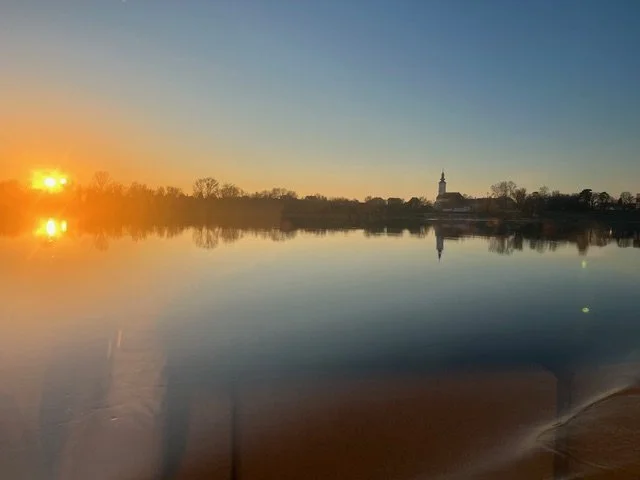
4. sunset on the Danube

10. In general, people are people. They want to live in peace, have a secure existence, provide safety and opportunity for their children, worship how they choose, have a trustworthy and helpful government, and live FREELY.
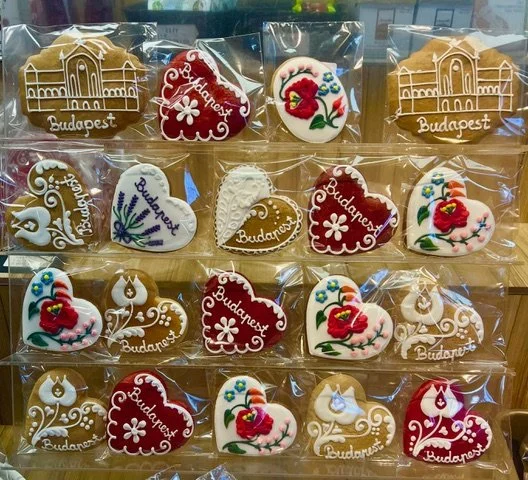
6. Cookies Budapest market

One final story is from Serbia, a place with a corrupt government (per our guide), where votes are bought, coerced, and manipulated. Only 30% support the current administration, but they win elections because of the corruption and false propaganda that is rampant—a fragile "democracy," no doubt.

But Serbia is also a place where 300,000 Russians have resettled and 100,000 Ukrainians have fled since the start of the Ukraine war. We know why the Ukrainians are there, seeking safety. But why so many Russians? Primarily because they have sons who must serve in the Russian military. The parents don't want their sons to die. They are there to save their children's lives; all 400,000 want to save their children's lives. I think all parents can empathize with that.

Shannon Seibert Shannon@smallworldbigfun.com


Joanna Seibert  joannaseibert.com


1. Orthodox Church in Belgrade, Serbia

2. Church in Sremski Karlovci, Serbia

3. Memorial in Vukovar, Croatia

4. Sunset on the Danube

5. Pecs, Hungary

6. Cookies at the market in Budapest, Hungary

7. Me having champagne in Vienna

8, 9, 10. Monument against War & Fascism in Vienna. 

  • "Gate of Violence": A large chunk of granite with carvings representing victims of the war, including chained laborers, gas masks, and a woman giving birth (symbolizing the rebirth of Austria). 
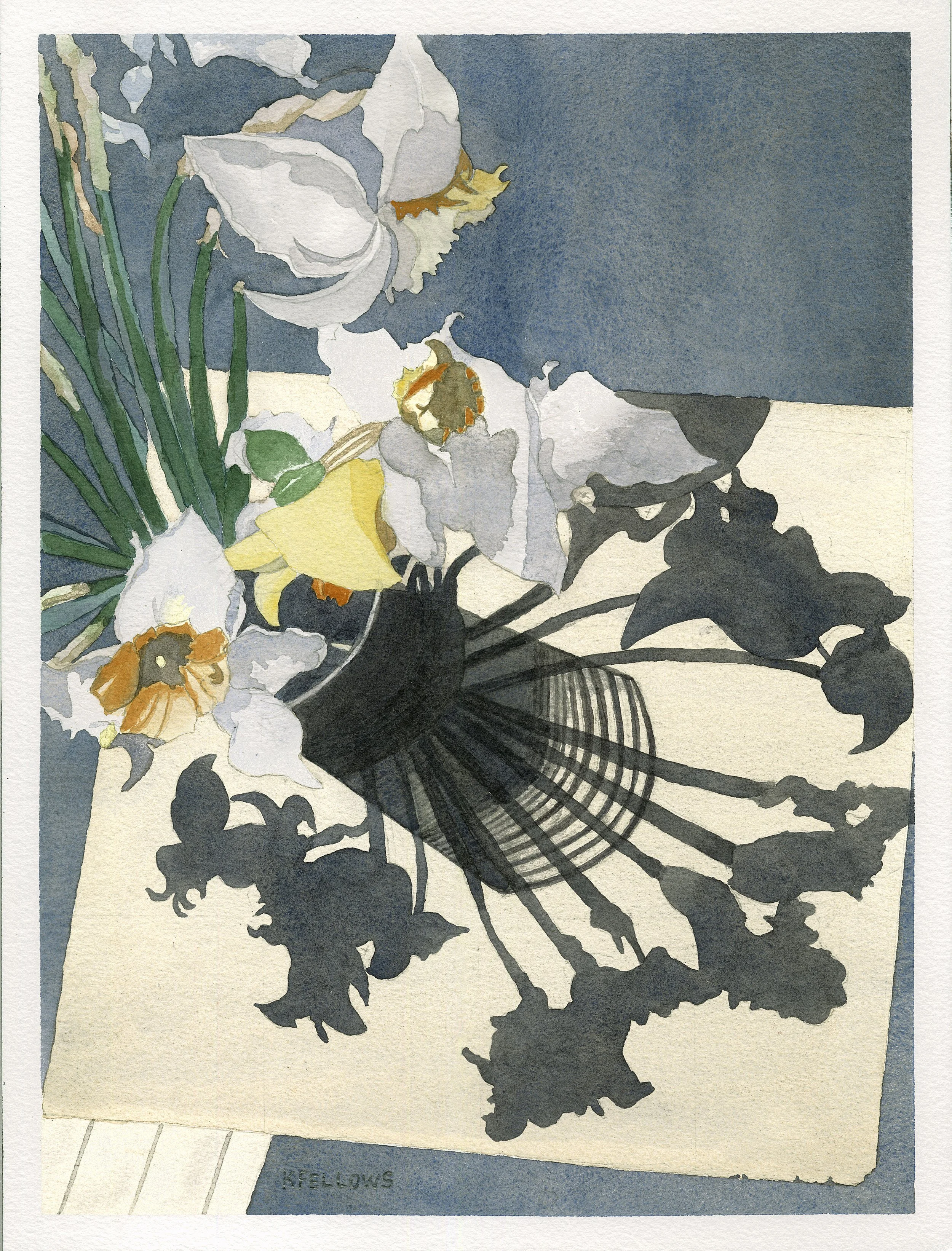
 

Art of Not Knowing

Guest Writer and Artist: Ken Fellows

Art of Not-Knowing

      In mid-1970, I began my career as an academic Pediatric Radiologist. With several other American radiologists at the time, I helped pioneer a new sub-specialty, Pediatric Interventional Radiology. That endeavor was made possible by an explosive improvement in X-ray imaging. A new device –the image-intensifier –allowed especially clear fluoroscopic (real-time) visualization of inner-human anatomy.

It was soon accompanied by other revolutionary imaging techniques, such as ultrasound (US), computed tomography (CT), and magnetic resonance imaging (MRI). All of these provided new,  extraordinarily precise imaging of the circulatory system, the heart, brain, and most other organs.

 Using this new imaging, interventional radiologists were able to insert local anesthetics, thin catheters, and other small devices into patients through needles (not incisions) to perform therapeutic procedures. No general anesthesia is needed –just sedation of the patient.  

     Using these devices, interventional radiologists began treating problems such as plugging bleeding vessels, closing holes in hearts, opening obstructed arteries and veins, performing biopsies, and draining abscesses, cysts, and other loculated fluids. The past 50 years have seen a vast expansion of these interventional techniques. I performed those procedures for the first 30 of those years.

     Following my retirement from radiology practice 23 years ago, I found myself in a ‘second act’ as a watercolor painter and a memoir writer. I’ve sometimes wondered if any common thread exists between these very different eras of my life … any connection between doing interventional procedures and art, and the ‘uncertainty of outcome’ common to both?  

    Pondering this question in my aging rodent brain, a possible connection was suggested recently in the book Emergency Medicine by Jay Baruch, MD. In it, he describes his difficulty discerning, from some patients’ rambling histories and vague symptoms, what the actual underlying problem is.

He explains how this is a doctor’s challenge not usually addressed in medical training –this not-knowing –a circumstance so antithetical to medical practice.


     Dr. Baruch attributes the concept of not-knowing to a dated but still famous essay in which David Barthelme describes the act of writing, and the creative arts in general, as a process of dealing with not-knowing. Barthelme states, “The writer (artist) is someone who, when embarking upon a messy task, doesn’t know what to do.” He adds, “Problems are crucial to not-knowing, and not-knowing is crucial to art.” The essay opines, “Writing is a process of dealing with not-knowing, and that not-knowing is hedged about with prohibitions, with roads that may not be taken.”

To this, Jay Baruch adds: “In any process of inquiry, our uncertainty is our ally.” I, in turn, propose that the ability to welcome uncertainty is often a critical part of being a doctor. Perhaps this idea is the connection I’ve sought between writing, painting, and performing interventional procedures.

       Whether a writer, painter, or doctor, problems that cause uncertainty are usually most formidable at the beginning of an undertaking. The problems are generally a matter of ideas, imagination, or technique. For surgeons and interventionalists, clinical problems typically have either a traditional, patented solution or require an innovative approach, a new maneuver that needs to be created.

Even during routine procedures, unforeseen complications and anatomic aberrations can arise, requiring spontaneous and imaginative corrective action. For doctors, the problem of selecting the best approaches to healing is the foundation of their uncertainty and not-knowing.

     In summary, not-knowing is a mental state common to making art and literature. Similar uncertainty often characterizes medical sleuthing, surgery, and interventional endeavors. Expanding the idea, I suspect this inherent doubting is not limited to art and medicine, but exists in many other fields. In various walks of life, uncertainty often enhances performance, fosters progress, and creates innovation. 

Ken Fellows

Joanna https://www.joannaseibert.com/

Love Stronger Than Death

Solomon and Wells: Presence, not Words

“Place me like a seal over your heart, like a seal on your arm, for love is as strong as death, its jealousy unyielding as the grave. It burns like blazing fire, like a mighty flame.”—Song of Solomon 8: 6.

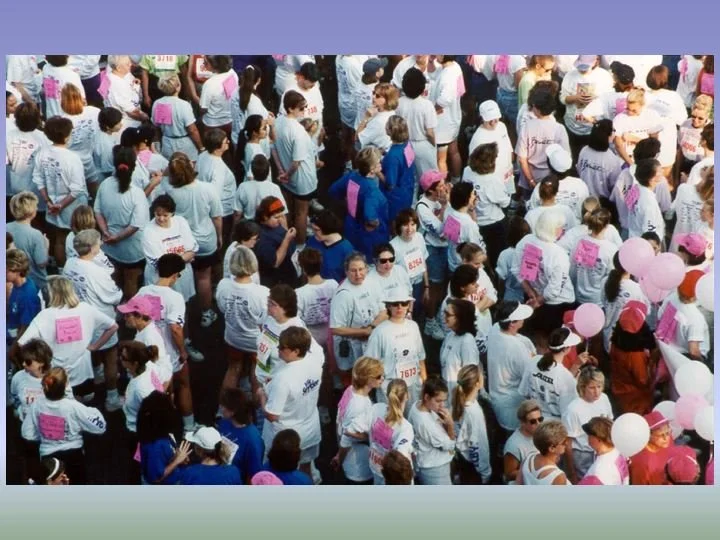
Running the Race for the Cure for Friends Who Have Died From Breast Cancer

Samuel Wells is the vicar at St. Martin-in-the-Fields in London and a frequent writer for Christian Century. He recently titled his article “Is Love Stronger?” 1 Wells tells the story of visiting with the husband of a wife who committed suicide, whom he did not know, and hearing their story, then delivering the homily at her service, suggesting that all is now well.

However, when he visited the husband a week later, he was met with anger about his sermon. All had not been well with the woman, who had a painful wasting disease, and all was not well with her husband. The husband said he told Wells that before the funeral.

 Wells said he learned from this experience that when being with people living with tragedy or in the aftermath of a disaster, all he has to offer is his presence beside them. There are no words to improve the situation, and attempts to clean it up do not address the difficulty. Wells believes his role is “not to make things better for someone. It’s being beside them as they face the truth.” This is what makes love stronger than death. It is a presence, not words.

This is also true when we meet with spiritual friends. Sometimes, trying to see God in any problematic situation is simply listening to our friends’ stories and letting them know we are beside them. We are not there to improve things or give answers but to be a loving presence beside them in a great storm. Eventually, we hope to lead them to see God’s presence in them, which has been present all along.

 In times of great tragedy, I remember people who just came and sat beside me, cried with me, and never said a word.

 Often, the person who can help the best is someone who has known a similar tragedy. They have walked in their shoes and understand that the presence of the listening heart is a more powerful healer than any words.

These are also people like women running or walking in the Race for the Cure for others, who show their loving presence with their feet instead of their mouths.

This is love stronger than death.

1 Samuel Wells, “Is love stronger?” Faith Matters, Christian Century, April 25, 2018, p. 35.

Joanna joannaseibert.com  https://www.joannaseibert.com/