De Mello: Putting Times of Joy in a Mental Album

De Mello 2: Albums and Awareness

This return to past scenes where you felt love and joy is one of the best exercises I know for strengthening your mental health.—Anthony de Mello in Sadhana: A Way to God (Image Books 1978), pp. 72-73.
I must admit I decided to read Anthony de Mello’s book, Sadhana: A Way to God, while studying spiritual direction because it isn’t long, seems like easy reading, and I knew I had a lot coming up in the next few weeks of study! Well, it’s only 140 pages, but it’s the kind of material where you should practice one exercise each day for 140 days or, even better, one exercise each week. There was only one exercise I found too hard to do, and that was Exercise 29, where we imagine ourselves as a corpse decomposing! I have otherwise found each of them so helpful in many ways to connect to God. 
Each exercise was something I wanted to practice. I relate most to the fantasy exercises, especially Exercise 18, the joyful mysteries of your life. Here, we immerse ourselves in joyful moments, recalling details, staying in the present, and feeling joy and love. De Mello then suggests creating an album of these peak experiences to revisit during difficult times—to remind ourselves of the joy in life and the presence of God in those past moments when God may not seem present.  
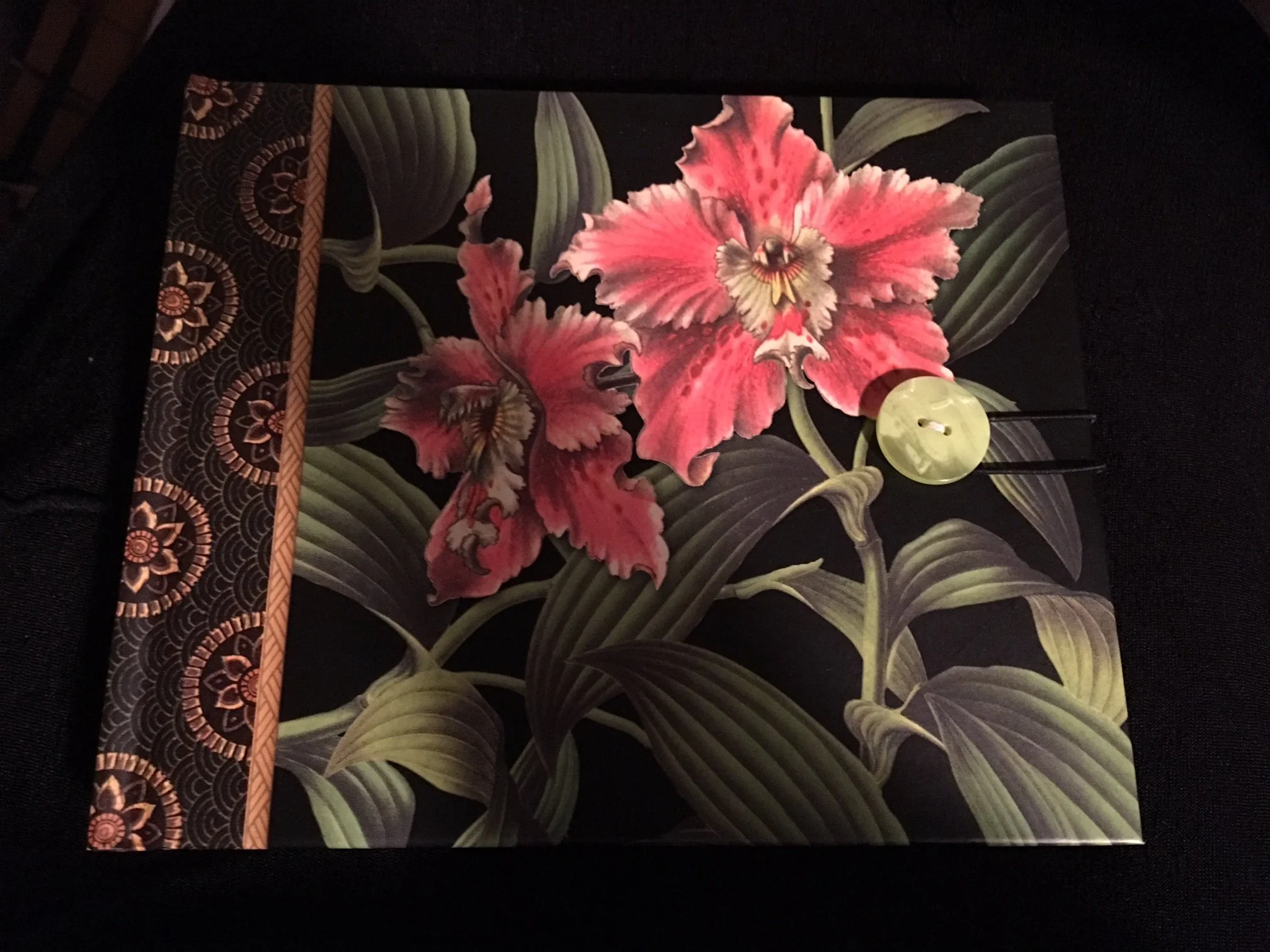
De Mello explains that when we have memorable experiences, we often do not fully appreciate or absorb the joy of being completely aware of what is happening. He encourages us to revisit the event repeatedly, to replay it mentally, and to feel the love it gave us, allowing ourselves to be nourished again by that experience. He warns us not to be mere observers, but to immerse ourselves completely back into the moment. De Mello believes that recalling these experiences enhances our ability to experience joy and, in turn, opens our lives to more fully receive God’s love.

Joanna joannaseibert.com


Barbara Brown Taylor: Spiritual Practices

Barbara Brown Taylor: Spiritual Practices, Movies, Short Stories

“Anything can become a spiritual practice once you are willing to approach it that way—once you let it bring you to your knees and show you what is real, including who you really are, who other people are, and how near God can be when you have lost your way.”—Barbara Brown Taylor, An Altar in the World.

 I have been in groups that watched for the presence of God in movies, not necessarily religious films. One of my favorites is Places in the Heart, where Sally Field is a recently widowed farmer’s wife in rural Texas during the Depression. She takes in a blind boarder, John Malkovich, and with the help of an African American drifter, Danny Glover, raises and picks cotton to keep her farm. Stop here if you do not want to know more, but the movie ends with all the characters, living and dead, black and white, murdered victim and murderer, kind and unkind, faithful and unfaithful, passing communion and love to each other at their local rural church.

I am in another group that reads contemporary short stories to find the voice of God. We have used a four-volume series, Listening for God, edited by Paula Carlson, an English professor at Yale University, and Peter Hawkins, a religion professor. One of my favorite stories is “A Small Good Thing” by Raymond Carver, about a couple whose child dies and the baker who made him a birthday cake. Spoiler alert! This story also ends with the three of them having a form of communion late at night at the baker’s shop.

We find communion and spiritual practices in our daily lives that lead us to that connection to God that is always there. We only need to open our eyes to see and tune our ears to hear. We can then live in the present moment, where God lives within us, around us, above, and in our neighbor.

Joanna joannaseibert.com https://www.joannaseibert.com/


Travel: After European Trip Last Year

Travel

Guest Writer: Shannon Seibert

Post Europe Trip March 2025, final thoughts.

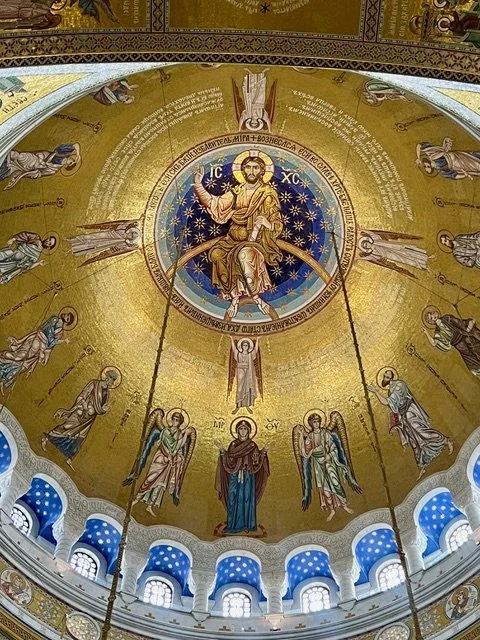
. Orthodox Church Belgrade Serbia

 "Travel is fatal to prejudice, bigotry, and narrow-mindedness, and many of our people need it sorely on these accounts. Broad, wholesome, charitable views of men and things cannot be acquired by vegetating in one little corner of the earth all one's lifetime." Mark Twain

Travel is the most excellent classroom where history comes alive, where art, architecture, food, and culture create new spaces in our minds, and most importantly, where we connect with people outside our little corner of the earth.

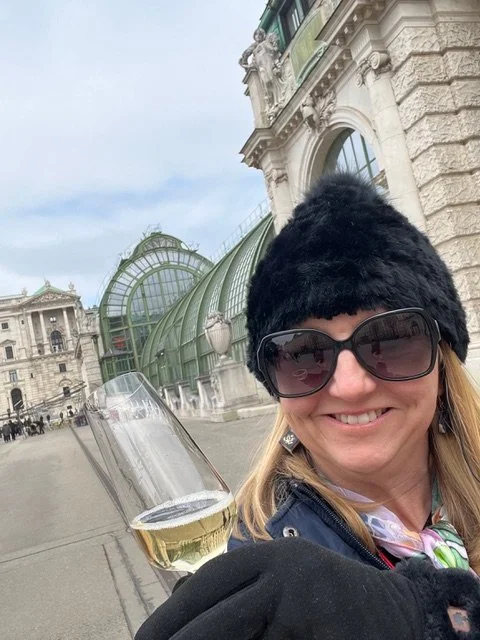
7. Shannon in Vienna

I learn, grow, and expand my worldview. My perspectives are challenged. My circle of influence is broadened. It makes me more humble, more grateful, and more curious.

I remember when Americans, as a whole, were proud that we were a melting pot of different people, cultures, religions, and customs. America wasn't just a dream but an IDEA, a way of thinking. We have forgotten and lost our pride in being a melting pot.

Historically, many wars, hate, and loss of life are about rejecting melting pots.

All nations, peoples, governments, and cultures have flaws and flawed histories. They all have their challenges, corruption, and failures. But what beauty do they offer?

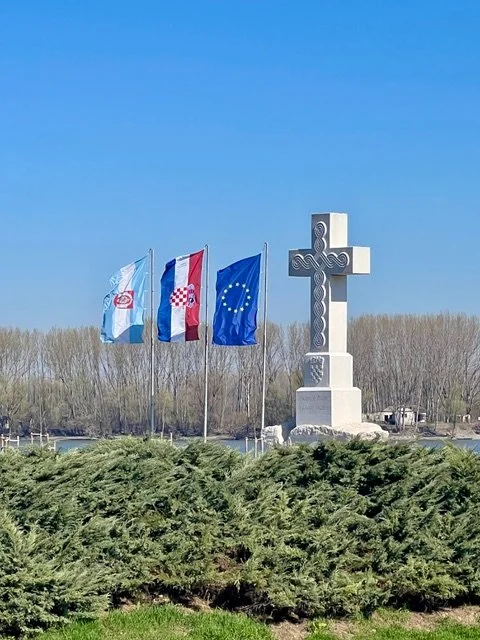
3. Memorial in Croatia

What are the lessons they teach?

What can I bring home to improve my own "backyard"?

Here are a few things I brought home this time; some are repeats of previous trips.

1. Slow down. Your work will still be there; no one is coming to take it away.

2. Sit with friends over a cup of coffee or a glass of wine, OFTEN, and for extended amounts of time.

3. Offer signs in multiple languages. In Serbia, signs were offered in FIVE languages to make things more accessible to a wider audience.

4. Church doors had many, many languages. One church had eight languages inscribed on its main doors! Churches offered services in two different languages at every service.

5. City centers are pedestrian, and all shopping is located in one area. Families and friends could gather here; kids ride bikes, and babies learn to walk. City centers are where life happens together.

6. FREE public transportation

7. Every city had a memorial/remembrance of the holocaust (probably the darkest stain on European history). They remember not to be ashamed, not woke, not DEI. They don't want to repeat history! They acknowledge it and REMEMBER so they don't repeat it.

8. There are anti-fascist monuments in every town.

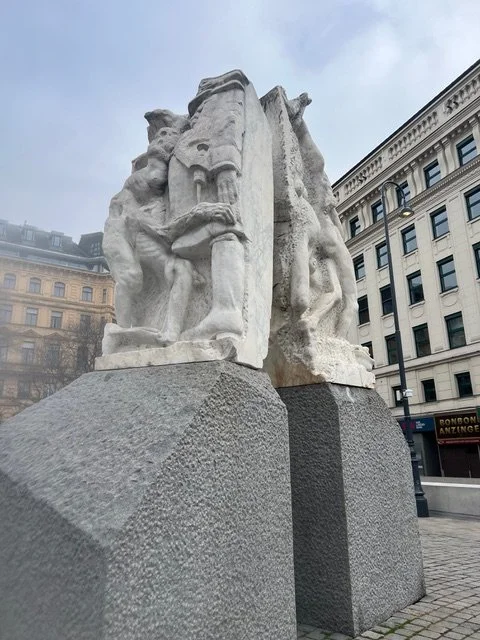
8. Monument against war and fascism in Vienna

9. Focus on doing ONE thing really well. Multi-tasking is overrated and reduces overall quality. Whether it's sausages, pastries, oils, wines, or beer, do that ONE thing really, really well.

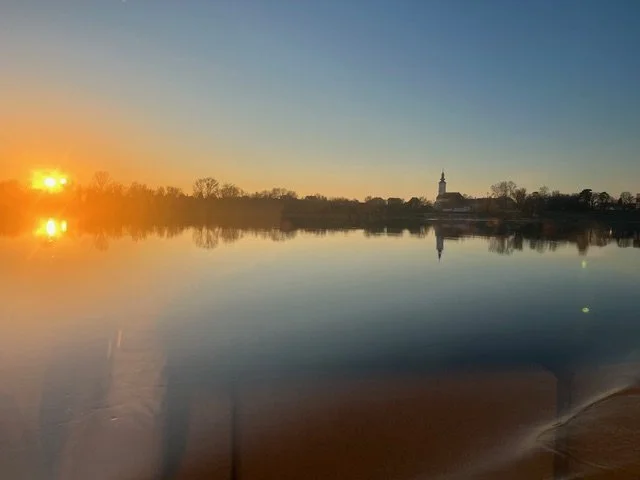
4. sunset on the Danube

10. In general, people are people. They want to live in peace, have a secure existence, provide safety and opportunity for their children, worship how they choose, have a trustworthy and helpful government, and live FREELY.

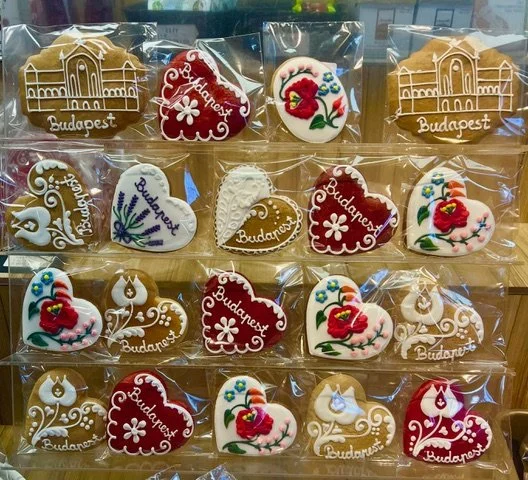
6. Cookies Budapest market

One final story is from Serbia, a place with a corrupt government (per our guide), where votes are bought, coerced, and manipulated. Only 30% support the current administration, but they win elections because of the corruption and false propaganda that is rampant—a fragile "democracy," no doubt.

But Serbia is also a place where 300,000 Russians have resettled and 100,000 Ukrainians have fled since the start of the Ukraine war. We know why the Ukrainians are there, seeking safety. But why so many Russians? Primarily because they have sons who must serve in the Russian military. The parents don't want their sons to die. They are there to save their children's lives; all 400,000 want to save their children's lives. I think all parents can empathize with that.

Shannon Seibert Shannon@smallworldbigfun.com


Joanna Seibert  joannaseibert.com


1. Orthodox Church in Belgrade, Serbia

2. Church in Sremski Karlovci, Serbia

3. Memorial in Vukovar, Croatia

4. Sunset on the Danube

5. Pecs, Hungary

6. Cookies at the market in Budapest, Hungary

7. Me having champagne in Vienna

8, 9, 10. Monument against War & Fascism in Vienna. 

  • "Gate of Violence": A large chunk of granite with carvings representing victims of the war, including chained laborers, gas masks, and a woman giving birth (symbolizing the rebirth of Austria).