Peace of God

Peace of God

“Jesus doesn’t offer peace of mind. Instead, he offers the peace of reconciliation.”—Diane Roth, “Living the Word,” Christian Century, March 14, 2018, p. 23.

Easter Accord

Diane Roth's response to the Lectionary Readings for the Second Sunday in Easter from John 20:19-31 serves as a reminder for us to reconcile with those we struggle with. Jesus calls us to love neighbors who are very different and to love our relatives who view politics through a different lens. It also involves seeing Christ in the most unlovable person at work and loving those whose beliefs are completely opposite ours. I could go on with many more examples. 
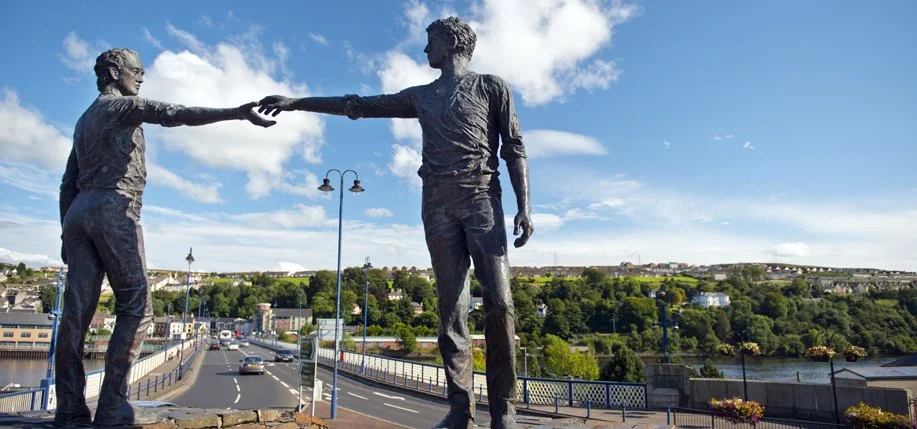
hands across the divide Derry

A verse that often haunts me, spoken at the offertory, is Matthew 5:23-24: “So when you offer your gift at the altar, if you remember your brother or sister has something against you, leave your gift there before the altar and go; first, be reconciled to your brother or sister, and then come and offer your gift.” 

Family systems models suggest that we should try our best to reconnect with any family members with whom we are estranged.

The core of 12-step recovery involves examining our resentments toward others, recognizing our role, which causes separation, making amends, and realizing our similarities instead of focusing on our differences.

These teachings remind us that when we struggle to love our neighbor, it becomes difficult to love God, because the God of our understanding also resides in our neighbor, just as God lives in us. 

This is an important message for us to share with spiritual friends. We might not be trained to help our friends reconcile with those they are struggling with, but we are called to share our experience: that reconciliation with our neighbor is a direct path to the peace of God.

Forgiveness and reconciliation are central to our paths in building relationships with others and with our God.

Joanna   joannaseibert.com. https://www.joannaseibert.com/
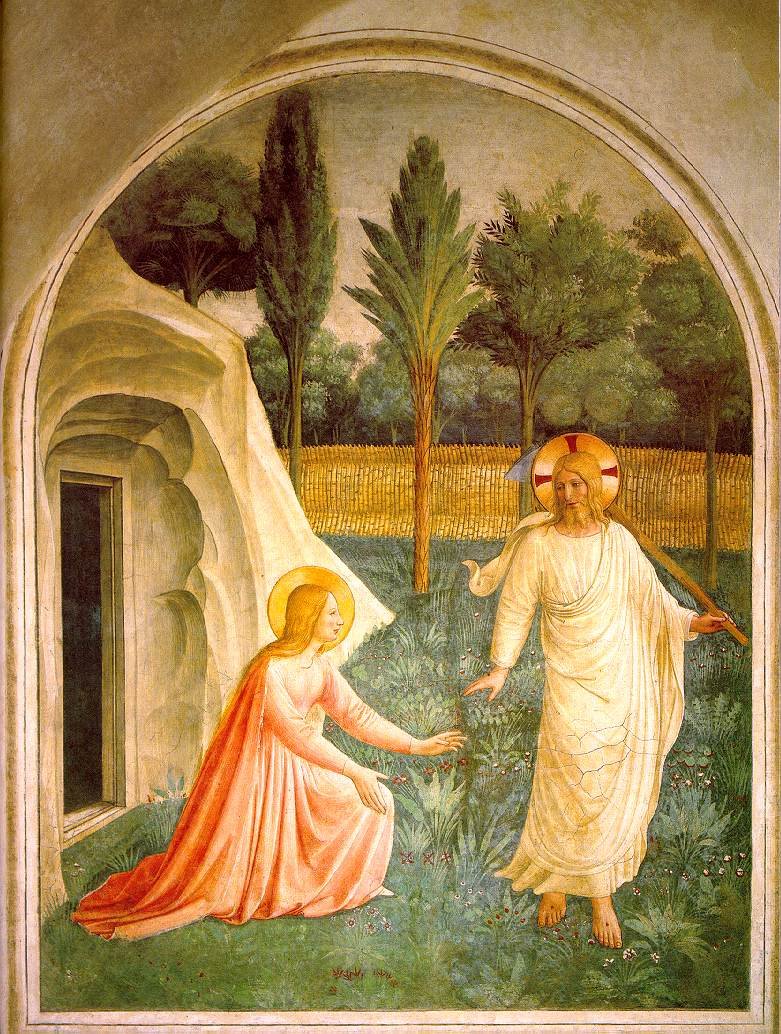
 

Recognizing Angels and Jesus

Recognizing Angels and Jesus

noli me tangere fresco. fra angelico

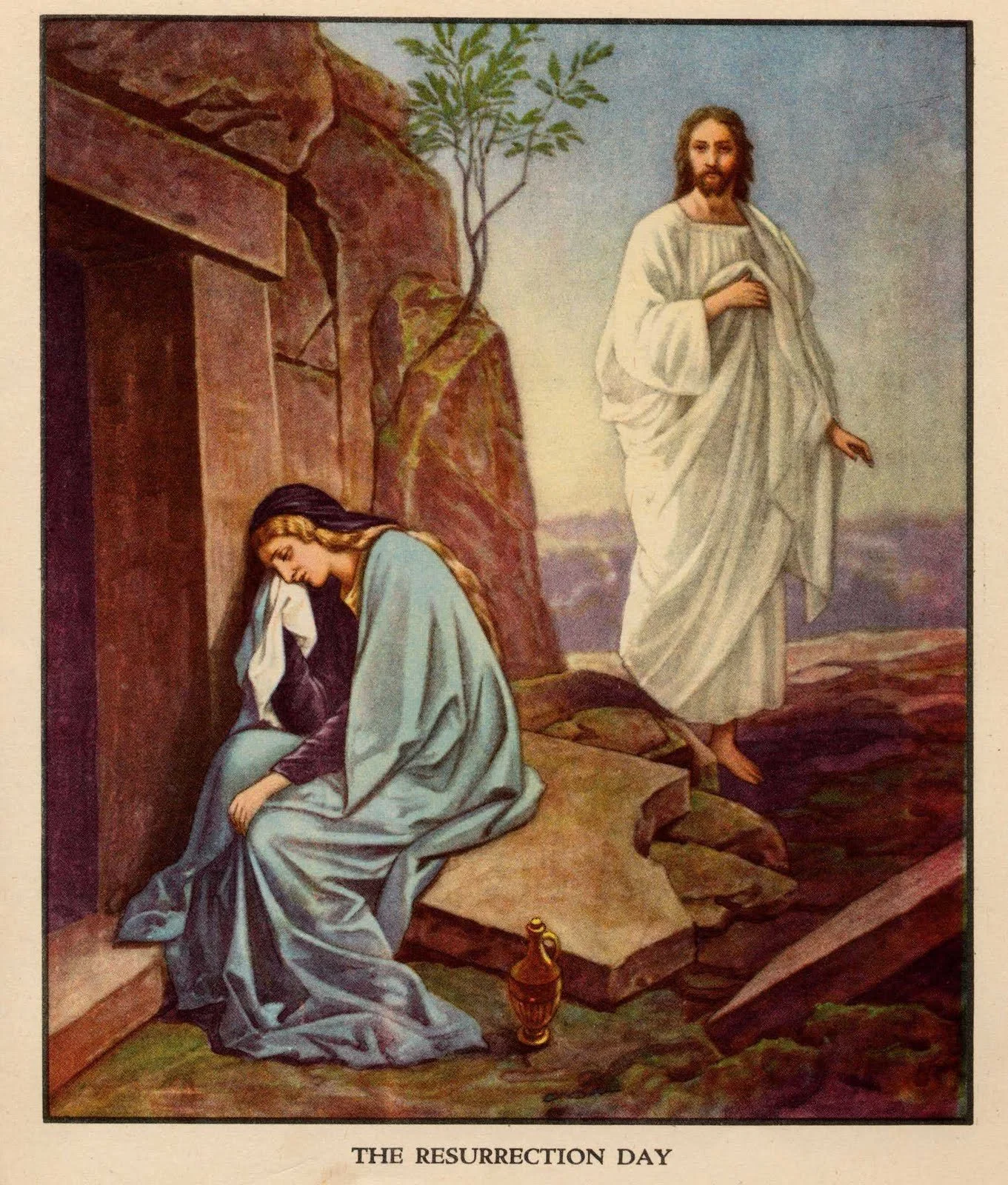
But Mary stood weeping outside the tomb. As she wept, she bent down to look into it, and she saw two angels dressed in white, sitting where Jesus' body had been, one at the head and the other at the feet. They asked her, “Woman, why are you weeping?” She replied to them, “They have taken away my Lord, and I do not know where they have put him.” 

When she said this, she turned around and saw Jesus standing there, but she did not recognize it was Jesus. Jesus said to her, “Woman, why are you weeping? Whom are you looking for?” Thinking he was the gardener, she said, “Sir, if you have carried him away, tell me where you have laid him, and I will take him.” Jesus said to her, “Mary!” She turned and said to him in Hebrew, “Rabbouni!” (which means Teacher).”—John 20:11-17.

My mind and heart are overwhelmed with thoughts about this Easter as I read others’ works and envision new images from this familiar story about Jesus' appearance to Mary Magdalene. 

Bishop Jake Owensby of Western Louisiana suggests in an Easter blog “that Mary Magdalene did not recognize Jesus because she is looking right at the risen Christ, and yet she sees nobody. For Mary Magdalene, the gardener is a nobody.”

Owensby’s theme is that our calling as people of the resurrection is to “find the risen Christ in everybody, no matter their physical appearance.” Christ is no longer confined to one body but present in each of us. No exceptions.

Frederick Buechner also explores this theme in The Faces of Jesus. Buechner states that “it hardly matters how the body of Jesus came to be missing, because in the last analysis, what convinced the people he had risen from the dead was not the absence of his corpse, but his living presence.”

Here's another insight into Mary Magdalene’s visit to the tomb. Angels speak to her, but there’s no indication that she recognizes the awe of the moment. Maybe she sees and talks to angels regularly, but if we try to imagine ourselves in her place, we might feel more like the other Mary at the annunciation—full of fear, surprise, or wonder. If we stay in the scene with Mary Magdalene, my best guess is that she might not realize they are angels. We are reminded once again of how hard it can be to see Christ in our neighbor and to recognize the angels guiding us through these difficult times.

rebecca stephens fracasantos

Mary Magdalene must have realized all of this later, as is often the case with us. Otherwise, we wouldn't be familiar with her story. 

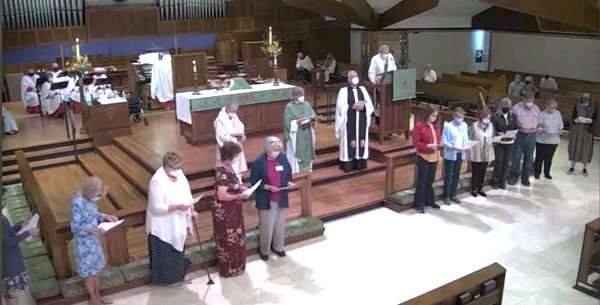
Angels and Christ, in others, were very present during the past pandemic and this war in Ukraine and the Middle East. They were wearing masks, driving trucks, stocking shelves in our pharmacies and grocery stores, at the checkout counters, making take-out dinners, giving us vaccines, caring for refugees, treating the wounded, and especially the women of our Daughters of the King, who pray for us every day.

1Jake Owensby, “Everybody is Somebody,” Looking for God in Messy Places, Jakeowensby.com, April 19, 2019.

2 Frederick Buechner “The Cross as the crossroads of eternity and time,” in The Faces of Jesus (Paraclete, 2005), p. 87.

Joanna  joannaseibert.com https://www.joannaseibert.com/

Learning to Be Myrrh Bearers

Learning to Be Myrrh Bearers

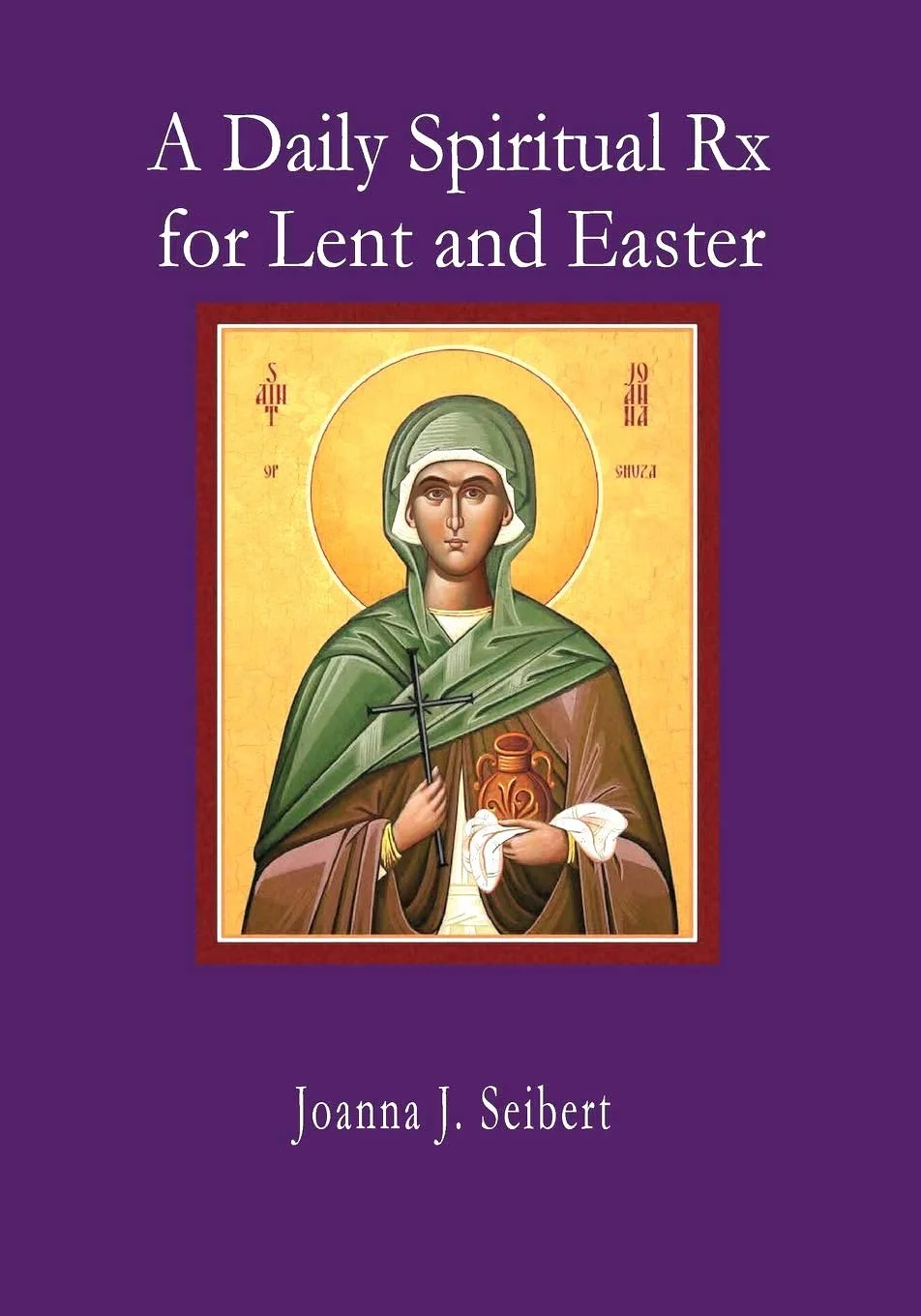
But on the first day of the week, at early dawn, they arrived at the tomb, carrying the spices they had prepared.—Luke 24:1.

I remember preparing to present a workshop at the International Community of Hope conference one summer in Texas. The Community of Hope began training individuals who aren't ordained to serve as hospital chaplains at St. Luke’s Hospital in Houston. The training program is now used worldwide by those interested in visiting the sick and homebound. I have been involved with the Community of Hope in our diocese for over twenty-five years. I continue to see it as excellent preparation and study for anyone called to a ministry involving pastoral care in any form. (Some might believe this applies to all ministries!) One hallmark of the training is its foundation in Benedictine spirituality. 

The image of the Community of Hope Chaplains that keeps coming to me is the “myrrh bearers,” the women who brought spices to the tomb of Jesus on that early Easter morning. They brought their most precious resources to honor the one who had cared for them. In my experience, this has been the story of many called to be pastoral in any ministry they are involved in.

They know what it is like to be wounded and be ministered to by other healers. They understand what it is like to be loved and cared for by others. Their only way to share, sustain, and keep that love is to pass what they learned on to someone else.

What happens during the myrrh bearers’ visit is completely unexpected. They go to honor their friend and teacher; instead, they are promised a new life, a resurrection in this life and the next.

I’ve never experienced a visit without receiving resurrection. We are touched and healed by those we visit. We take our most precious possessions—ourselves, our time, and our presence—and make an offering. In return, we always encounter the resurrected Christ in many forms.

During the pandemic, we connected via Facebook, Zoom, and individual phone calls. In addition, our Daughters of the King, vestry, and clergy called everyone in our parish twice. 

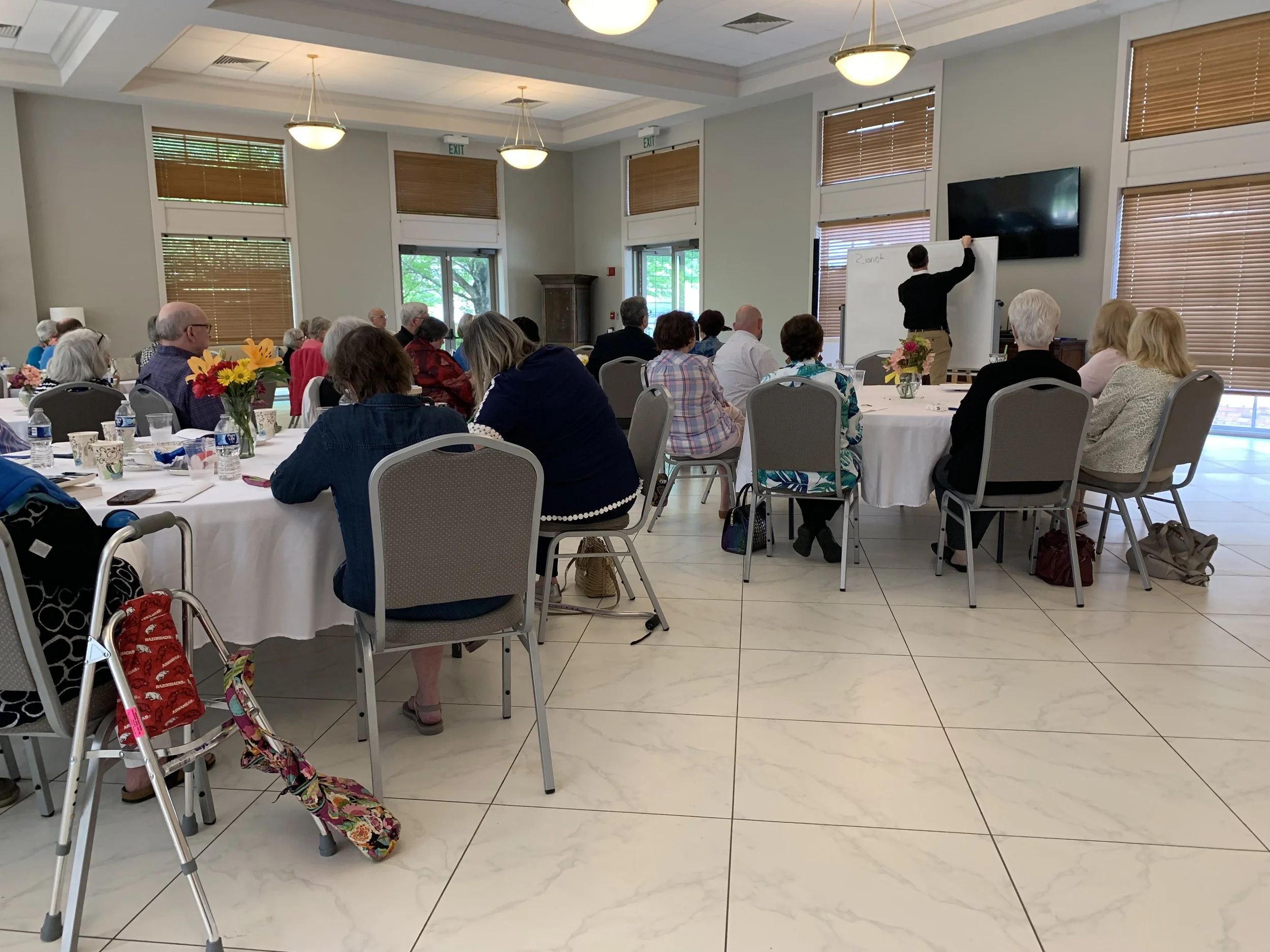
We also offered Community of Hope training on Zoom at St. Mark’s for those interested in integrating pastoral care into their ministries. Thirty-three graduates from across our diocese are now applying what they learned in 28 different ministries. We still meet once a month on Zoom to continue our studies and support one another. We held a regional retreat for Community of Hope chaplains in the Midwest, with the Reverend Barkley Thompson, the rector of St. Mark’s, as the keynote speaker. Recently, we again trained fifty-five Community of Hope chaplains from twenty churches in the Diocese of Arkansas.

Joanna. Joannaseibert.com https://www.joannaseibert.com/