Loaves and Fishes: Ministry Multiplying

Loaves and Fishes, Free Read

“Young people say, “What can one person do? What is the point of our small effort?” They cannot see that we can only lay one brick at a time, take one step at a time; we can be responsible only for the one action in the present moment.”

But we can beg for an increase of love in our hearts to vitalize and transform these actions, and know that God will take them and multiply them, as Jesus multiplied the loaves and fishes. – Dorothy Day, The Catholic Worker, September 1957

I often hear from friends that they want to give up their ministry. The need feels overwhelming, and they cannot imagine how their small part can make any difference. My experience is that God calls us to bloom where we are planted, to help and make changes right where we are, and to let God take over the rest.

This 20th-century social activist reminds us of something else we should remember. We do what God calls us to do, and God will multiply the works we have done, just as with the loaves and fishes. How exciting that the story of the multiplying loaves and fishes did not happen only in Jesus’ time. It happens every day, every hour we do ministry.

I am thinking of one friend, Tandy Cobb, who felt called to send books to women in prison during the pandemic’s scariest period. Tandy is a retired, much-beloved high school English teacher who still wanted to share her love of reading with others and felt called to women’s prison ministry. She presented her idea to our Daughters of the King (DOK) and then to the congregation at Saint Mark’s. As a result, 23 St. Mark’s parishioners joined the ministry, including 16 DOK members.

The books go directly to inmates who have requested them and are not returned. One group contacted other individuals and bookstores for paperbacks. The Boy Scouts helped move the books and gave up part of their scout hut to store them. Donations of money and paperbacks came in. Members of the group met with Tandy three days each month to fill orders from the women in prison. 

Then the chaplain at the prison asked the group, now called Free Read, to send books to the men’s prison as well. Soon, they filled an order for 648 books from 324 men and women. Sheila and Carly, two other team members, delivered the two carloads of books to the prison.

The notes inmates write on their book request forms show that Free Read is a program that matters to them. They received letters saying they would leave prison before the last shipment of books they ordered, but could the books be sent to their home address? Most notes express gratitude, but they also offer glimpses into their lives. One man asked them to pray for his release. 

One lady asked for a large-print Bible for her bunk-mate, who is almost blind. Another Free Read regular wrote that she has no family to visit her, so she looks forward to receiving books each month. Recently, Mary wrote, “Thank you for the wonderful books. We so enjoy sharing them. So many special friendships are formed. We learn a lot about one another. God bless you.”

Then it became harder to send books to prisoners, but Free Read did not give up. They now send books to those in a local jail, a halfway house, and a homeless shelter for families called Our House.

The group at Saint Mark’s repeatedly says that this ministry blesses them.

Some might believe God is still in “the business of multiplying the loaves and fishes.”

Joanna joannaseibert.com  https://www.joannaseibert.com/


Lessons from the Great Fifty Days of Easter

Lessons from the Great Fifty Days of Easter

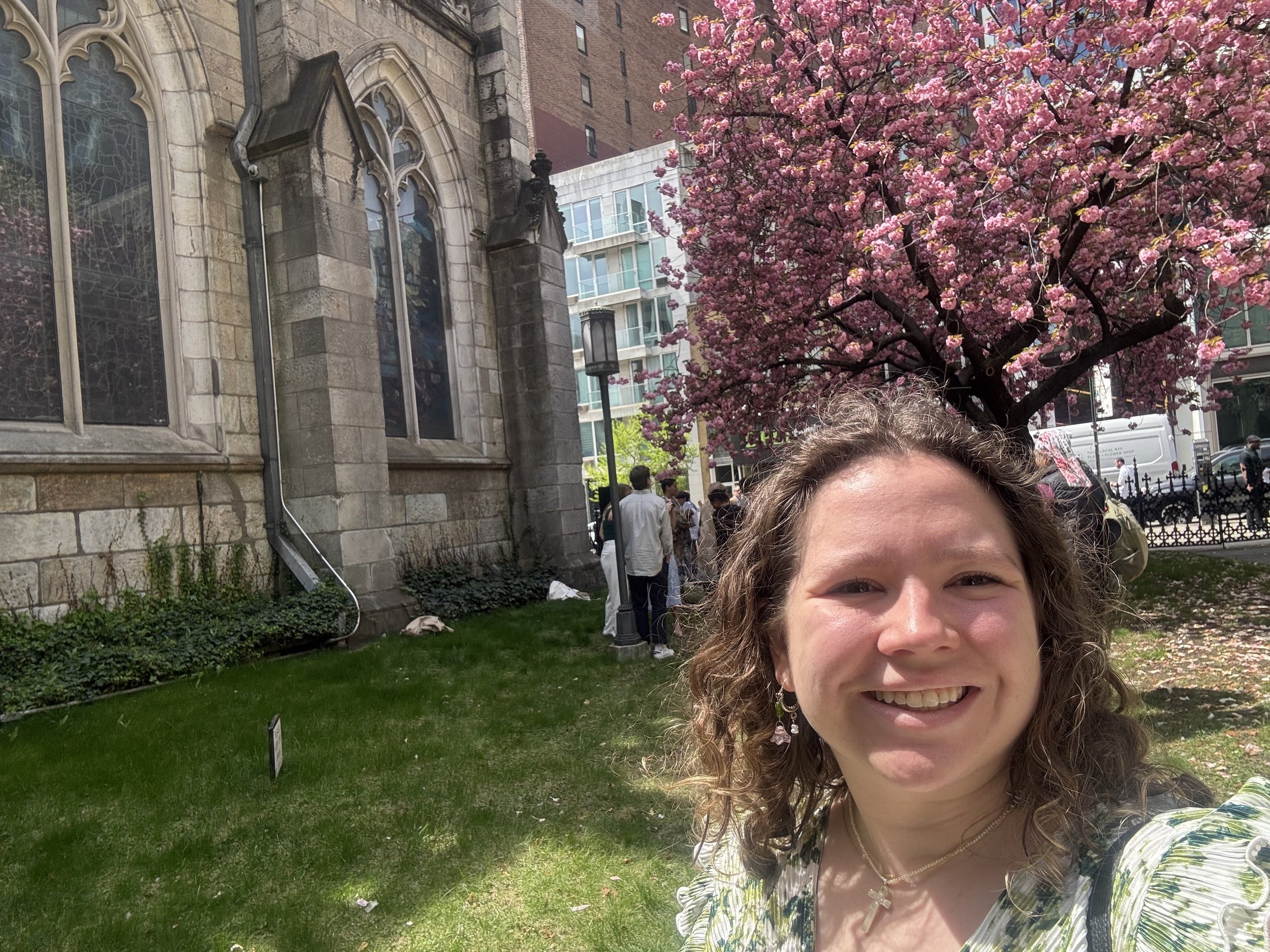
Langley at Grace Church in NYC with an Easter Parade

"I looked and saw a nurse, dressed all in white, standing by a bed in the makeshift ICU. "Why do you seek the living among the dead?" she asked, pulling back the curtain to reveal an empty bed. Confused, I turned and walked outside, leaving the hospital as if it were a tomb, and stepped into the streets." 

There were hundreds of people there, laughing and talking, strolling hand in hand, children playing in the parks, and hugging one another as they met on busy sidewalks. The shops were full. The streets were full. The city was overflowing with the sounds of life, joyous and unending, beneath a clear, sunny sky. I stood transfixed. Then I remembered: it was Easter Day!—Steven Charleston's Facebook Page, Easter 2020.

In case you did not see Bishop Charleston's previous Easter Facebook Page, here it is! He tells us what the resurrection of our state, country, and world will look like. He constantly reminds us to look fear in the eye and shows us what hope looks like. Reread the resurrection stories of Jesus. So often, he says, "Fear not. Do not be afraid; Peace be with you." 

Not being afraid means knowing that God is beside us and cares for us. God walks beside us today so that we, again this year, can bring the joy of Easter out of our churches. The Easter Parade is a reminder of a movement into our streets, shops, and workplaces to share the good news.

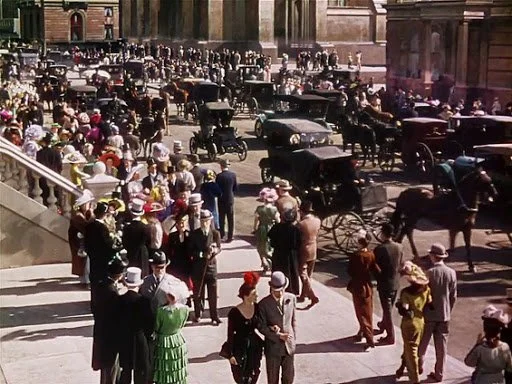
Customs and traditions can also help us remember God's love as God walks with us, especially during a joyous holiday such as Easter. My granddaughter Zoe and I have a custom of watching the movie Easter Parade on Holy Saturday. Later, on an Easter Day after lunch, I watched Easter Parade with our oldest granddaughter, Langley, who had never seen it. That night, she showed me pictures of that day's Easter Parade in New York City. It was very different from the past, but still joyous. 

Last Easter, Langley, who is now in school in New York, sent us a picture of the Easter parade at her church in the city. A tradition celebrated even when we are apart.

We need traditions to remind us of life and love from the past. We also live in the present and carry traditions forward to keep remembering. Customs can be as simple as watching a movie with people you love. Traditions help us remember a time of God's love and promise. Sometimes, we can enjoy the experience even more in our memories.

The joy of the great fifty days of Easter is an ideal time to celebrate family traditions and memories of love.

Chanting as an Offering

Chant Exsultet Easter

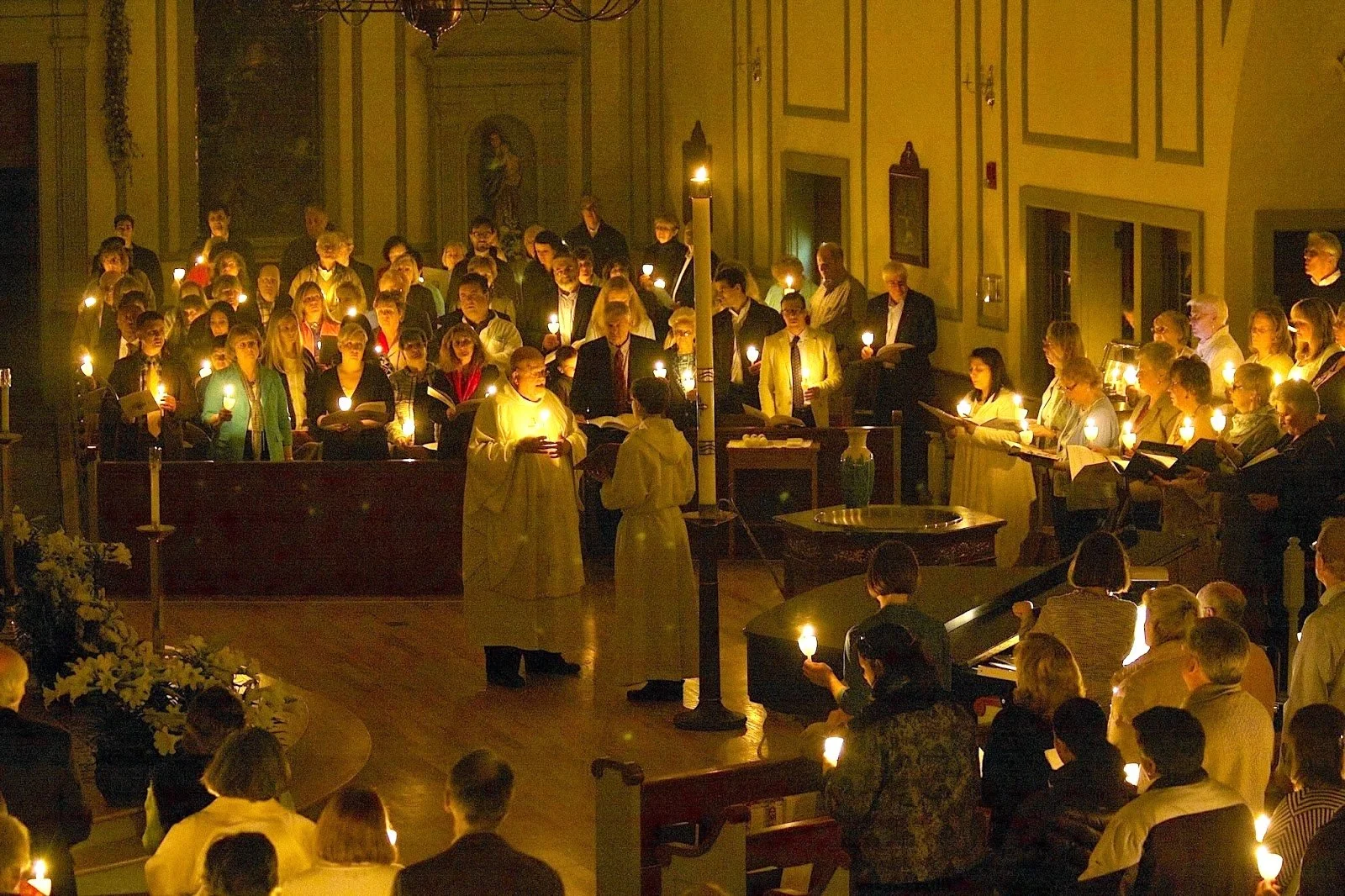
chanting at the Easter Vigil

“Chant calls us out of chronological time, in which ‘now’ can never be located, and into the eternal now, which is not really found in time.” —David Steindl-Rast in The Music of Silence: Entering the Sacred Space of Monastic Experience (HarperOne, 1995).

David Steindl-Rast reminds us that when we use this ancient voice of praise and prayer to God, we stand in the presence of ancient angel choirs. We change the way we address God and each other. The words become notes. The message we chant sounds different. The chant itself is soothing and comforting. 

The music takes us to another place and another time. The sounds open our world to a new dimension. Chanting slows the words of the message. The squirrels running in the cage in our heads slow down and grow quieter. Sometimes, time seems to stand still, and we feel at peace. We are home.

The chant that deacons most often sing is the Exsultet, which is sung after the newly lit Christ candle is brought back into the church at the Easter Vigil. This music becomes part of my body long before Lent begins, even if I am not the deacon designated to sing this lengthy Canticle.

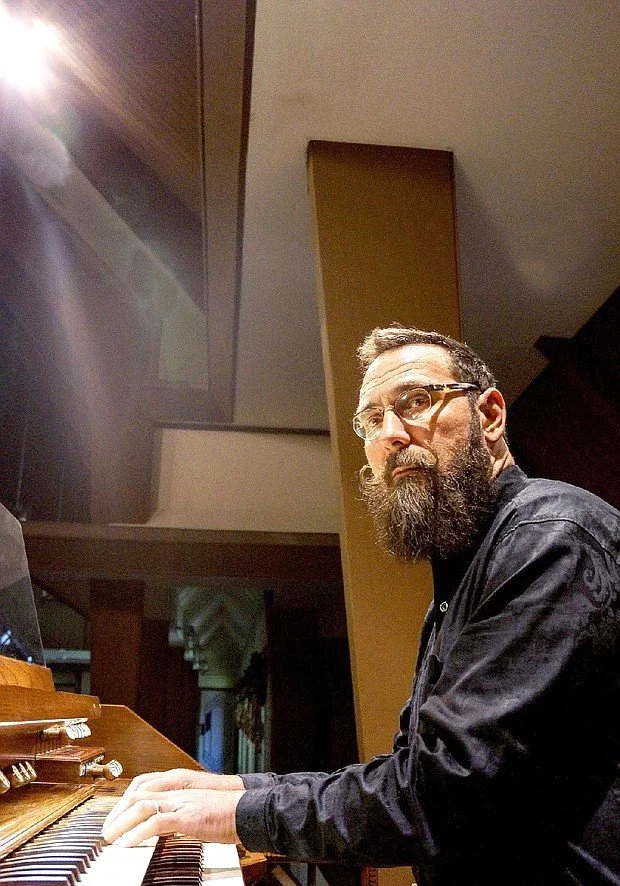
Jason Pennington, the music director at one of my previous churches, describes the Exsultet as “one of the most difficult chants in the Church’s treasury of song, sung at the opening of the Great Vigil. It is the culmination of the events of the Holy Triduum, as the congregation holds their candles in the shadow of the one Paschal Candle. The choir, not yet allowed into the stalls, stands in the nave with the faithful as that most beautiful of Canticles is intoned, promising us all the immeasurable gift of salvation.” 

I keep a note from Jason from our last Easter together, when I began experiencing more mobility issues and standing for a long time became more difficult.

“She endured excruciating physical pain to stand for the lengthy Canticle, drawing each breath to acclaim its message of life. She paced it well, taking her time and savoring every phrase as if it were the very first. This was a beautiful gift of ministry, a Holy Spirit gift that put ministry before self. And isn’t that exactly the lesson to be learned at the Mandatum not two nights before: ‘I give you a new commandment, that you should love one another.’ Joanna’s lovely, quiet chanting voice trembled with pain yet was filled with joy. This was Easter.”

I keep Jason’s note as a reminder for me and others that chanting is always an offering, never a performance.

Joanna. https://www.joannaseibert.com/