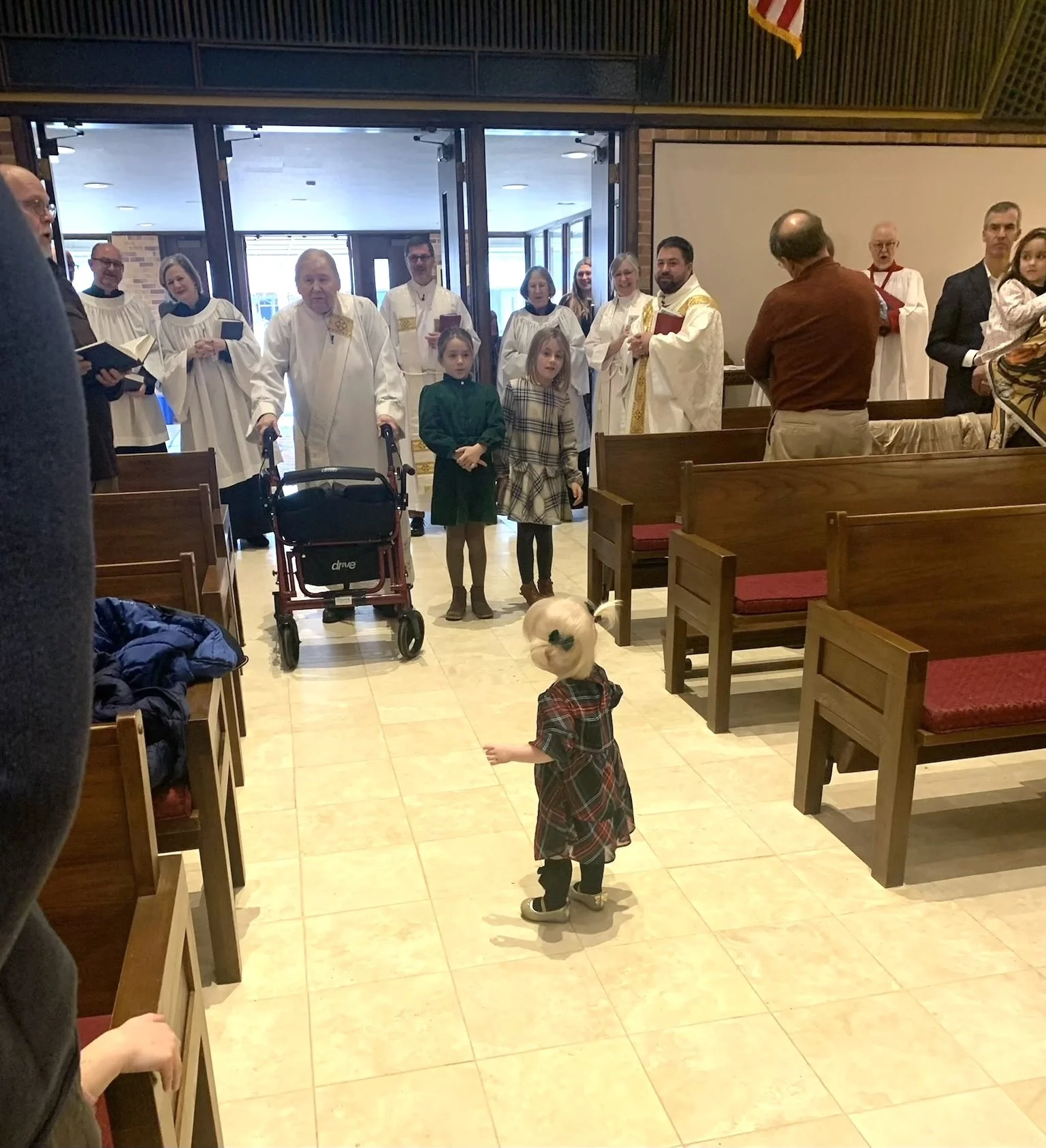
Leaving church with voices of children

Church Dismissal

“He called a child, whom he set among them, and said, “Truly I tell you, unless you change and become like children, you will never enter the kingdom of heaven. Whoever becomes humble like this child is the greatest in the kingdom of heaven. Whoever welcomes one such child in my name welcomes me.”—Matthew 18:2–5.

One of my favorite parts of the 10:30 service at St. Mark’s Episcopal Church is at the end, when several young children come to help me with the dismissal at the back of the church. They are usually sweet girls, though an occasional brave boy joins them. On rare occasions, they even walk down the aisle hand in hand with me to reach the back of the church. 

There are so many words I would like to say to them. I want them to learn to love being part of a church community and to worship together. I want them to know they are the future of the world and of Christ’s church. I want them to see that this place is open to them for the rest of their lives.

I want them to know this is a safe place. I want them to know this is where they will find a community that worships a loving God. I want them to know what they can learn from this worshiping community at Saint Mark’s.

This can be the gift they inherit and pass on to their children and grandchildren, as my mother and grandparents did for me. I want them to learn what Jesus said when the disciples asked him who was the greatest in the kingdom of heaven. Jesus pulled a child from the crowd and said that the greatest in the kingdom of heaven are people like these.

Frederick Buechner writes about our children: “Children live with their hands open more than with their fists clenched. They are people who… are so relatively unburdened by preconceptions that if somebody says there’s a pot of gold at the end of the rainbow, they are perfectly willing to go take a look for themselves. Children aren’t necessarily better than other people. Like the child in “The Emperor’s New Clothes,” they are just apt to be better at telling the difference between a phony and the real thing.1”  

 Therefore, I must be careful about what I say and always try to speak the truth. Of course, there is no way to tell these amazing children all this. But I can invite them to be part of the final part of the church service, simply love them for those brief moments at the back of the church before they go home, and remind them that this is a place of love.

1Frederick Buechner in Beyond Words.
Joanna Seibert joannaseibert.com. https://www.joannaseibert.com/
 

Faith=Trust=Love=Healing

Faith =Trust=Love=Healing

“Faith is often understood as accepting something you can’t understand. The Greek word for faith is pistis, meaning “trust.” Whenever Jesus says to those he has healed, “Your faith has saved you,” he means they have found new life by surrendering in complete trust to the love of God.”—Henri Nouwen in You Are the Beloved (Convergent Books, 2017).

Henri Nouwen speaks to us this morning about faith in God. He reminds us that we often see faith as believing or accepting something we cannot explain or understand.  

Jesus, however, says faith is trust, trust in the unconditional love of God for us that never ends. Knowing this keeps us from looking for and demanding love from other people or from anything other than God. Addictions are love for something other than God. Family misunderstandings arise because, in essence, we do not feel loved or cared for by other family members.  

We do not feel appreciated by other friends, despite all we have done for them. We have given our lives to our work, family, and church, and we perceive that they no longer appreciate us. We have offered conditional love. We have forgotten what unconditional love is like because we have stopped offering it or believing in it.

Whenever Jesus tells those he has healed, “Your faith has saved you,” he is saying that you have surrendered in complete trust to the love of God. That surrender, the trust in an unconditional love continually offered by our God, has healed our hearts and souls, even if physical healing never occurs.

Joanna. joannaseibert.com  https://www.joannaseibert.com/


Resurrection Stories

Resurrection Stories

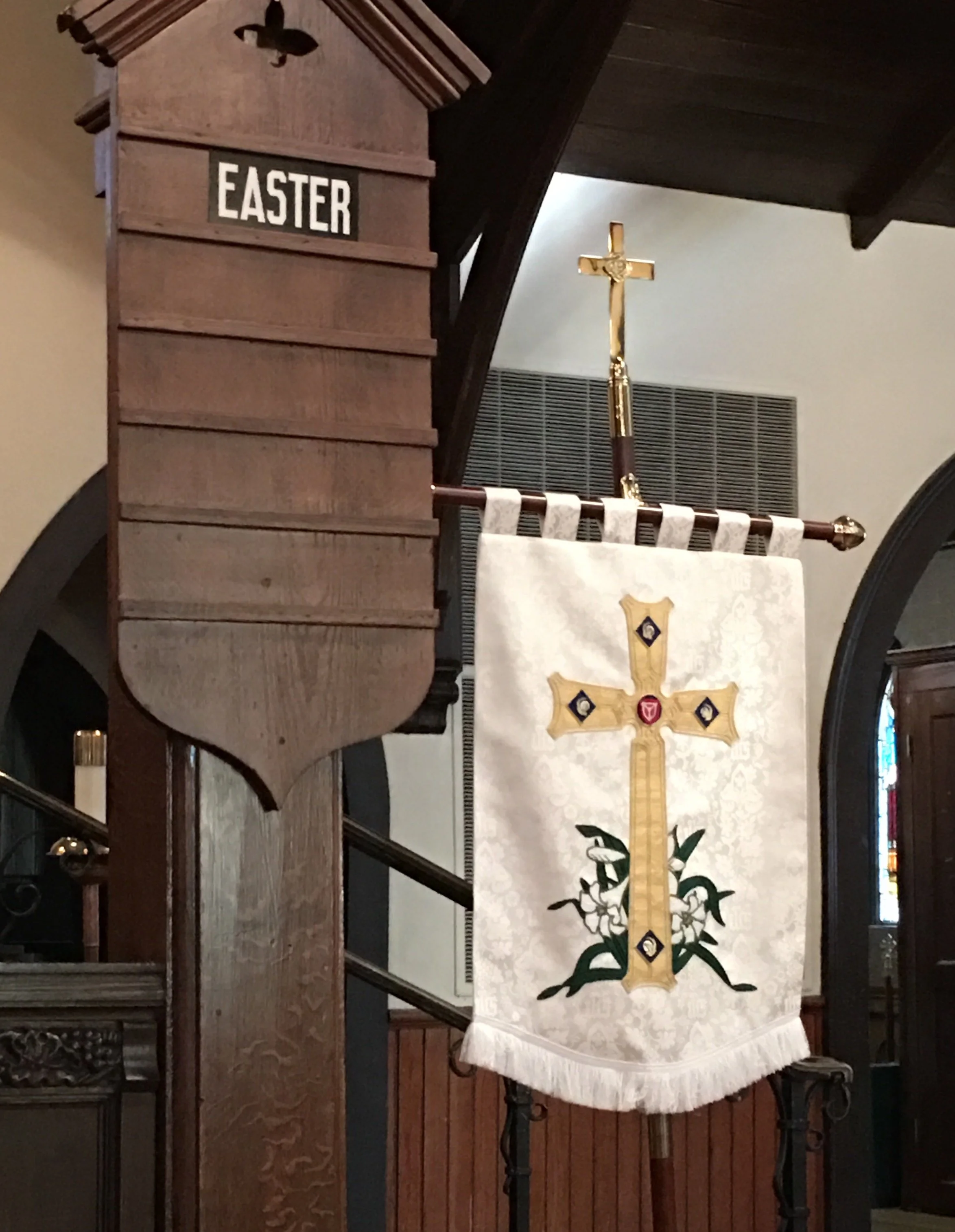
Easter Banner Trinity Cathedral

“Our memory of Jesus’ resurrection fails us if we understand it only as a miracle. Jesus’ resurrection was indeed a miracle; however, it needs to be more than a miracle. It needs to be normal … every day … how we live and breathe: with resurrection power.”—Br. Curtis Almquist, SSJE, from “Brother, Give Us a Word,” a daily email sent to friends and followers of the Society of Saint John the Evangelist (SSJE.org). 

This is at the heart of spiritual direction, encouraging spiritual friends to see daily and yearly resurrections in their lives amid the daily Good Fridays that present themselves. It often takes more than three days to become aware of these resurrections. However, as we become more conscious of them, we become more open to trust and a little more patient, trusting that there will be a resurrection from each new darkness we face. 

My experience is that I most often draw closer to God and spend more time with God in the darkness. On the dark Good Fridays of my life, I learn about surrender, “re-turning” my life and my will over to God. We learn to look for a tiny light in the darkness to lead us through it to a new, resurrected life.

A close family member or friend dies. We learn about the sacredness of life and spend more time living in the present with gratitude for each day. We learn to honor and be grateful for our relationship by extending to others the love and kindness we knew in that relationship.

Our children act out. We recognize our role in it and try to change our relationship with them.

Our job becomes increasingly difficult. But then we finally leave it, or maybe even get fired. After much time, we find a job that is our bliss.

 A medical illness slows us down. We seek a more meaningful life by living at a slower pace, a day at a time.

We are caught in our addiction and lose our job. We change our whole lifestyle and outlook to live without the addiction.

Someone has harmed us mentally, physically, or spiritually. Over time, we realize that unless we can forgive and move on, that person continues to hurt us. We then slowly learn to practice daily forgiveness for the small hurts we feel each day.

Miracles become ordinary. We see God at work in our lives. Resurrection.

A gift of the past pandemic was slowing down our lives and living in the present moment. Slowing down is one of the best ways to see ordinary miracles. This is resurrection.

Today, our prayers are also for those whose lives cannot slow down, especially our healthcare workers and first responders.

Joanna  joannaseibert.com https://www.joannaseibert.com/