Spiritual Practices and Paths for Difficult Times

 Guest Writer: Jennifer Horne

Spiritual Practices and Paths for Difficult Times

Walking a Pandemic Labyrinth in the Woods
“What we are looking for on earth and in earth and in our lives is the process that can unlock for us the mystery of meaningfulness in our daily lives. … Truly the last place it would ever occur to most of us to find the sacred would be in the commonplace of our everyday lives, and all about us in nature and simple things.”—Alice O. Howell in The Dove in the Stone: Finding the Sacred in the Commonplace.

In March, during the pandemic, we listened to the endless honking of Canadian geese on the lake by our home, the sounds reminding me, in my fear and helplessness, of slowed-down ululations of grief. Sometime in April, when I could no longer stand to watch images of COVID victims on the nightly news, I began doing tai chi in my study between 5:30 and six while my husband watched CBS. 

I’d been practicing tai chi a couple of times a week for the past seventeen years, after taking a class from James Martin, a kind, elegant Vietnam veteran who had learned the practice to soften the demons he’d brought home from the war. James died fifteen years ago, and as I followed the path of the twenty-four poses, beginning, moving through the sequence, and returning to where I started, I felt grateful for the legacy he left, for how he taught us to “take a little journey,” breathe, and let our minds rest as our bodies moved. 

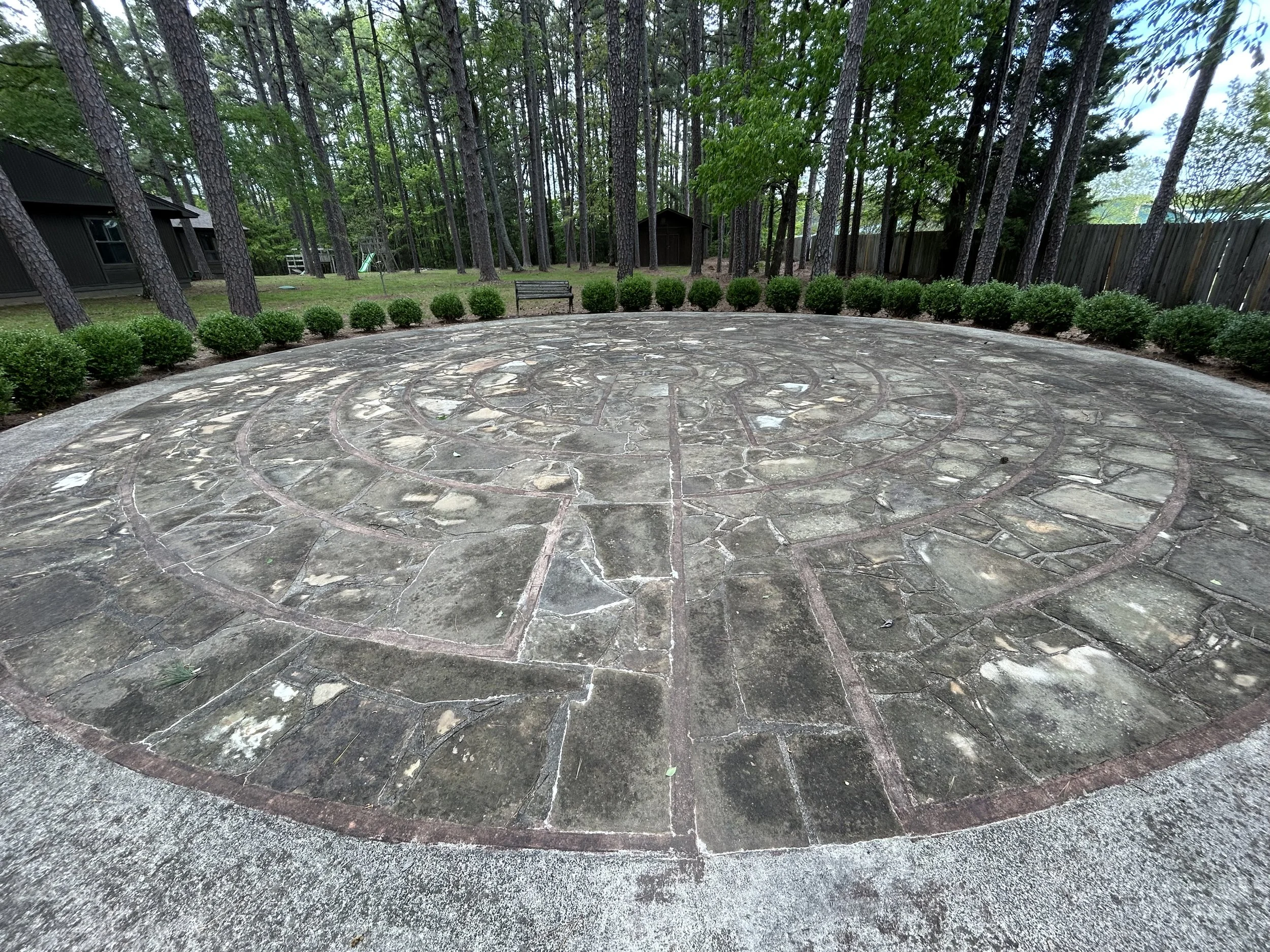
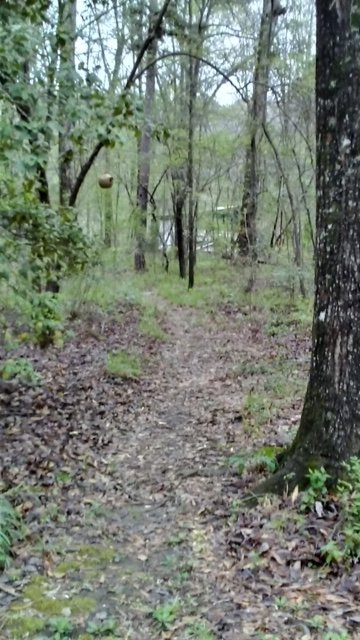
In fall, as darkness closed in and the days grew short and cold, I felt the need for some kind of outdoor movement, something brief but restorative, close by. Our house is nestled in the woods, and I had been wanting to make a labyrinth but didn’t have the right spot. Instead, I made an oval meditation path in the woods off to the side of the house, finding, raking, and marking its circumference, then placing whimsical items along the way, all related to birds: an old birdhouse with a bright orange plastic egg inside, a birdcage with no bottom, and a piece of driftwood shaped like a heron’s head. 

My favorite part is the approximately 2-by-2-foot nest of twigs I made at a bend in the path. As I walked, these things reminded me of how we were “nesting” at home but would be able to “fly farther afield” someday, and the shape of that simple path reminded me that life happens in cycles and circles as well as in linear time. 

Whenever my mind got too busy with pandemic thoughts, I loved going out and walking for as long as I needed to, looking at branches, sky, and ground, so that my inner space came to resemble the outer calm and natural changes I was observing.

Staying home to stay safe from the virus, we weren’t going anywhere, and it felt constraining. Still, on my path, even though I walked in circles, it felt like I was going somewhere—somewhere deeper, more expansive, connected to a greater being, to an out-of-time beyond the current fraught moment.
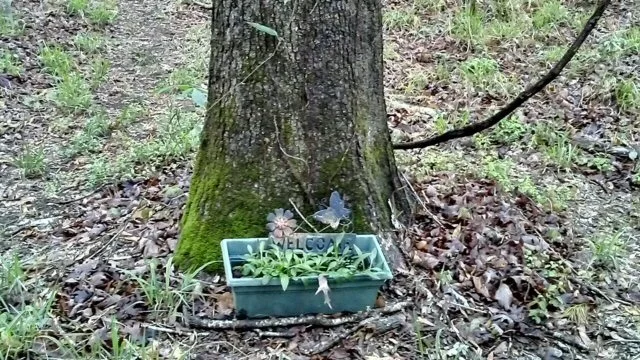
On the last day of March, I went out to the path after the rain stopped. The woods are greening at time-lapse speed, and the path is sprouting life: wild iris I’d never noticed before, and also the first shoots of the poison ivy that covers the woods in summer. Soon there will be ticks and chiggers and the occasional snake as well.

It’s time to leave the path until next fall, another cycle.

As I do my evening tai chi, repeating the phrase “this day, this light, this moment, this breath” whenever I need to recenter myself, I move toward the woods and then away from the window. I can’t see the path now, but I know it’s there. I imagine that, in times to come, it might remind me that even when I’m stuck, I can still find ways to move forward so that, in walking my own small path, something good can happen.

Jennifer Horne

Recent Poet Laureate of Alabama

Recent books:
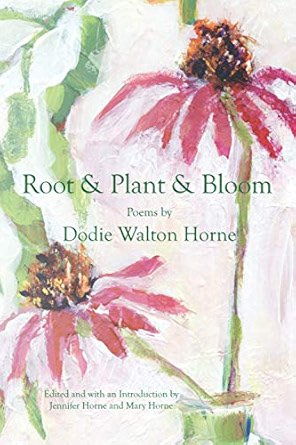
 Dodie Walton Horne in Root & Plant & Bloom: Poems by Dodie Walton Horne, edited by Jennifer Horne and Mary Horne, 2020. Jennifer published in 2024, Odyssey of a Wandering Mind: The Strange Tale of Sara Mayfield

and Letters to Little Rock, memories of her father.

Joanna Seibert joannaseibert.com


.


Koinonia

Koinonia

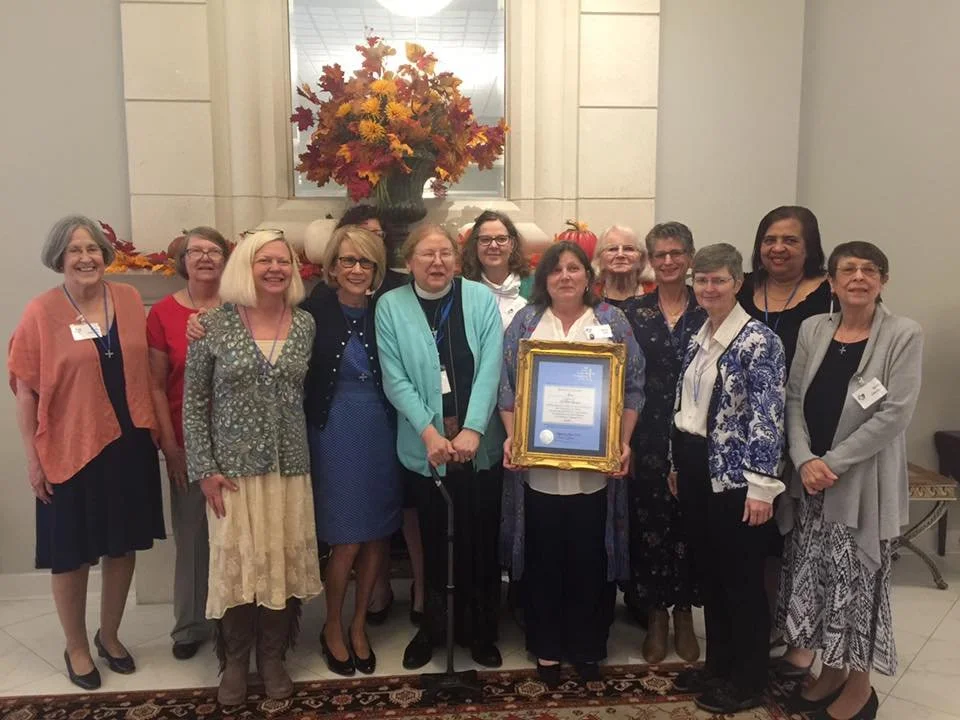
Formation of Grace Chapter Daughters of the King 2018 at Saint Mark’s

“All who believed were together and had all things in common; they would sell their possessions and goods and distribute the proceeds to all, as any had need.”—Acts 2:44–45.

In her brilliant sermon at Saint Mark’s Episcopal Church, Patricia Matthews reminded us of the winning word in the 2018 Scripps National Spelling Bee that weekend: Koinonia. Fourteen-year-old Karthik Nemmani from McKinney, Texas, correctly spelled this word of Greek origin, meaning Christian fellowship or communion with God. It primarily refers to fellowship with other Christians in community. Patricia reminds us that the 91st National Spelling Bee, with its 515 qualified participants, was televised on ESPN. On this sports network, we watch football, basketball, baseball, or soccer more often! 

When I heard Patricia say the winning word that weekend and again on Sunday, my heart skipped a beat. Koinonia had been on my heart for almost a week. Langley, our oldest granddaughter, had just graduated from high school and was headed to the University of Georgia. I had been praying about how I could support her in this decision. The answer came as I read a review of two books about Clarence Jordan in The Christian Century. 

I want to remind Langley about Mr. Jordan, perhaps one of the University of Georgia’s most outstanding graduates. His proficiency in Greek led him to produce his “Cotton Patch” version of the New Testament, as he strove to communicate the Bible’s message in everyday language. Jordan also founded Koinonia Farm, a farming community of believers who share their lives and resources, following the example of the first Christian communities. From this movement came Habitat for Humanity International, founded by Millard Fuller, and later The Fuller Center for Housing, Jubilee Partners, and significant support for the Civil Rights Movement.

Also, that Sunday at our church, a group of women met to begin discerning how to create a Daughters of the King chapter at St. Mark’s. Daughters of the King also seek koinonia—specifically, fellowship with other women who seek a more profound spirituality and relationship with God through prayer, service, and evangelism. 

I will keep koinonia in my heart for a few more years to see if I notice any more serendipitous connections or synchronicity in our world.

Now, over eight years later, the newly formed Grace Chapter of Daughters of the King at St. Mark’s includes more than 40 women who meet monthly and pray daily for every member of this congregation and for the needs of the world. During the pandemic, the Daughters launched a new ministry, Free Read, which reaches out to women in prisons, recovery centers, and homeless shelters who have requested books to read. The ministry was the brainchild of Tandy Cobb Willis and has since expanded into a ministry of the whole church.

Since writing this, we have traveled to Texas, El Dorado, Shreveport, Hot Springs, Memphis, and Springfield, Missouri, to meet other women of the Daughters of the King.

I now love hearing about our grandchildren’s adventures and connections because we travel less and less.

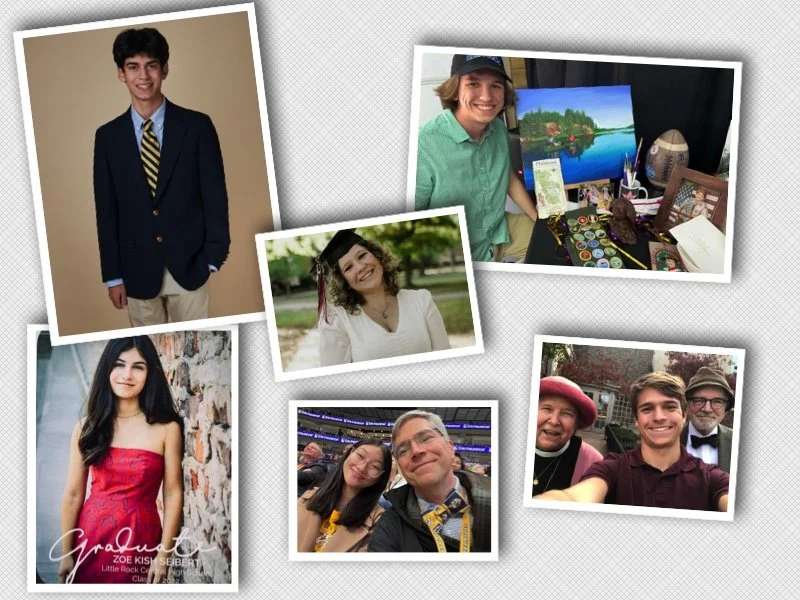
Langley has now graduated from Georgia and is finishing her second year at NYU Law School, studying international law. Zoe will soon graduate from Tulane as a Newcomb Scholar and has experienced Koinonia New Orleans’ style! Last fall, she spent a semester in Copenhagen. She traveled to New York City and Stockholm for two women’s conferences that summer. 

Mac graduated from the University of Georgia last year and then spent a year in Liverpool to earn a master’s in sports management. Gray is finishing his second year at Kentucky, studying art and journalism. Turner is finishing his second year in the honors college at the University of Arkansas, studying biomedical engineering. He visited Belgium last summer to study water management. Elizabeth is now driving. 

Our community continues to grow as we hear stories of connections from across the country and around the world. I have faith in the future as I see what our children’s children are doing.

The Koinonia continues.

Joanna. joannaseibert.com https://www.joannaseibert.com/