Charleston: Learning to Read Spiritual Signs

Charleston: Learning to Read Signs in a Spiritual Life
“You have seen the signs around you for some time now. You are beginning to understand which way the wind is blowing. The spiritual life is not an exercise of imagination but of interpretation. We see the signs. Understanding them as a coherent message requires skill. The handwriting on the wall tells us nothing unless we have learned to read.”—Bishop Steven Charleston, Facebook Page.

“Learning to read the signs on the wall.” Bishop Charleston offers us a helpful metaphor for living and discerning the spiritual life. As spiritual friends, we help each other see where God works in our lives. We have friends who help us connect the dots, suggesting that a storm may be coming when we miss the signs. We are called to remember how God led us in the past. We have seen the signs. When one of us cannot presently see the signs of God alive in our lives, those who can see them help each other. 

This is why God calls us to community. We cannot do this alone. Our spiritual practices, including prayer, contemplation, study, Centering Prayer, the labyrinth, praying the Rosary, and intentional walking, help us interpret the handwriting on the wall—the hand of God caring for us, leading us, and never abandoning us. We practice some spiritual disciplines by ourselves; others, such as corporate worship, we practice together. Whether we experience these disciplines alone or together, we are called to share what we learn with one another. Discernment about where to go or what action to take next is most effectively realized in community.

I have friends who sit alone to meditate and say they perceive the direction God calls them to in their lives. By listening, they discover what they should do. All the better for them. I could never do this except on rare occasions.

My experience is that others notice signs I have missed, and the course of action I should take is readily apparent to them. All of this, of course, requires much trust and life in a community.

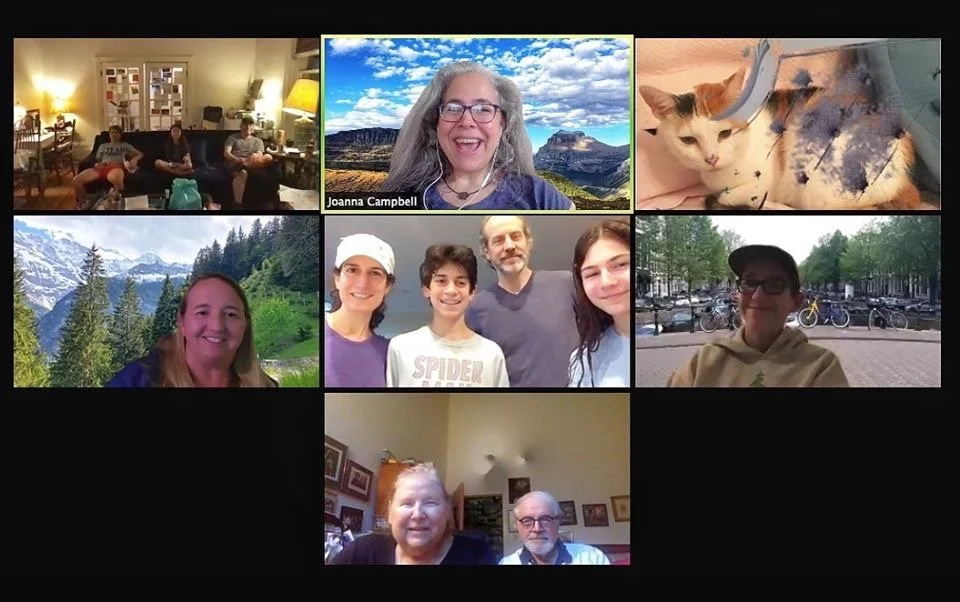
I was continually amazed at how our children, grandchildren, and some older adults learned to stay connected during the pandemic—Zoom, Facebook Live, game apps such as Kahoot and Scrabble GO, watching movies together via Watch2gether and Netflix Party. But, of course, this is just the tip of the iceberg! Isn’t it wonderful that we learn to do all these things from our younger generation!

Joanna. joannaseibert.com.  https://www.joannaseibert.com/


Sue Monk Kidd: Connections, Travel Near and Far

Sue Monk Kidd: Connections, Travel Near and Far

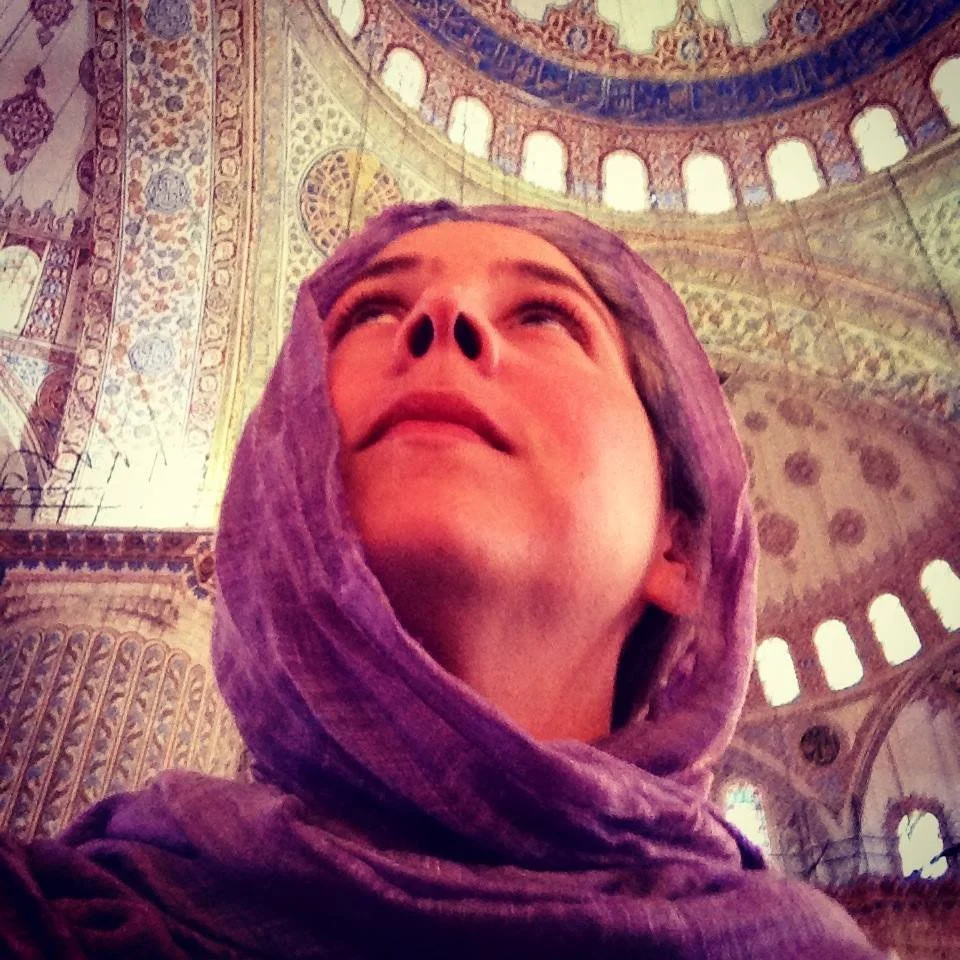
blue mosque

“Remember the little flame on the Easter candle. Cup your heart around it. Your darkness will become the light.”—Sue Monk Kidd, “A Journal Entry” in When the Heart Waits: Spiritual Direction for Life’s Sacred Questions (HarperOne, 1992).

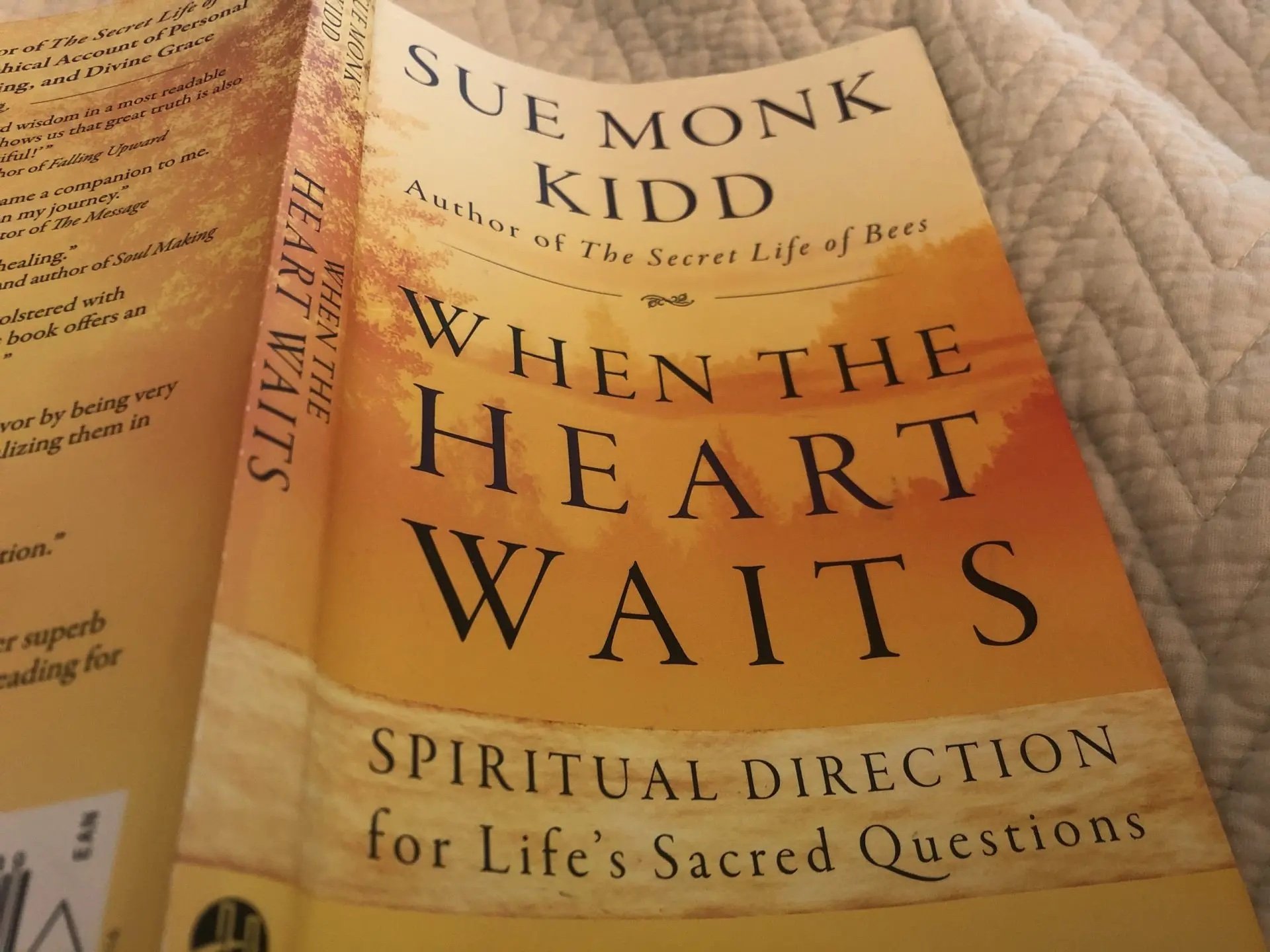
I wish I had Sue Monk Kidd’s When the Heart Waits: Spiritual Direction for Life’s Sacred Questions with me to read when meeting with other spiritual friends. I hope to remember her message about waiting. Many friends seeking direction live in the biblical tradition of waiting, the “night sea journey”: Jonah in the belly of the whale, Christ in the tomb, or Joseph in the well, where there is only darkness.

 I hope to remember Kidd’s phrase when we have difficulty letting go: “Put on your courage suit” and cross the bridge to letting go.

I began this book on Maundy Thursday in the Chapel of Repose, where the Reserved Sacrament was kept. I ended it in Greece, with my husband, my daughter, and her husband, in the fourth week of Easter as we overlooked the Acropolis. 

Kidd’s later books recount her trips to Greece, especially with her daughter, and her growing connection to the feminine aspect of herself and God. My daughter and I wrote a book together, as Kidd and her daughter did—so much serendipity.

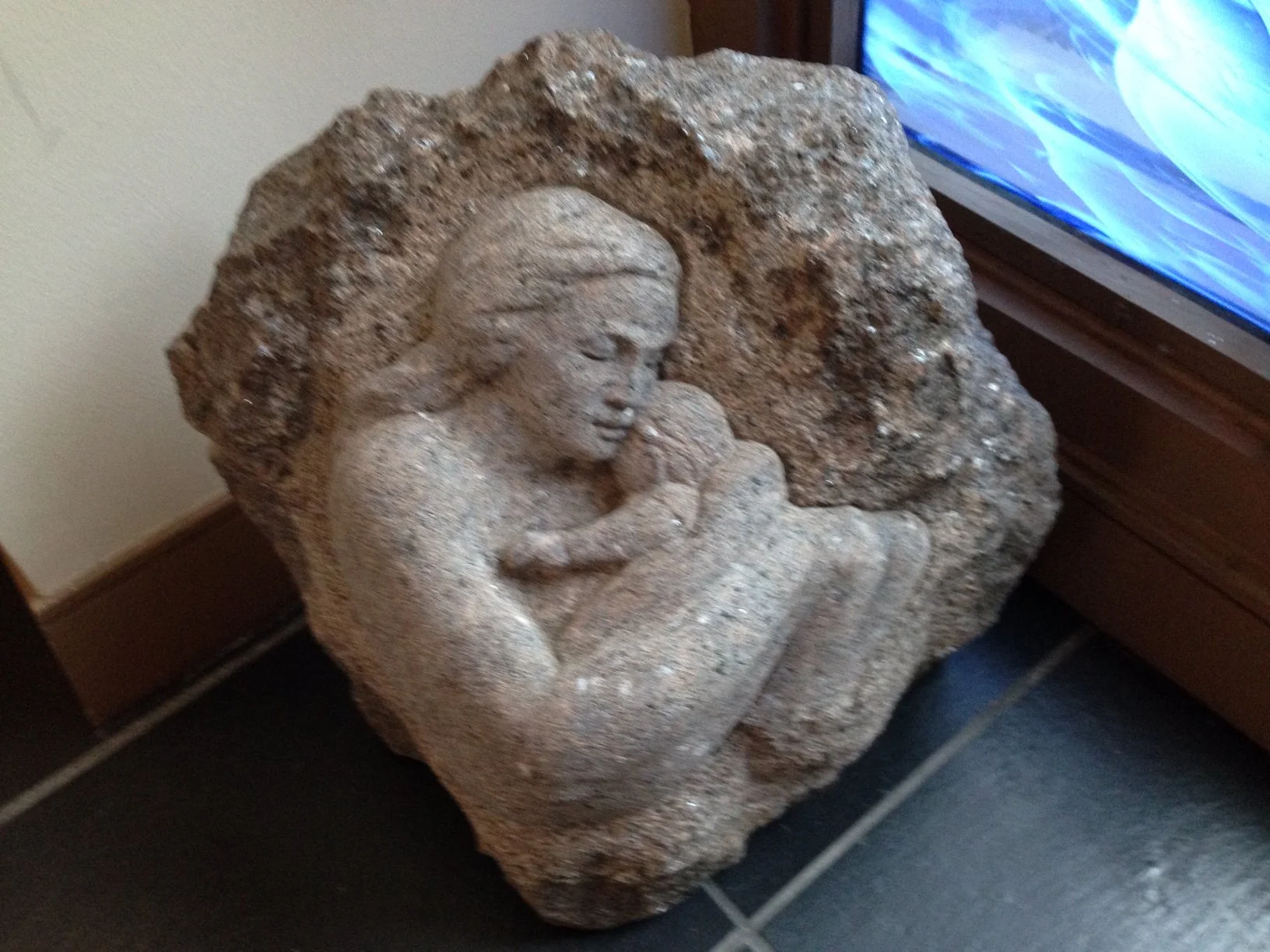
Kidd ends her book by describing a drawing of a mother and child that emerged from her true inner self, based on a sketch she made at Kanuga, the home of my spiritual direction class. Several years ago, on Mother’s Day, we dedicated a sculpture of a mother and child in the garden next to St. Luke’s chapel, a piece my husband had commissioned. 

More connections.

As you can see, Sue Monk Kidd captures my attention and speaks to me. Today, as I relive journeys, I try to follow more of Kidd’s guidance, stay in the moment, and feed my soul real food instead of junk food. 

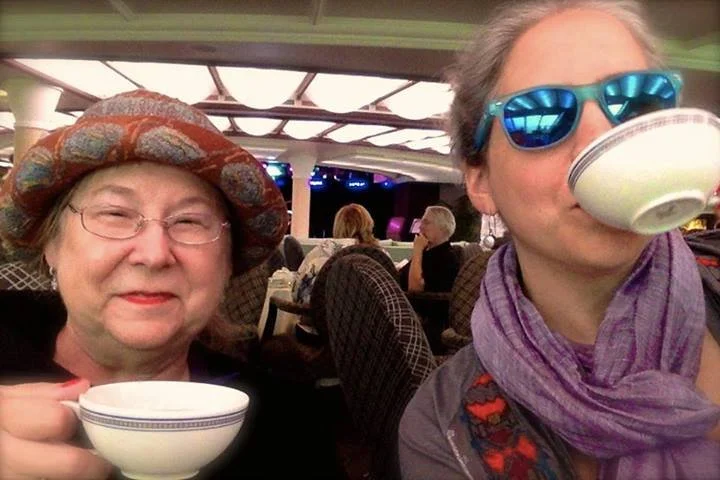
I am remembering past trips to ancient and nearby parts of the world we both visited with our daughter and granddaughters on land and sea, where we learned, surrounded by those we love and away from our busy world, to let go and be in the moment.

Retrace your steps in your mind to a country you once visited with loved ones, perhaps carrying a book by a favorite author. Maybe you traveled to England, Italy, China, Spain, Germany, Greece, Norway, France, South Africa, Canada, Mexico, or Israel.

I remember Buechner’s words in Wishful Thinking: “There are two ways of remembering. One is to make an excursion from the living present back into the dead past. The old sock remembers how things used to be when you and I were young, Maggie.”


The other way is to summon the dead past back into the living present. The young widow remembers her husband, and he is beside her. When Jesus said, ‘Do this in remembrance of me’ (1 Corinthians 11:24), he was not prescribing a periodic dose of nostalgia.

            Give thanks for those you love who have traveled with you. Give thanks for writers who speak to your soul. Pray for that author, your family, and the people in that country to remain safe, especially the families in Ukraine and the Middle East.

Joanna joannaseibert.com. https://www.joannaseibert.com/
 

Sue Monk Kidd: Incubation in Darkness to Easterlngs

Sue Monk Kidd: Incubation in Darkness

Family Zoom

“Today (August 12) is my birthday. It makes me think of the new life I’m incubating and the Birth-day still to come. Today, I’ll talk to myself. I’ll say, ‘Accept life—the places it bleeds and the places it smiles. That’s your most holy and human task. Gather up the pain and the questions and hold them like a child on your lap. Have faith in God, in the movement of your soul. Accept what is. Accept the dark. It’s okay. Just be true.’”—Sue Monk Kidd, “A Journal Entry” in When the Heart Waits: Spiritual Direction for Life’s Sacred Questions (HarperOne, 1992).

Today, we continue sharing stories from author Sue Monk Kidd. I found two unread copies of her book, When the Heart Waits: Spiritual Direction for Life’s Sacred Questions, in my home library. When I saw it on the list for my spiritual direction studies at the Haden Institute, I took it as a sign to read it. I still remember the first time I met Sue Monk Kidd. She was on tour for her book The Dance of the Dissident Daughter. I took all my female partners in my medical group and my daughter to hear her. One of my partners cried the entire time and bought several books.

Kidd is as impressive a speaker as she is a writer. She reminds us of Marion Woodman’s writings on creative suffering in the dark. Creative suffering burns clean, unlike neurotic suffering, which produces more soot. Creative suffering “easters” us or transforms us, chooses a new way, owns our shadow, and heals our wounds—as opposed to neurotic or self-pitying suffering, which is untransforming and leads to despair. Kidd continues to tell us that pain may not kill us, but running from it might. 

At a retreat she led at the Kanuga Conference Center, Kidd described a healing exercise in which we placed cut-up scraps of colored paper on the altar, representing wounds and pain from our lives. We then offered them up, turning them over rather than pushing them down or trying to escape them. 

She reminds us that the most significant events in Jesus’ life occurred in darkness: birth, arrest, death, and resurrection. As tiny bits of light emerge in our lives, we begin eastering—much like the lighting of the Paschal candle and the bringing of light into the dark world at the Easter Vigil. This is a powerful image for me, as the deacon often carries the Paschal candle, saying “the light of Christ” three times before singing the Exsultet, giving thanks for the light. The Paschal candle we use is made of natural wax and, for some reason, is always challenging to extinguish! 

Kidd describes how our addictions keep us unaware of what is going on inside and outside us. When I live in my addictions, I deny the harm to my body, soul, and heart that comes from wearing many false selves. Thirty-six years ago, when I was introduced to a twelve-step program, I got my voice back, but dealing with the tensions of all the false selves remains part of my recovery as I try to live the steps. I experience more and more easterings, or resurrections, but it is still hard work. When the true self emerges, there is light and delight in life. Gratitude is what living in the true self brings. God becomes our playmate, and we find our inner child.

Kidd writes about our accelerated, instant, quick “fast-food” society. I remember talking to a ten-year-old about playing chess, and her response was, “It takes too long.”

Kidd also reminds us of our desire for shortcut religion, seeking what Bonhoeffer called cheap grace, “Long on butterflies but short on cocoons.”

I go down to our den this afternoon and find my husband and our almost thirteen-year-old grandson quietly playing chess. I feel hope.

What great tragedies occurred during the pandemic and in our recent tornadoes in Arkansas, but we are also beginning to see Easterings, with neighbors and churches caring for each other, families checking on each other, families getting vaccinated, and a growing recognition of the value of community and of staying healthy together.

Joanna. joannaseibet@me.com 

https://www.joannaseibert.com/