Our Personality and Our Prayer Life
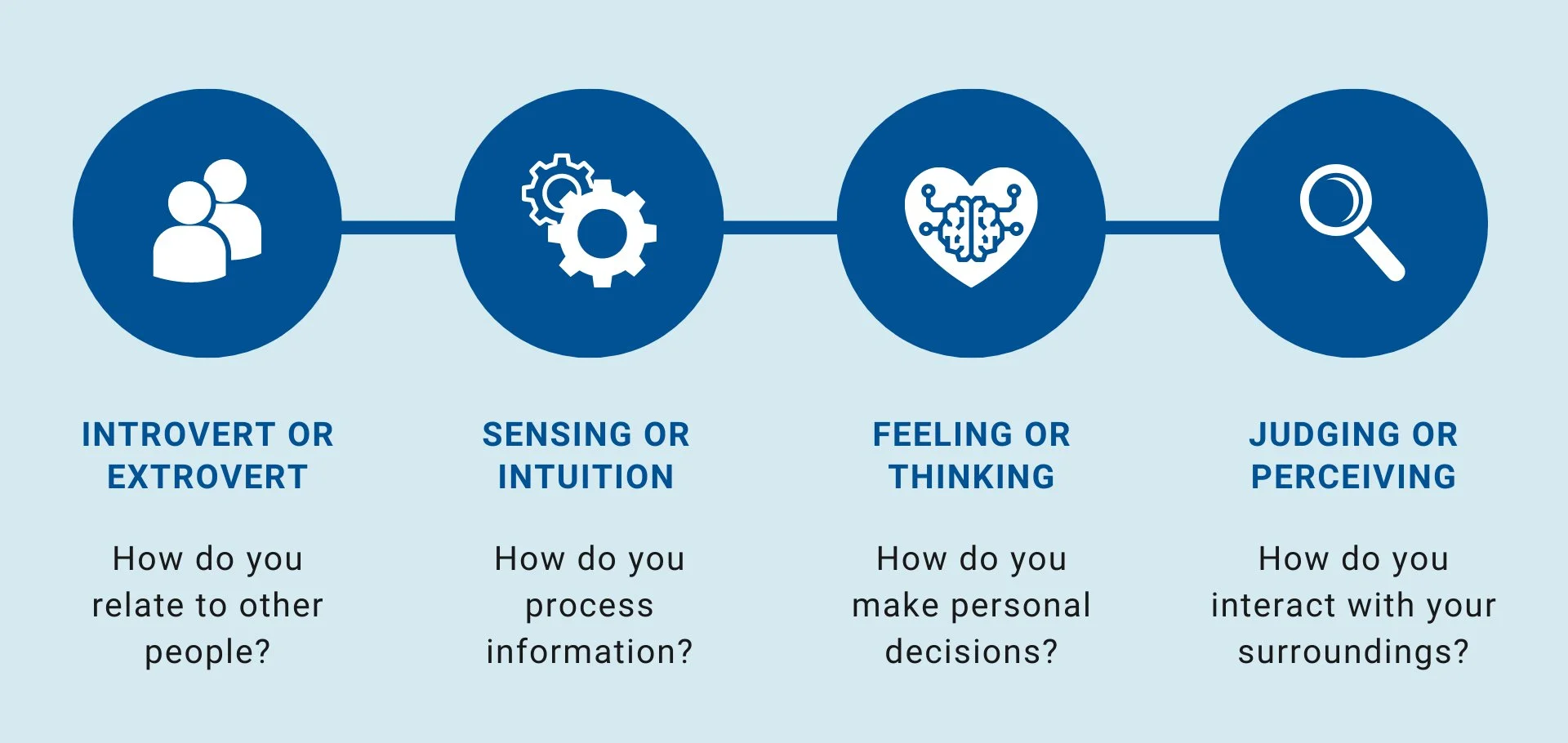
The Myers-Briggs Type Indicator is based on Carl Jung’s theory of psychological types, which describes personality preferences in four areas:
Energy Source. Introverts (I) get energy from within, while extroverts (E) get it from outside.
Information Method. Sensing (S) people gather factual data, while intuitive (N) people consider possibilities.
Decision Making. Thinking (T) people decide what is logical, while feeling (F) people decide based on relationships and what is of value.
World View. Judging (J) people approach the world in a planned, organized way, seeking closure when a problem arises, while Perceiving (P) people are more flexible and spontaneous, keeping options open. When a problem arises, they continue gathering data.—Chester Michael and Marie Norrisey in Prayer and Temperament: Different Prayer Forms for Different Personality Types (Open Door, Inc., 1991).
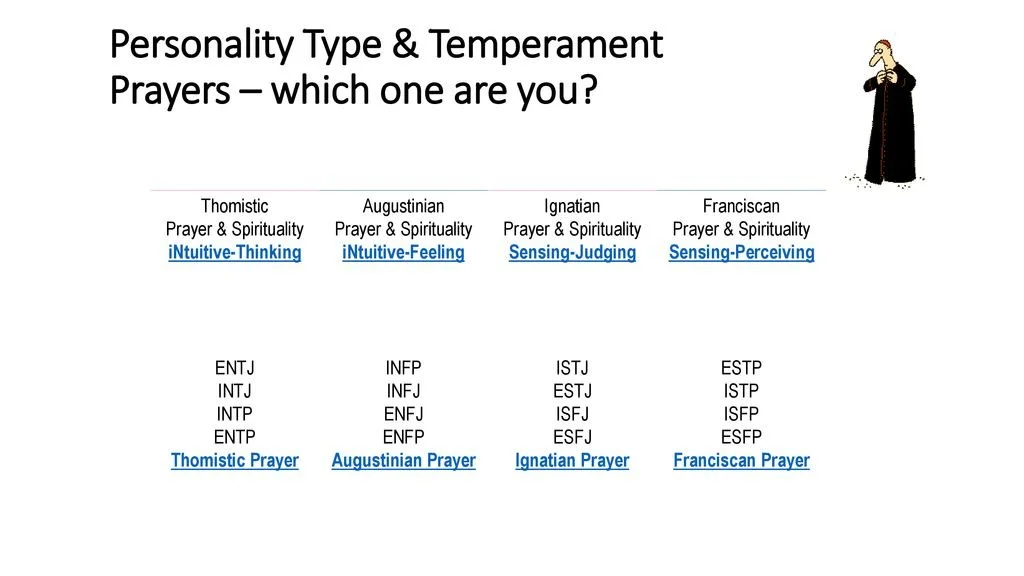
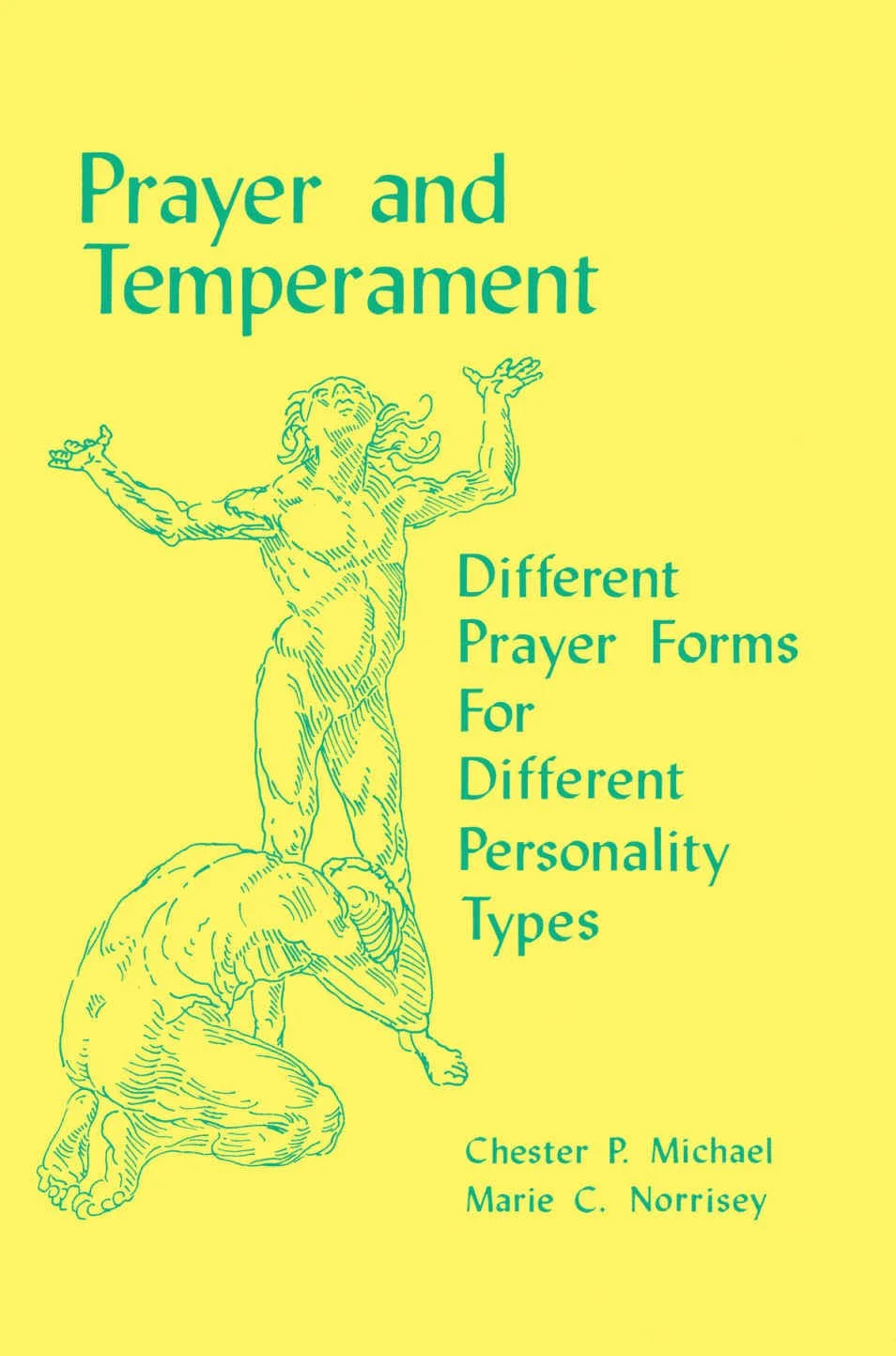
We have discussed how understanding the Myers-Briggs personality types can help us live life on life’s terms. The classic book Prayer and Temperament explains how the Myers-Briggs test is helpful in our spiritual life, especially in deciding how to pray. Lectio Divina, or Benedictine Prayer, is suitable for all personality types.
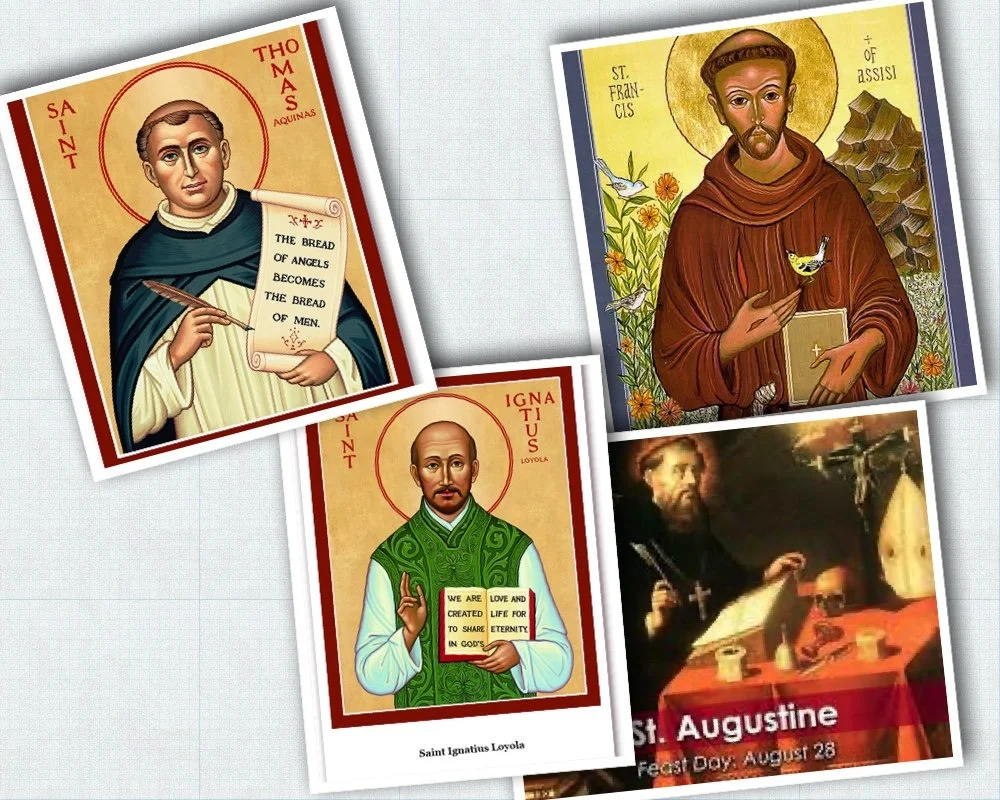
Augustinian Prayer emphasizes feeling and intuition, which may suit the NF temperament best.
The basic temperament of SP may best respond to Franciscan or to the prayer used by St. Francis.
Those with a temperament oriented toward truth, competency, and learning (NT) may best pray using the Thomistic or Dominican spirituality of Thomas Aquinas.
The SJ temperament most readily understands the Spiritual Exercises of St. Ignatius, but NT and NF temperaments may also find them a rewarding form of prayer.
Ignatian prayer projects us into a scene, while Augustinian prayer transposes the words of the Bible so that the Bible speaks directly to us.
Those practicing Franciscan Prayer (SP) must be free and able to go wherever the Spirit moves them. Their prayer leads to action, and their action is prayer. Therefore, they cannot endure long periods of silence.
Those who best practice Thomistic Prayer (NT) are logical and orderly, thirst for truth, and approach prayer almost like a scientific project or mystery to be solved.
Prayer became a mainstay for so many during the past pandemic and social unrest. We learned several more ways to pray to enrich that time. We will talk more about it tomorrow.
Joanna Seibert https://www.joannaseibert.com/