Parker Palmer: How Trees Save Our Lives

Parker Palmer: Trees
“I used to take trees for granted. But these days, I know that spending time in their presence leaves me refreshed and renewed. I wonder if trees photosynthesize the soul as well as sunlight?”

But most of all, I’m drawn to trees because of something W. S. Merwin says in this lovely poem—the way they slowly and quietly cycle through the seasons, as though nothing had happened while our individual and collective lives whirl madly around them. This is Parker Palmer’s response to W. S. Merwin’s poem “Elegy for a Walnut Tree,” published in the weekly column “On Being with Krista Tippett” (5/3/2017).

I want to remember what Parker Palmer tells us about the outdoors, especially trees. Could “trees photosynthesize the soul”? Being outside with trees does something to my soul. Photosynthesis is a process plants use to convert light energy into chemical energy (sugar from carbon dioxide and water), which is later used to fuel the plants’ activities, and it releases oxygen as a waste product. Plants are like transformers, changing one form of energy into another, turning light energy into chemical energy. 

Being outside in a forest transforms and quiets my soul. Soon, the busyness of my mind, the committee in my head, and my to-do list no longer rule me. I am grounded in the earth. I move out of my mind and into my body. I see a world greater than myself, a power at work beyond my limits. 

As I return to the forest, I observe how the trees quietly “cycle through the seasons.” The trees are a permanent icon, reminding us to be the “steady bow,” as the parent Khalil Gibran writes in The Prophet. We are indeed all parents caring for this earth, which in turn also parents us and cares for us.

My father was a forester who, for so many Saturdays, took people out to plant more trees. Often, we would drive by the pine forest to see how the trees were growing. This produced changes in my synapses, so I always had difficulty seeing a tree cut down.

This poem is significant to me today because two large trees in my neighbor’s yard, just outside my window, were uprooted last year. Soon, men with chainsaws took the trees away. I still grieve their absence. 

It helps to remember that our son and his wife had to cut down a dying tree near where they were building a house. They honored the tree by using its wood to make a mantel for their fireplace. Our daughter holds an advanced degree in forestry and returned to Arkansas after teaching at the Wilderness Institute at the University of Montana. I have hope for the future.

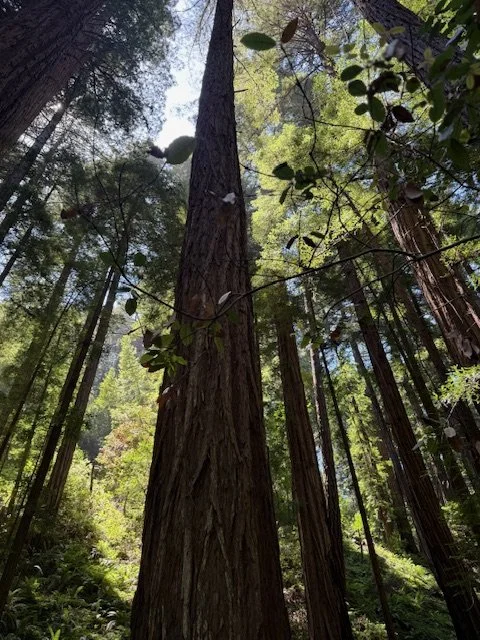
Donna Kay sent me this picture of trees that were meaningful to her.

Trees were nature’s healers for all those who spent more time outdoors during the past pandemic.

Elegy for a Walnut Tree

by W. S. Merwin

Old friend now there is no one alive
who remembers when you were young
it was high summer when I first saw you
in the blaze of day most of my life ago
with the dry grass whispering in your shade
and already you had lived through wars
and echoes of wars around your silence
through days of parting and seasons of absence
with the house emptying as the years went their way
until it was home to bats and swallows
and still when spring climbed toward summer
you opened once more the curled sleeping fingers
of newborn leaves as though nothing had happened
you and the seasons spoke the same language
and all these years I have looked through your limbs
to the river below and the roofs and the night
and you were the way I saw the world

"Elegy for a Walnut Tree" by W.S. Merwin, from The Moon Before Morning. © Copper Canyon Press, 2014. Reprinted with permission.

Joanna. joannaseibert.com



Living the Paradoxes of Life

Living Paradox

University of Arkansas graduates 2025

“The great paradox of life is that those who lose their lives will gain them. If we cling to our friends, we may lose them, but when we are non-possessive in our relationships, we will make many friends. When fame is what we seek and desire, it often vanishes as soon as we acquire it.”—Henri Nouwen, “April 30” in Bread for the Journey (HarperOne, 1997).

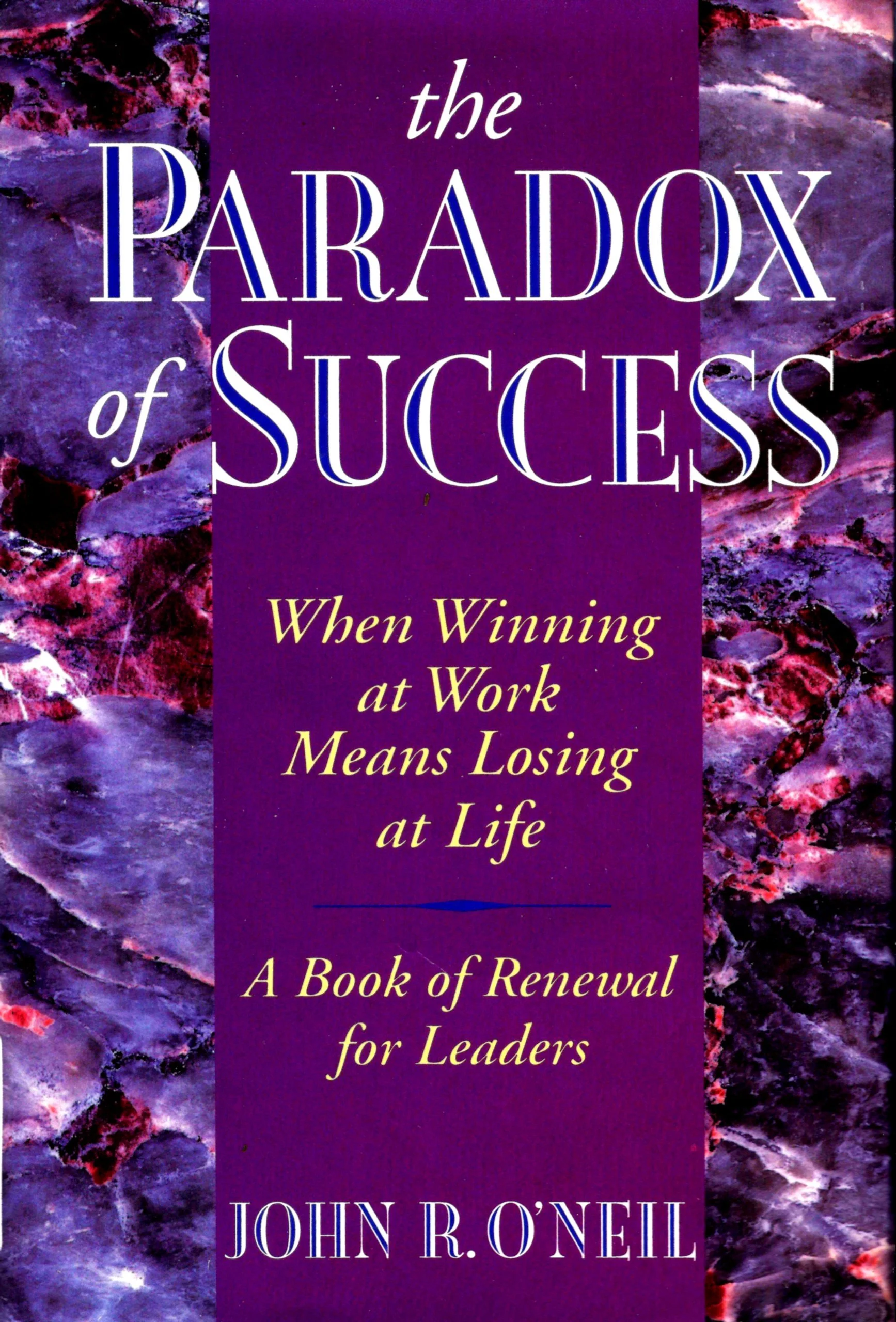
Nouwen again opens us to an authentic truth: that we live and work with paradox, holding tensions. One of the best books I read during my work as a physician was John R. O’Neil’s The Paradox of Success: When Winning at Work Means Losing at Life. It is subtitled A Book of Renewal for Leaders. O’Neil explains how our excessive pride as leaders, combined with the seductive perks of power, can become addictive. At some point, wielding power itself becomes more important than its goal. 

Power and the need to control our fate can take over and, at times, become the end rather than the means. The paradox of success is the promise of renewal, as we can step back, especially in a retreat, and see where we have gotten into trouble. There are obstacles to stepping back, such as our drive for perfection, which can turn our path into a prison. Often, we let our clocks tell us what we should be doing, especially as we drive toward the dead end of a substantial paycheck. 

O’Neil believes that any time spent away from our usual productive round of activities is renewing, as long as it is time spent pursuing wisdom. Renewing activities can include exercising, watching birds at my window, being in nature, listening to music, playing the harp, being quiet, writing, talking and connecting with friends, visiting the sick, and some form of daily retreat, usually involving writing. 

O’Neil encourages us to heal by pursuing a different situation, one where we do not run the show and focus on relationships rather than goals or end results. Our difficulties stem from the very traits that make us winners. We will find unmined gold in dark places, initially hidden from us.

The book includes a graph about success. We work hard to reach the top as we master our profession. However, we only stay at the top briefly, since there is always someone else, or many, who will soon surpass us. O’Neil suggests that we pause to assess our situation as we approach the peak of a pursuit and consider starting over in a new career. 

That can keep us humble, as we are back on a learning curve where we do not have all the answers. Then, as we approach the top of that career or undertaking, he suggests that we observe and again consider starting all over. As Benedictines might say, “Always we begin again.”

My summer reading again includes David Brooks’ The Second Mountain. I think Brooks is uncovering some of the same principles about life. For so many of us, our time during the pandemic was a period of discernment—learning to live with the paradoxes in our lives. 

Richard Rohr recently reminded us in his blog that our call is to hold the tension, not necessarily to find a resolution or closure to the paradox. We must agree to live without resolution, at least for a while. He believes that being open to this holding pattern is the very essence of faith.

Joanna. Joannaseibert.com  https://www.joannaseibert.com/


Remembering Creative Friends and Mentors

 Remembering Creative Friends and Mentors

best friends growing up in Virginia Laura and Suzanne

“Some say the creative life is in ideas. Some say it is in doing. It seems, in most instances, to be in simply being. It is not virtuosity, although that is very fine in itself. It is the love of something—so much love for something—whether a person, a word, an image, an idea, the land, or humanity—that all that can be done with the overflow is to create. It is not a matter of wanting to, not a singular act of will; one solely must.”—Clarissa Pinkola Estes, Women Who Run With the Wolves.

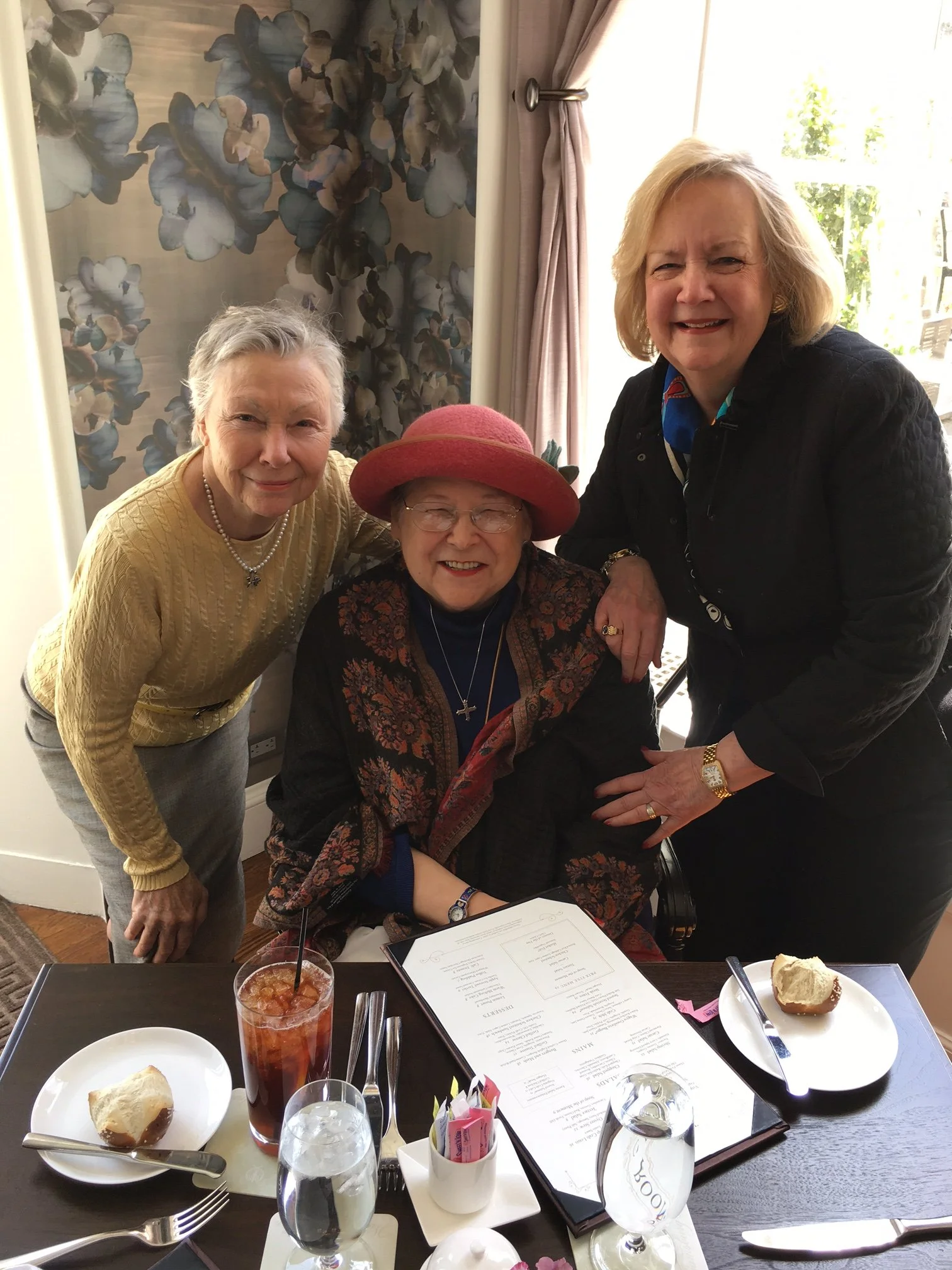
Several years ago, my husband and I took a motor trip of more than 2500 miles to revisit the towns and farms where I grew up, reconnecting with my cousins and childhood friends. On this last visit, I was reunited with women who loved me no matter what I did. I was with friends and family, including Liz, Kelly, Janie, Debbie, Laura, Jean, Christine, Betty, Anne, Wanda, and Suzanne, who encouraged me to become the person God created me to be. They still do, more than sixty years later. 

Traveling by car fostered long periods of silence, introspection, and reflection on the people, especially women, who shaped my life. I grew up in a small coastal town in Virginia. There were thirty-three in my high school graduating class. I went to college in North Carolina and eventually studied to become a medical technologist. Then, the summer before my senior year, I worked in that field and realized I had the training and education to become a physician. 

However, in my college graduating class of one thousand women, only two others attended medical school. No woman in my family had become a doctor. The only female physician I knew was Dr. Shirley Olsson in my small hometown.

Dr. Shirley Olsson

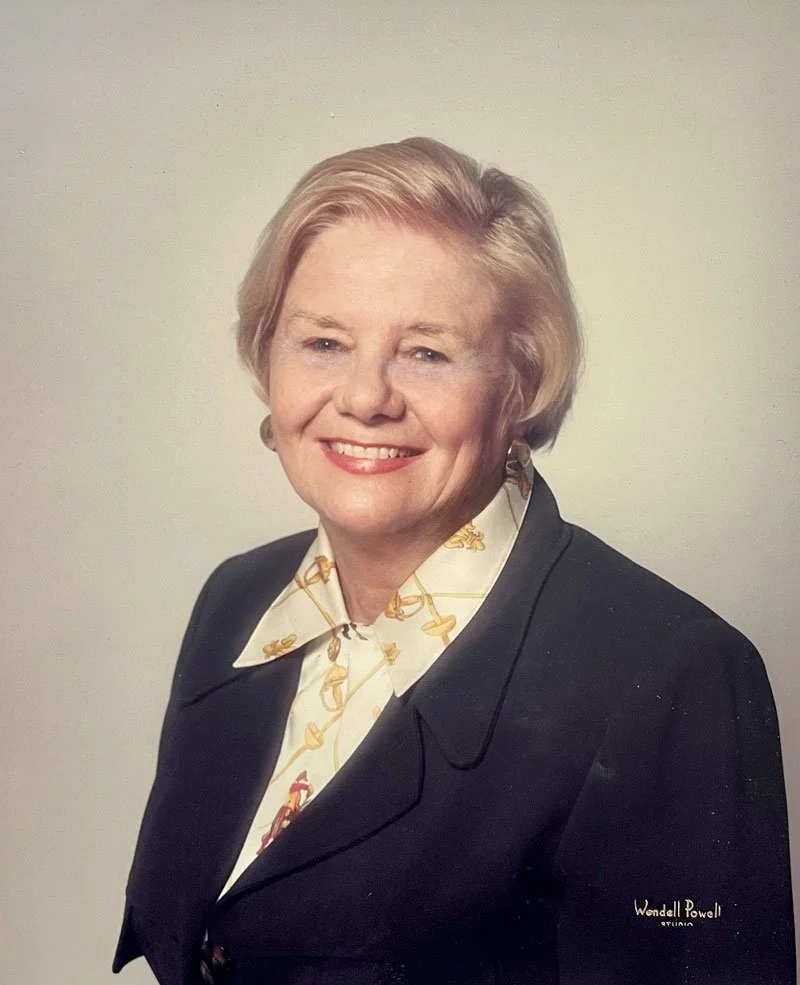
I now realize that Dr. Olsson was someone I most admired and unconsciously wanted to become, the authentic, caring woman and physician she embodied. She modeled in her everyday life how a woman can be a talented doctor and still have a family and a fruitful life. By chance, I would often run into her at the post office when I was home from medical school. I grieved when I later read that she died at age 92. I grieve that I never told her how she influenced my life, just as I did not realize at the time how she unconsciously shaped my decisions. 

I also know now that one of the incredible women I saw on this past trip had advanced dementia and has since died.

What I learned on this trip is to be a little more aware of how I can support others in becoming the person God created them to be, as Dr. Shirley, Laura, Liz, Janie, Suzanne, and so many others encouraged, sustained, and stood by me.  

We have another reminder to live in the present moment and to treasure each person we meet, especially those we meet by chance.

The Great Fifty Days of Easter is a time to reflect on the people who have influenced our lives, to let them know, and to thank them. There is still time.

Joanna. joannaseibert.com https://www.joannaseibert.com/