The Fire of Pentecost Is Still Present

Pentecost Continues

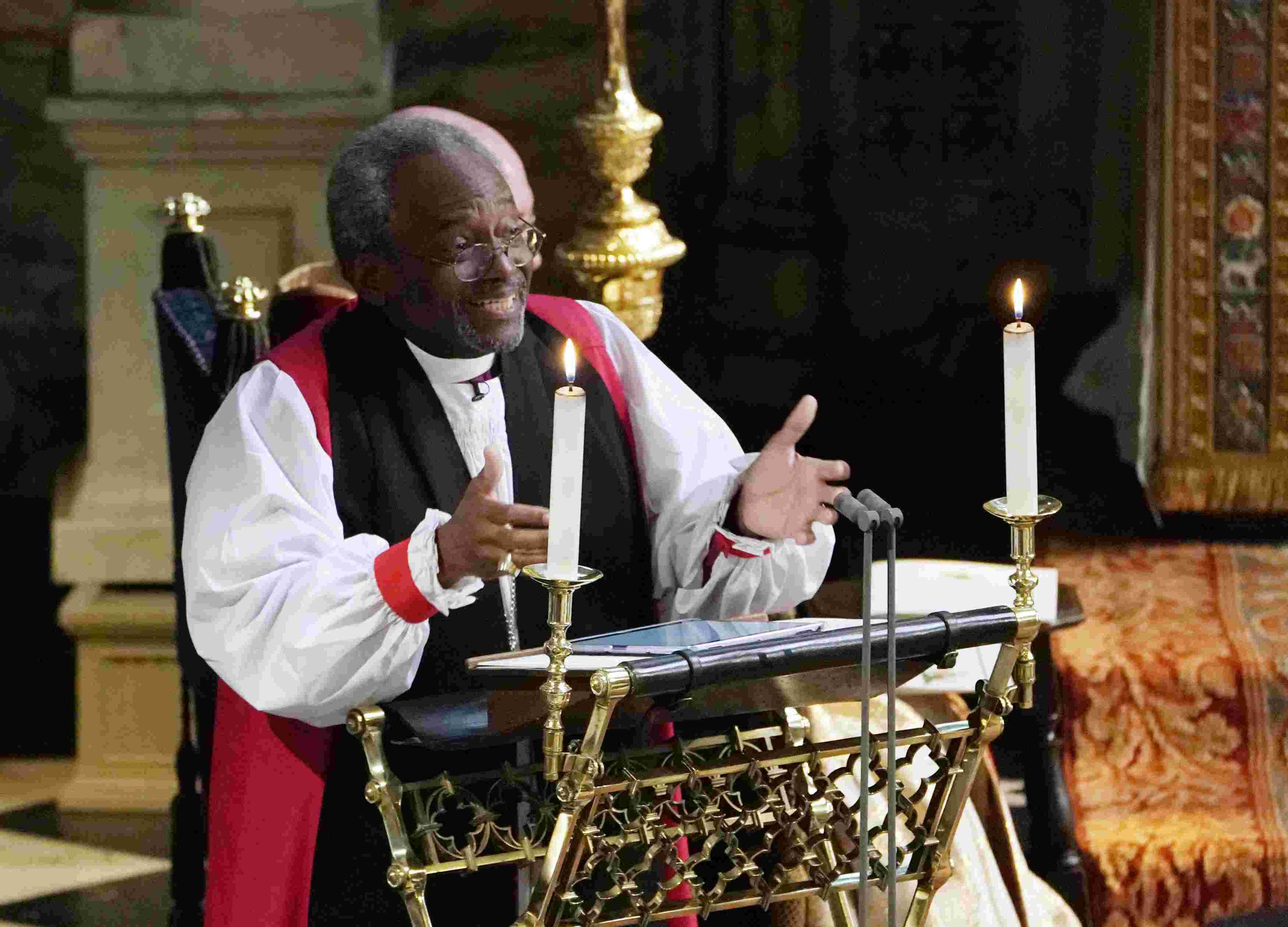
Bishop Curry USA Today

“When he had said this, he breathed on them and said, ‘Receive the Holy Spirit.’” — John 20:22.

We are now in the season of Pentecost: remembering and celebrating that the Spirit was given to us on the Day of Pentecost. If you want to see what happened that day when the Spirit moved through a large room of people who had no idea what was happening, watch the video of Bishop Michael Curry’s sermon at the wedding of Prince Harry and Meghan Markle on the morning of Pentecost Eve, May 19, 2018.

Usually, the minister’s words at a wedding are called a homily, a short sermon. But as one of the British commentators puts it, Curry’s message is an actual sermon—and it is all about love. He first reminds us that when two people fall in love, nearly the entire world shows up, as it did that Saturday morning. That is how important love is.

Bishop Curry reminds us that love has the energy of fire, and his enthusiastic, passionate words are comparable to the Pentecost flames that ran through St. George’s Chapel that day. It appears as though Bishop Curry is so filled with the Spirit that he must keep holding on to his lectern to stay in place.

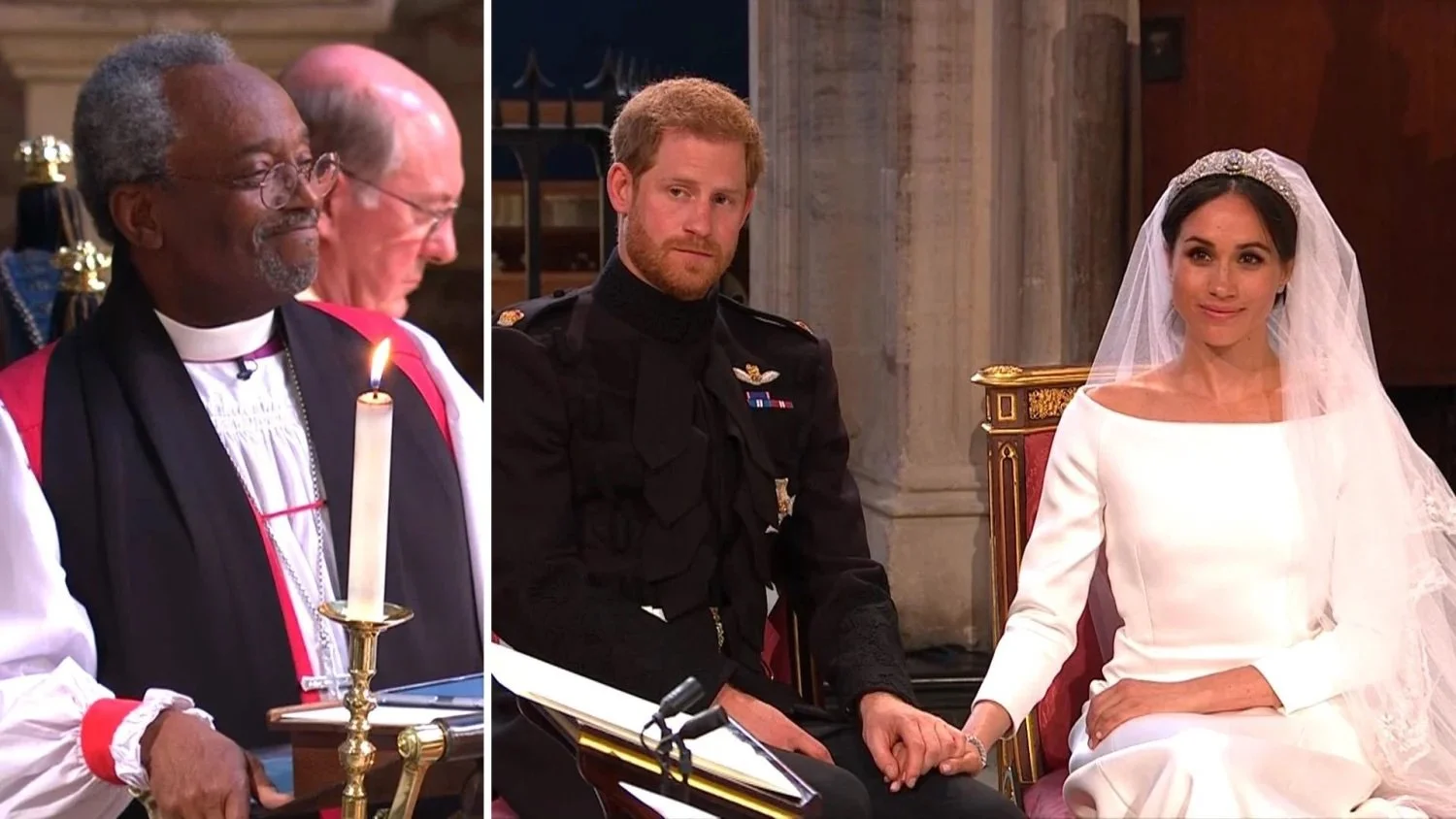
His body language signals that he wants to move out and approach the young couple and his congregation more directly. As you watch people’s faces, you can tell they do not know how to respond to him or his barnstorming message. They look mystified, amused, indignant, comical, and questioning. Some look down at their programs so others cannot see what they think. Others glance at their neighbors for a clue about what is happening. Some almost fall out of their chairs! Some look at Curry as if they are mesmerized. 

Perhaps the ones who seem to understand his message best are the royal wedding couple themselves—especially Meghan, who beams a radiant smile with an occasional twinkle throughout the sermon.
NBC

Bishop Curry’s presentation and delivery are not in the British style, but his message of love is true to his Anglican and African roots. He speaks out of his African American tradition, drawing on his ancestors’ experiences of slavery and on his training in an Episcopal style that Americans adapted from the Anglican form. Bishop Curry speaks his truth, which comes from deep within him—as these traditions mesh and kindle tongues of fire from the power of love that flames around the world. 


Bishop Curry is a beautiful role model of what it means to be filled with the Spirit. With Pentecost fire, we have no choice but to speak the truth. Many people will not understand what we are saying, but everyone who receives us will be changed.

Bishop Curry also reminds us that the truth from God should always be about love: loving God, loving ourselves, and loving our neighbor. Period.

I have greatly enjoyed our journey together through Lent and Easter, and I look forward to our adventures in the season of Pentecost.
 

Joanna  https://www.joannaseibert.com/


Pentecost

Pentecost

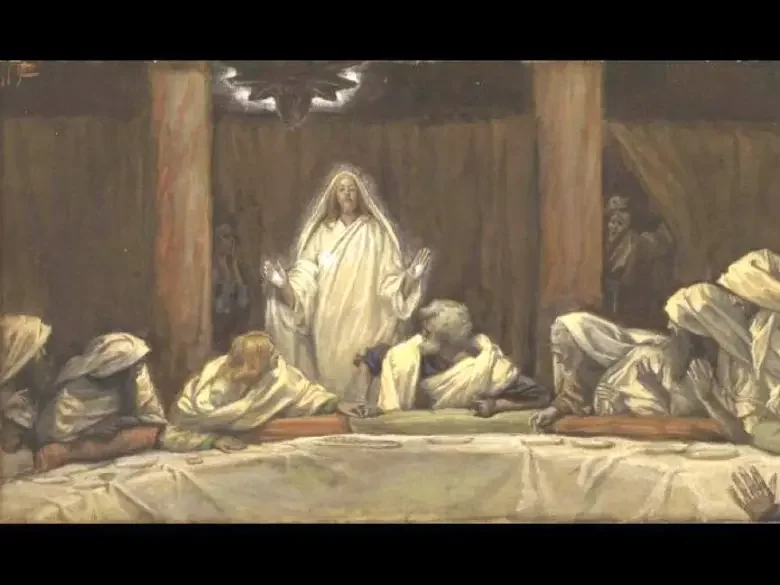
“When the Day of Pentecost had come, the disciples were all together in one place. Suddenly, from heaven, a sound like the rush of a violent wind came.”—Acts 2:1-2.

“ … [Jesus] breathed on them and said to them, ‘Receive the Holy Spirit.’”   —John 20:22.

Barbara Brown Taylor1 describes two versions of Pentecost: the gentle breeze in John, as Jesus breathes on the few disciples gathered in fear on the night of his resurrection, and the violent wind of Pentecost described in Acts, as the Holy Spirit sweeps in, with tongues of fire hovering over at least a hundred people.

The disciples at Pentecost, where the Spirit comes as a gentle wind, are commissioned to take the Spirit out into the world. The ministry assigned to the disciples of the violent wind is to fan the Spirit already present in the world. Taylor challenges us in our congregations to emulate the disciples in both Pentecost stories: those of the gentle breeze and those of the violent wind. Both groups are commissioned to find the Holy Spirit within themselves and others and to take it out of their churches and into the world. 

The same is true of the Spirit, the Christ, within us. We are called to connect with that Spirit within us and then go out to connect with the Christ in others. If we don’t, we are like the disciples in John’s scenario—locked in a dark room, afraid of losing what we have. Only when we connect our Spirit to the Christ in others do we know the peace, joy, and love we seek. Our view of God also grows as we become aware of the magnitude of God’s creation and love.

Barbara Brown Taylor, “God’s Breath” in Journal for Preachers, Pentecost 2003, pp. 37-40.

Happy Pentecost.

Joanna  joannaseibert.com

Thank you for supporting our camp and conference center, Camp Mitchell, on top of Petit Jean Mountain, by purchasing this book from the daily series of writings for the liturgical year, A Daily Spiritual Rx for Ordinary Time: Readings from Pentecost to Advent. All proceeds from book sales benefit Camp Mitchell. If you enjoy this book, please take a moment to write a brief recommendation on its Amazon page at https://smile.amazon.com/Daily-Spiritual-Ordinary-Time-Pentecost/dp/B08JLTZYGH/ref=sr_1_1?dchild=1&keywords=joanna+seibert+books&qid=1621104335&sr=8-1

 More thank-yous than we can say!!!


Lessons from Birding

Lessons from Birding

Guest Writer: Vickie Becker

Musings from a Campground

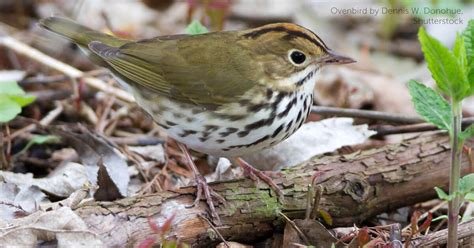
Ovenbird

Birding by ear was a concept I’d never heard of before I started hanging around with experienced birders. Whoever thought about being able to identify birds just by listening to them! By the time I wanted to become part of the elite group that could do that, my ears were declining in quality, and I’d long since moved on to hearing aids.

No matter how good or expensive the hearing aids are, it’s not like having young, healthy ears. They just don’t work as well - sound location is tricky, for one thing, and the sound, the tonal quality of birdsong, can get distorted by distance, wind, and reflection. But I try.

There are a few (really loud) birds that I can ID immediately, anywhere, anyplace by sound. Great Horned Owls, for instance. They are immediately recognizable with their nightly “hu-hu-hu-hoo-hoo” calls that reach long distances. Chickadees are pretty identifiable, as are Tufted Titmice, Cardinals with their “Right Chere, Chere, Chere,” Fish Crows denying any culpability, shouting “Nuh-uh.”

There are other species I can recognize with a bit of help. I often use an app called “Merlin .” Merlin will record the birds I’m listening to and tell me what he thinks they are. Merlin tends to know his stuff pretty well and is relatively accurate. I can hear a birdsong and think I know what it is, and Merlin will either agree or disagree. It’s not a bad compromise with poor hearing, I guess. 

And there are those birdsongs that are way too high in pitch for me ever to hear, or so fragmented that only a tiny portion of their song is recognizable, or that I hear so infrequently that I just don’t have any idea what I hear, Merlin or no Merlin. It’s complicated. I’m grateful to hear what I can.

I made a trip a couple of hours west to Mount Magazine State Park with a two-fold purpose. The first was to bird. See birds, hear birds, and enjoy birds in all their myriad shapes and sizes. (The second purpose was to ensure the used RV I recently bought was roadworthy for the California trip I planned in a few months. I found a leak in the bathroom, so . . . success after a fashion for my second purpose.)

I found something bird-related I didn’t expect:  Ovenbirds were calling incessantly at Mount Magazine. 

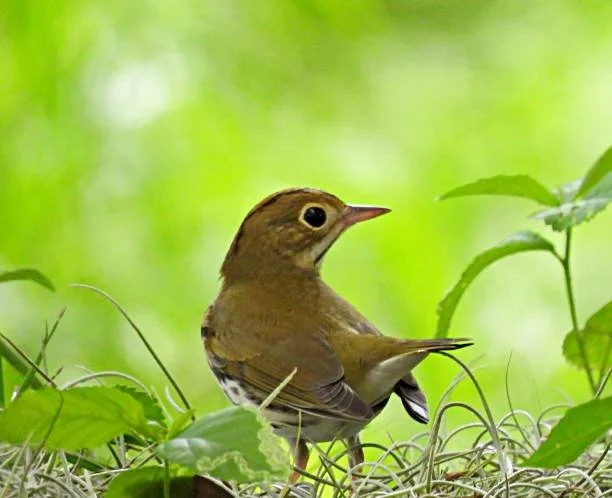
 Ovenbirds are so named because their nest is said to resemble an outdoor oven. They tend to stay close to the ground and are hard to find in the grass. But you can certainly hear them, even me. The noise was constant. Usually, two birds would sing to each other - a call and a response. This enchanted me because I don’t hear these birds at home. For whatever reason, they were gathering on the top of the highest point in Arkansas, at 2,753 feet, Mount Magazine.

The trees were still bare, at least 3 weeks behind Little Rock.

The wind blew, howled, really, the entire time I was there. Sometimes a gale force, sometimes something lighter, but always wind. The campground was full of tall trees bending in the wind, free of the brush so prevalent in the woods in the central part of the state. And the Ovenbirds sang throughout. If there was daylight, Ovenbirds were singing.

I heard only four species while I was there - the Ovenbirds, a quick comment from an Eastern Phoebe, and American Crows and Blue Jays, which seem to bloom wherever they’re planted.

There were so many birds when I was little that I haven’t seen or heard in years and years. Bob-whites, Whip-poor-wills, and Owls used to be so plentiful.

 My dad noticed Scissor-tailed Flycatchers moving north from Texas when I was about ten - ditto for Armadillos and Greater Roadrunners. We didn’t associate it with climate change or habitat degradation at the time. Things change. Losses occur.

But those Ovenbirds sang right straight through. I never saw a single one despite searching for 4 days.

 For me, those calls were the substance of things hoped for, the evidence of things not seen. Right there on the top of Mount Magazine.

Vickie Becker

Joanna joannaseibert.com