aIn a Maine Manner of Speaking
Guest Writer: Ken Fellows
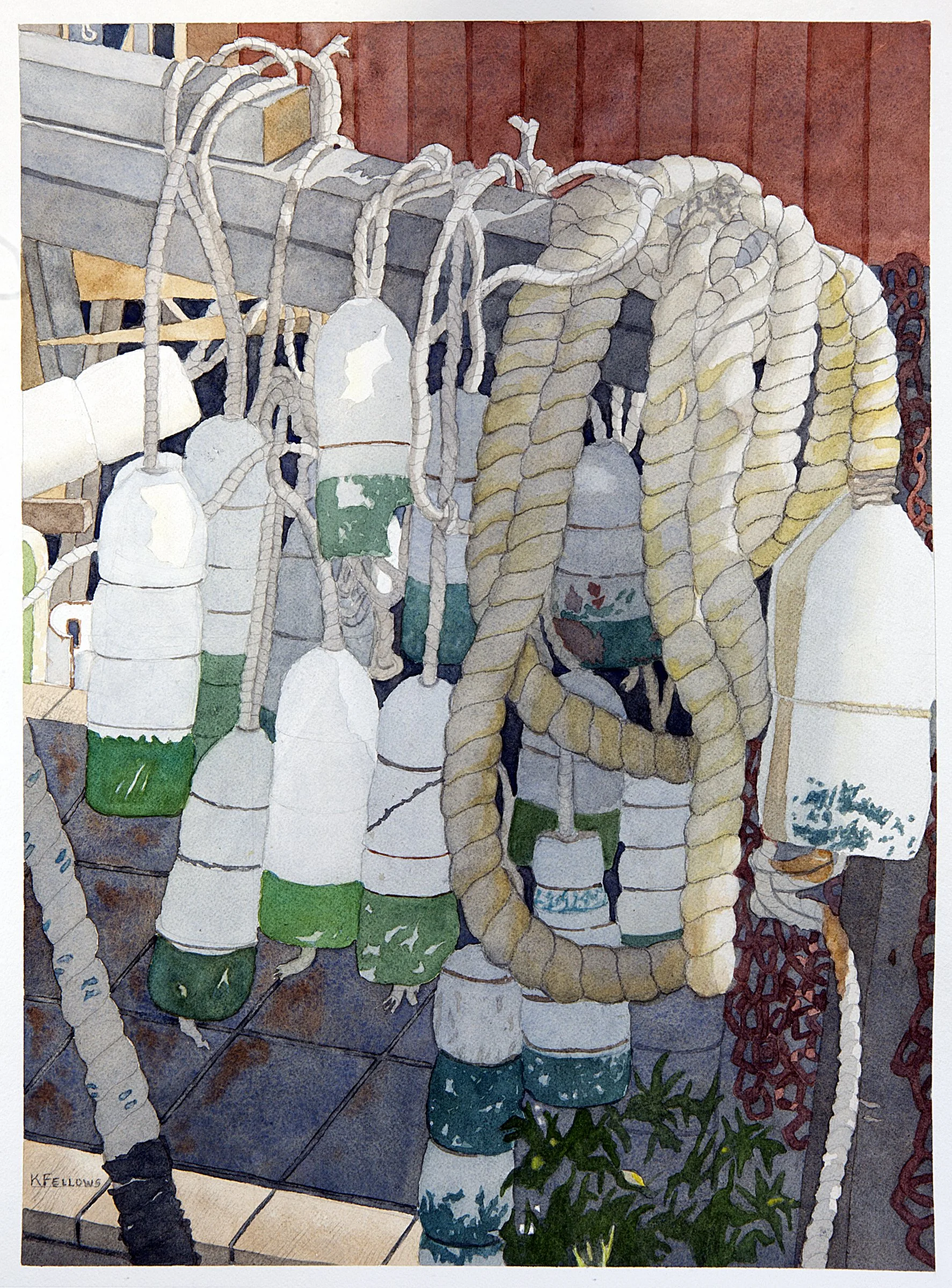
Maine Porch Railing Ken Fellows
Tourist: “How far is it to Portland?”
Maine Farmer: “The way you’re headed, about 30,000 miles …
with some stretches of pretty bad wheelin’.
Years ago, when we moved to our home in Kittery, Maine, I was charmed by local speech … words like “Sat’day” for Saturday and “barse-ackwards” for reversed, and colloquialisms (“go’in over town,” “right as rain”). I was also smitten by our new neighbors’ comments, often cryptic, wry, and ironic. But it was the short, off-kilter conversations I found most beguiling.
My first encounter with local brevity came while building an addition to our Kittery house. A muscular, middle-aged Mainer, perspiring and frustrated, was trying to back a huge cement truck along the narrow edge of a new foundation. A stunted, bushy tree next to his truck was another vexing obstacle.
Assuming I could help, I shouted up to him: “I don’t care much about that tree.” The driver whipped around and glared down at me from the truck’s cab. Clearly annoyed, he deadpanned: “Neetha’ do I.” Reflecting on that brief exchange, I marveled at how that Maine truck driver, in just three little words, had expressed his extreme contempt for my help, established me as an irritating interloper, and effectively curtailed any further distractions from the gallery. Our future relationship had been established.
A graying lobsterman, Henry M., lived in a house backing onto ours. He was an extreme example of Maine reticence. He was a thin, spry man, polite but taciturn. He often left products of his fishing on our doorstep but never knocked on our door or ventured to stop in when we were obviously at home.
He waved from his yard but rarely spoke. I suspect he wanted to be neighborly but was inhibited by our being “from away” and perhaps embarrassed by our age and background differences. He was probably a treasure trove of Maine lingo and local stories, but his shyness kept me from gathering any samples.
A 60-year-old lobsterman, Bud S., lived next door. Over many years, our relationship was quiet and distant, yet never unfriendly. We met occasionally on our adjoining creekfront lots, he repairing his lobster boat while I fussed over a dock with a landing float I was building. I was always impressed by his reticent speech and calm demeanor bordering on indifference. He never initiated a conversation, and his responses to questions were mumbled and abbreviated. Yet I found his persona intriguing and amusing … a quintessential Maine character. His bearing always put me in an uncharacteristic calm.
Having returned to Kittery after a long winter, I was devastated on a sunny April day to discover the floating-raft section of my new dock was gone. I assumed it had washed down tidal Chauncey Creek and out to sea during the winter's high tides. Bud happened to be there, painting his boat for the next fishing season at the waterside. His back to me, he remained thoroughly engaged in his work and characteristically mute as I loudly voiced my anger and frustration. For at least 10 minutes of my uninterrupted, distraught whining about my loss and the expense of building another raft, Bud concentrated on his painting, nodded once or twice, but never turned around. Exhausted and deflated, I finally turned to leave.
Without expression, in his usual laconic tone, Bud muttered: “Well, you could build anotha’ one, I suppose (pause …), but my cousin down the cri’ck saw your raft floating by some weeks ago and hauled it up on his beach (pause) … I could help haul it back whenever you like.” And so another Mainer had let a ‘new-be’ stew awhile before generously offering needed information and help.
Maine lingo – it’s often reluctant, on target, exasperating, and amusing, all in the same mumbled breath. It slows city folk down, lowers their voices, and encourages their consideration and reflection. It makes them more accepting and much easier to deal with.
Ken Fellows
Joanna. . https://www.joannaseibert.com/