Merton: Spiritual Direction

Thomas Merton and spiritual direction

“The only trouble is that in the spiritual life there are no tricks and no shortcuts. Those who imagine that they can discover spiritual gimmicks and put them to work for themselves usually ignore God’s will and his grace.” Thomas Merton, Contemplative Prayers
merton direction.JPG

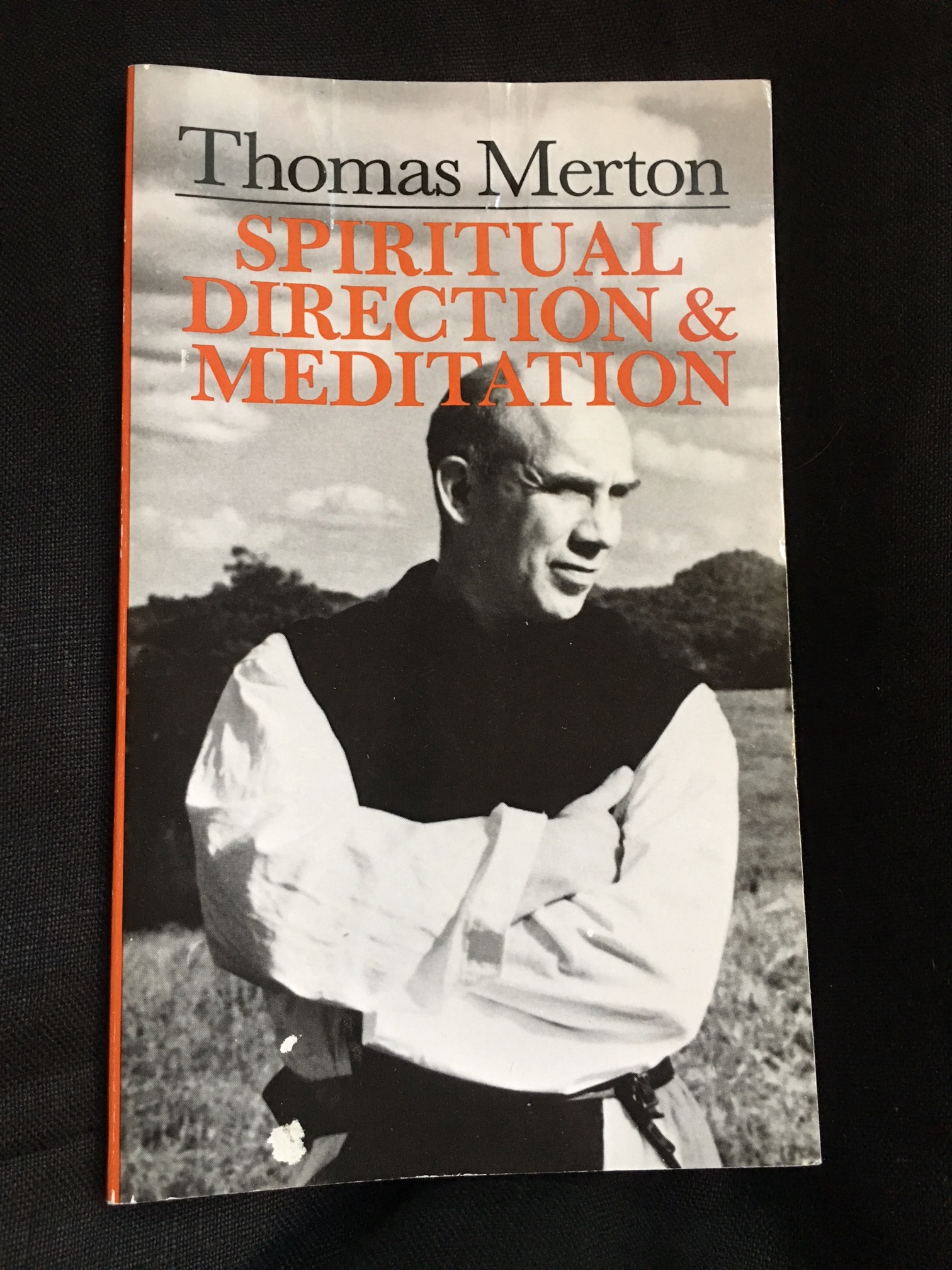
Thomas Merton’s concise book, Spiritual Direction and Meditation, is another excellent one for someone to read who wants to know what spiritual direction is all about. It is often recommended to spiritual friends before meeting about direction for the first time. It should also be a frequent reread for those giving spiritual direction. Merton reminds us that spiritual direction is not psychotherapy, and that directors should not become amateur therapist. He recommends that directors not concern themselves with unconscious drives and emotional problems. They should refer.

Merton’s sections on meditations are classic, straight forward, and practical. He uses the story of the Prodigal Son to serve as a model for meditation, as the son “entered into himself”, meditated on his condition starving in a distant land, far from his father. Merton also suggests the Incarnation, the birth of God into human form, as another meditation where we relate to the birth events within our own spiritual life.

Merton emphasizes the importance of holy leisure, believing that meditation should not be work, remembering that it will take time. He reminds us of promising artists who have been ruined by a premature success, which drove them to overwork in order to renew again and again the image of themselves created in the public mind. An artist who is wise contemplates more about what he paints than he puts to canvas and a poet who respects his art burns more than what he publishes.

In the interior life we must allow intervals of silent transitions in our prayer life. Merton reminds us of the words of St. Theresa, “God has no need of our works. God has need of our love.” The aim of our prayer life is to awaken the Holy Spirit within us so that the Holy Spirit will speak and pray within us. Merton believes that in contemplative prayer we learn about God more by love than by knowledge. Our awaking is brought on not by the actions of ourselves but by the work of the Holy Spirit.

Merton also cautions us about what he calls informal or colloquial “comic book spirituality” which flourishes in popular religion literature where Mary becomes Mom and Joseph is Dad and we “just tell them all about ourselves all day long.” This may be a helpful path to God for some, but it was not Merton’s path.

Joanna joannaseibert.com

Brussats: Spiritual Rx

Brussats: Spiritual Rx

“Spirituality won’t solve all your problems, but it will help you deal with them. The first step is to examine your symptoms--what is really happening in your life—to see what they reveal about the best spiritual practices for you.” Frederic and Mary Ann Brussats, Spiritual Rx. p. 16.

IMG_1458.JPG

Well known writers about spirituality for five decades, Frederic and Mary Ann Brussats, have written extensively about spiritual practices. My favorite book is Spiritual Rx, which is a rich resource for 37 spiritual practices, markers for the spiritual life, their alphabet of Spiritual Literacy, each of which is common in the world’s major religions. With each practice, there is an extensive discussion about it from the basic practice to teachers of the practice, videos, rituals, prayers or mantra, journal exercises, storytelling, community projects, fiction, poetry, art, music.

For example, if you are someone living in the past or future, the opposite of this symptom is being present. The spiritual practice of being present includes reading Brother Lawrence’s Writings and Conversations on the Practice of the Presence of God, viewing the German film, Wings of Desire, imaging exercises of sensing God’s presence all around you, practicing free intuitive writing, watching children at play who live in the moment, learning about Haiku, listening to Beethoven’s Pastoral Symphony.

Advent or Lent could be no better time to read this book alone or in a group.

Joanna joannaseibert.com

Fasting

Kelsey, Foster: Fasting

“Fasting can be to the body what silence is to the mind and soul,” Morton Kelsey, Companions of the Inner Way, The Art of Spiritual Guidance, p 119.

halt copy.jpg

Probably no one will consider reading about fasting only a couple of days after Thanksgiving! I was first introduced to holy fasting by Richard Foster in his now classic book, Celebration of Discipline. Fasting from food or any other ways of living helps us become aware of what is controlling us and the degree that it is controlling us. This is of course the traditional call of Lent, “to give up something,” a holy fast from something.

A fast can be a spiritual discipline to connect us more closely to God as are all the other disciplines. As we crave the substance or action, we can enter in some very small way and perhaps identify with the suffering of Christ and of others. Goodness knows, why in the world should we identify with more suffering? It is already present in our minds and in our bodies. For myself, however, when I attempt to fast from food or a certain type of food or from an action such as shopping or work, it is helpful to keep reminding myself that this is in an attempt to hear and see and find more time for God in my life. It can be a re-centering of what is important.

Fasting can especially be an important discipline to investigate how food or an action or a behavior pattern has become too important in our lives.

As we approach Advent, there is no better time to consider this spiritual discipline. Fasting could be a way to honor the Christ child as we fast from activities that block us from Christ in ourselves and in our neighbor.

Fasting above all the other spiritual disciplines can be an answer to prayer for quieting our soul during Advent while the outside world is unusually busy making demands on us. Intentional fasting from the news media, shopping, gossiping or criticism, for even one day a week or even an hour a day could change who we are by the time we approach the Christmas season.

Joanna joannaseibert.com