Lessons from the Harp about Listening

What I Heard About Listening From the Harp
paula volpe

“Be a lamp, a lifeboat, or a ladder. Help someone’s soul heal. Walk out of your house like a shepherd.”— Rumi (1207-1273), Daily Quotes, inwardoutward.org.

If I were redesigning a program about spiritual direction, 90% of the time would be dedicated to listening. My experience shows that listening is one of the best tools the Holy Spirit uses within us. I am talking about active listening, where we clear our minds of agendas and what is happening in our lives as much as possible. We offer the gift of time for forty-five minutes or an hour to listen to someone else’s life. During this time, we have the privilege of caring for another’s soul and helping a person recognize God’s never-failing presence in their own life.

I sit, and all these great ideas come to me as I listen. “I think they would like this book. Changing to this spiritual exercise might be helpful.”

I'm learning that when I interrupt with my ideas, they often go unnoticed, but if I wait until there's silence and then speak, the person seems to understand and listen better to what I might suggest. As I wait, I sometimes realize, “No, this was not the right book or spiritual exercise.” 

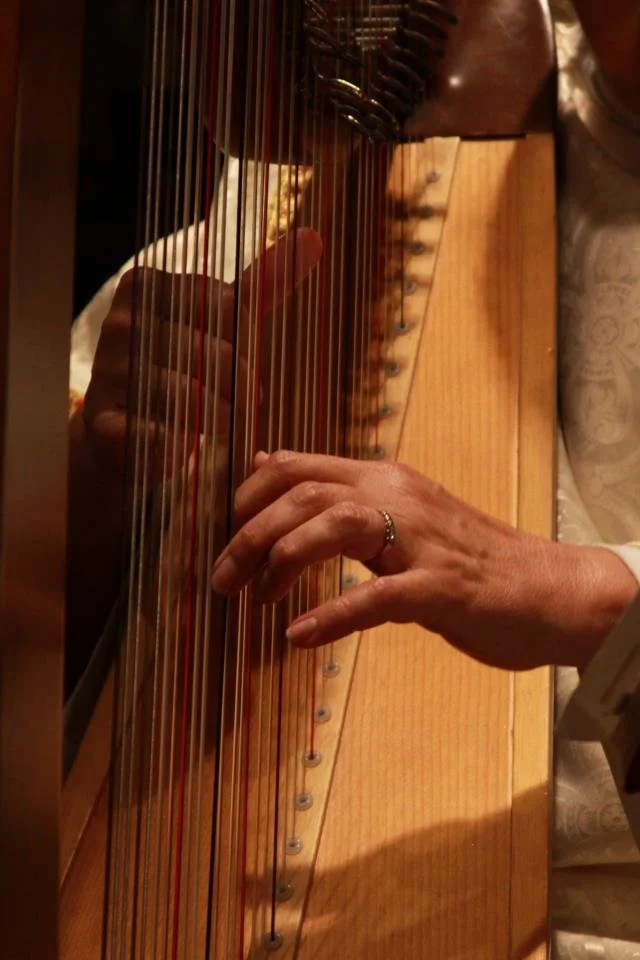
I've learned a lot about listening from my harp. You might have noticed a loud buzzing sound when some harpists play. Buzz. One reason for the buzz is that we've plucked a string that is still vibrating from a recent finger placement. We have to wait for the string to stop vibrating before playing it again, or this annoying sound will interrupt us.

 My buzzing harp reminds me that I have to wait for the person I’m visiting to stop talking. 

I am learning to play fewer buzzing notes as I talk less and listen more. As a result, my buzzing harp string has become my icon for listening.

Listening can serve as a “lamp, lifeboat, and ladder” to the Holy Spirit’s presence in our lives and those of our spiritual friends.

Joanna  https://www.joannaseibert.com/

Soul Friends

First Soul Friend

“Finally, I suspect that it is by entering that deep place inside us where our secrets are kept that we come perhaps closer than we do anywhere else to the One who, whether we realize it or not, is of all our secrets the most telling and the most precious we have to tell.”—Frederick Buechner, Frederick Buechner Center, Quote of the Day, formerly in Telling Secrets.

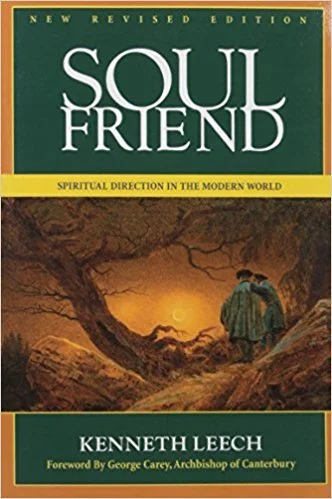
Kenneth Leech’s book, Soul Friend: An Invitation to Spiritual Direction, was the first book I read about spiritual direction over thirty years ago. Something was calling me to form deeper connections with other spiritual friends. I was seeing a counselor who helped me cope with life's challenges, but I somehow instinctively knew I needed a friend who genuinely cared for my soul, someone who could help me recognize the work of the God of my understanding in my life. I learned the importance of sharing ideas and seeking advice from others in my medical practice. After many mistakes, I found that when I tried to make decisions without consulting others, I often went down the wrong path and arrived at incorrect diagnoses.

How do you find someone you can trust with your soul? Spiritual directors were rare at that time. It had to be someone I trusted with my fears and secrets. I knew I shared my life with my family members, but my guidance or path to God always affected them directly or indirectly. I needed to talk to or be with someone who was not explicitly impacted by the insights we might have. 

After some time, I found another friend, Dean McMillin, in a book group. She was also looking for a soulmate and a spiritual friend. We read Leech’s book together. Leech had a lot to teach us, but we focused on this message. We met once a week. 

We each shared what was happening in our lives, including our secret worries, concerns, fears, and where we believed God might be working. We spoke without interruption or interpretation. There was no advice given, nor was there empathy or sympathy expressed. We just listened. Afterwards, we prayed for each other, focusing specifically on each person's concerns. 

 I am sure Leech would have wanted us to do more, but that was a start for both of us. It connected us to God by sharing our stories with someone else. In doing so, these secrets lost their power over us, and somehow, we entered the secret place inside ourselves where God was dwelling.

It was a beginning. I learned a little about how secrets and fears can block us from God. We no longer meet, but we are still friends and trust each other. We are thankful for this time when our paths crossed and started both of us on a new journey. 

I have gained more soul mates now. Many are from my spiritual direction class at Kanuga, and many others have traveled alongside me for years as we have supported each other. Soul mates now also include writers like Barbara Brown Taylor, Phyllis Tickle, Kate Bowler, Dean Kate Moorehead Carroll, Frederick Buechner, and Henri Nouwen, who inspire us daily through their writing. I don’t know how people make this journey without soul friends.

This type of friend is priceless, a gift from God. If you're searching for one, include it in your prayers. My experience is that this kind of treasured spiritual friend will appear.

Joanna joannaseibert.com


A Mother's Life in Poems

A mother’s life in poems

“Communion

Eyes look down.

 Souls look up.”—Dodie Horne, Root &Plant &Bloom, Poems by Dodie Walton Horne, edited by Jennifer and Mary Horne, 2020, p. 104.

Dodie began writing poems as a child. She died suddenly in 1994, at the age of fifty-nine, from a brain tumor. Ironically, a woman who dearly loved words died of cancer in the part of her body where words are formed. Dodie’s daughters, Mary and Jennifer, collected around 370 of their mother’s poems, beautifully packaged and published them as a gift to us. 

The book is organized into sections by subject, each introduced with lines from her poems. For example, “They Brought Me Spring” is about motherhood. “Life in Little Rock” explores younger adulthood and self-acceptance. The “Calendars and Clocks” section addresses time passing and aging. “The Questing Why” deals with religion and the spirit. 

Dodie was a girlfriend, soulmate, and masseur who cared for my wounded body through many physical trials. I loved visiting her in her final home deep in the woods of Ferndale, but I was never sure each time if my car would make it down the winding, rough dirt road. 

I visited Dodie while she was ill. I remember leaving magnolia branches in her room during our last visit in July. She never spoke, and she died soon after. I treasured the thought that the scent of magnolia filled her room and helped midwife her into God’s arms. I could not hold back tears at the synchronicity of Dodie’s last writing, “REAL LIFE,” that Jennifer and Mary left in the book.

— ‘REAL LIFE’ events are not necessarily events; this evening in July shows me that the magnolia candles have finished spreading their light and dropped to the ground, replaced by glowing lightning bugs and cool breezes. I look out at this scene and feel it with all my senses.

—And there would be, there is: writing—in itself an act of gratitude. ‘REAL LIFE’ goes on.” 1

As our large magnolia tree blooms near our house, I always think of Dodie and what she taught me.

Dodie couldn’t hold back her words of love and gratitude that she gave to so many people in her lifetime and even beyond.

1 p. 188.

Joanna Seibert  https://www.joannaseibert.com/