John Updike: Short Easter

John Updike: Short Easter
“The fact that the day is Easter means something to him—something he can neither name nor get out of his mind.” —John Updike, “Short Easter” in The Afterlife and Other Stories (Alfred A. Knopf, Inc., and The Penguin Group, 1994). Initially published in The New Yorker (3/19/1989).
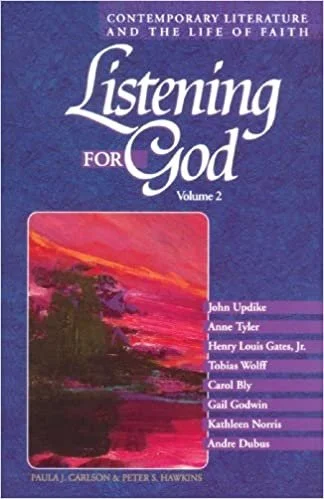
John Updike wrote one of my favorite short stories about resurrection in The Afterlife and Other Short Stories called “Short Easter,” about a year when Daylight Saving Time begins on Easter Sunday. I first read the story in Volume 2 of Listening for God, a series of short stories selected by Paula Carlson and Peter Hawkins—Carlson then from the Department of English and Hawkins, a professor of Religion and Literature, both at Yale University. The four-part series includes a DVD about the author of each contemporary short story, which can work well in a book group study using literature as an icon to hear and see God.

In “Short Easter,” this sacred day for Christians becomes one hour shorter when the clocks are moved forward, and we lose an hour of sleep. “Church bells rang in the dark.” Updike follows the day of a wealthy man named Fogel, who keeps wanting to attend church services on Easter Day but keeps putting it off until—by the end of the day, he has never gone. 

At the story’s end, Fogel wakes up from an afternoon nap “amid that unnatural ache of resurrection, the weight of coming again to life” and realizes that “although everything in his world is in place, there is something immensely missing.”

This is the moment of clarity that God constantly reveals to us. I often need to remind myself and my spiritual friends to remain open to that moment, which can be just as frightening for us as it was for Fogel. It’s like the fear the women felt at the empty tomb on Easter Day. It is resurrection. It always points to something greater than we can understand. We become aware of a love that we cannot fully grasp. 

We have filled our 'God hole' with something else, and whatever it is—prestige, money, marriage, work, family, fame, beauty—it will never satisfy the emptiness inside us where only the God of love is enough to fill. This is the God who desperately loves us and tirelessly calls us to share in his and our resurrection in this life and the next.

I would love to hear more of your resurrection stories this Easter season. You can email them to me or share them on Facebook or on the website where this blog is posted: joannaseibert.com.
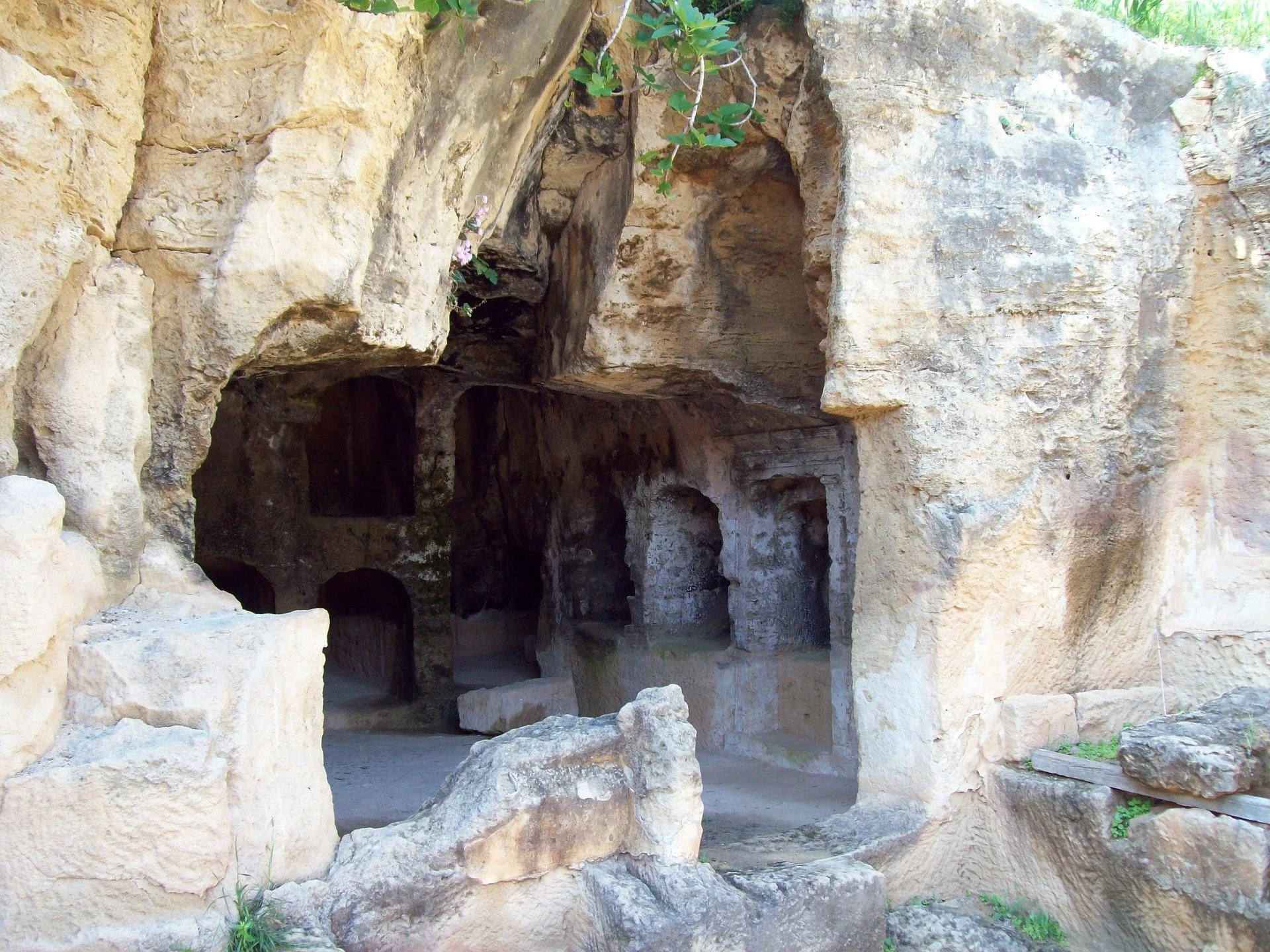
Empty Tomb
Nouwen: Crushed Grapes into Wine

Nouwen: Crushed Grapes

“Sometimes our sorrow overwhelms us so completely that we can no longer believe in joy. Life seems like a cup filled to the brim with war, violence, rejection, loneliness, and endless disappointments. At times like this, we need our friends to remind us that crushed grapes can produce tasty wine.” —Henri Nouwen, “April 7” in Bread for the Journey (HarperOne, 1997).

Our God never promises that we will not experience sorrow or tragedy, but God does promise to be with us through our despair. Out of every Good Friday experience, an Easter, a resurrection, can come.

When we, our friends, or those we come to comfort are in the midst of sorrow and pain, the words we offer do not bring comfort. We are first called to be the love of God simply by our presence among those who grieve. No words are sufficient to fix things—only our love and our standing with the broken can bring healing life.

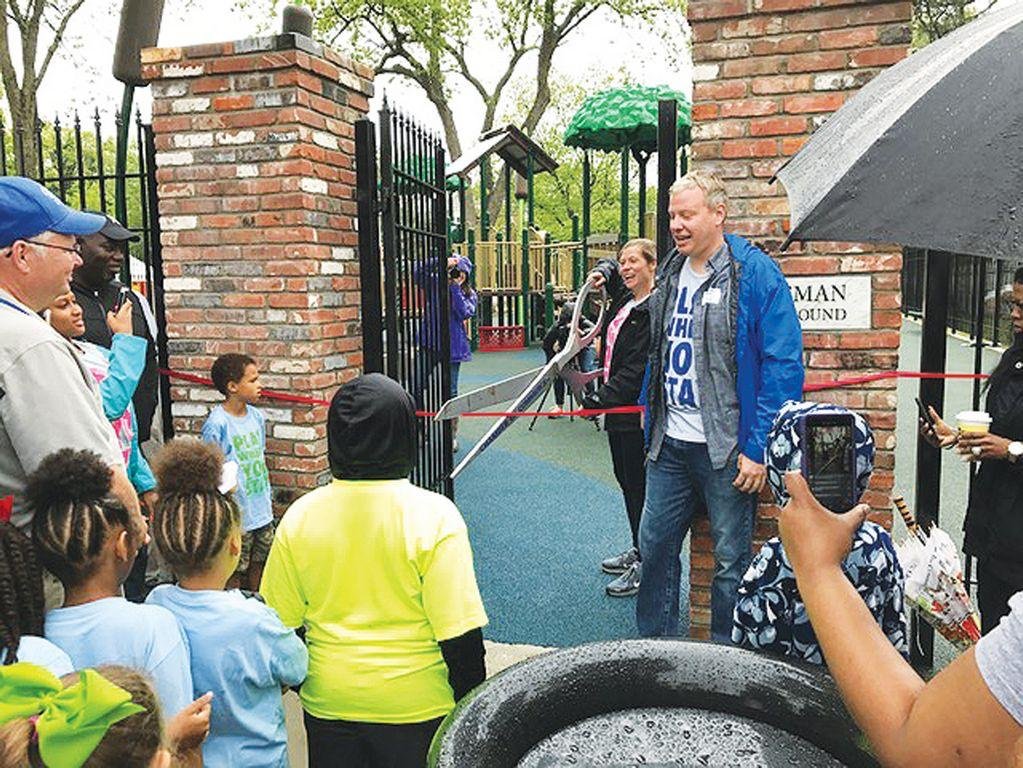
As the pain of grief eases, we can slowly offer this promise of an Easter experience in which crushed grapes become wine. For example, some people whose son committed suicide have developed a suicide-prevention plan so others will not have to endure the same pain. I see those who have endured the death of a loved one become the first to reach out to others whose loved one has died, sometimes sitting with them for hours. Parents whose child has been killed in a tragic accident build a playground or a trail so other children will have a safe place to go. A family whose teenage daughter dies in a car accident begins an arts program for teens in public schools because art made such a difference in their daughter’s life. Participants who form friendships in a grief recovery group form a funeral team at their church to care for families before, during, and after the service.

The Freeman Playground is at the corner of Beech and Market Street in Downtown Helena, AR, honoring the life of Freeman Ellis Staley who died in his 10th month of age.

All of us are a product of our wounds. We have a choice. We can learn, work, and live through our sorrows and, over time—at some point—may experience another Easter and taste a new wine. Or we can stay isolated and buried in our Good Friday tomb. 

My experience is that Christ always remains with us as long as it takes, ready to roll away the stone as new life emerges.

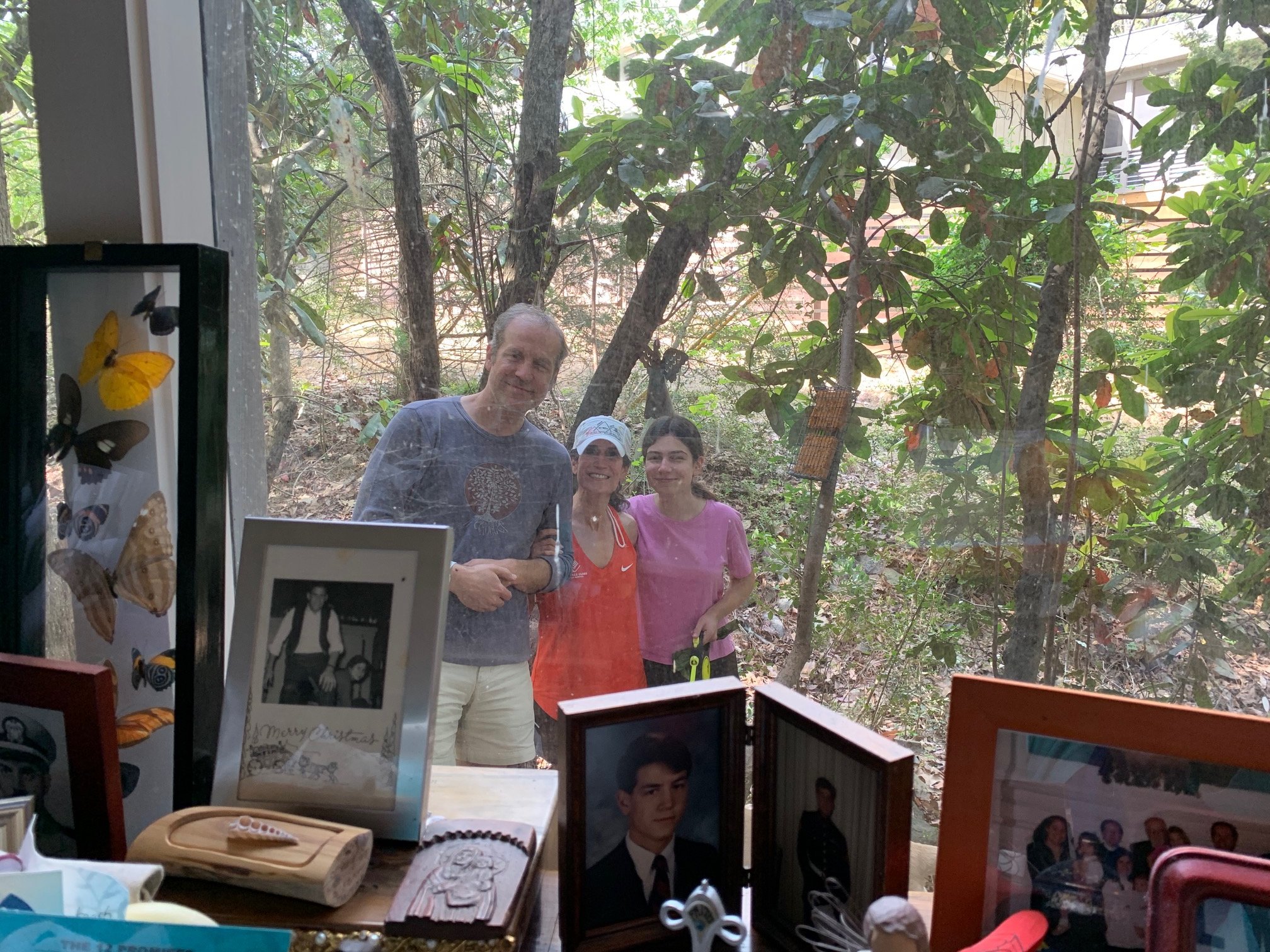
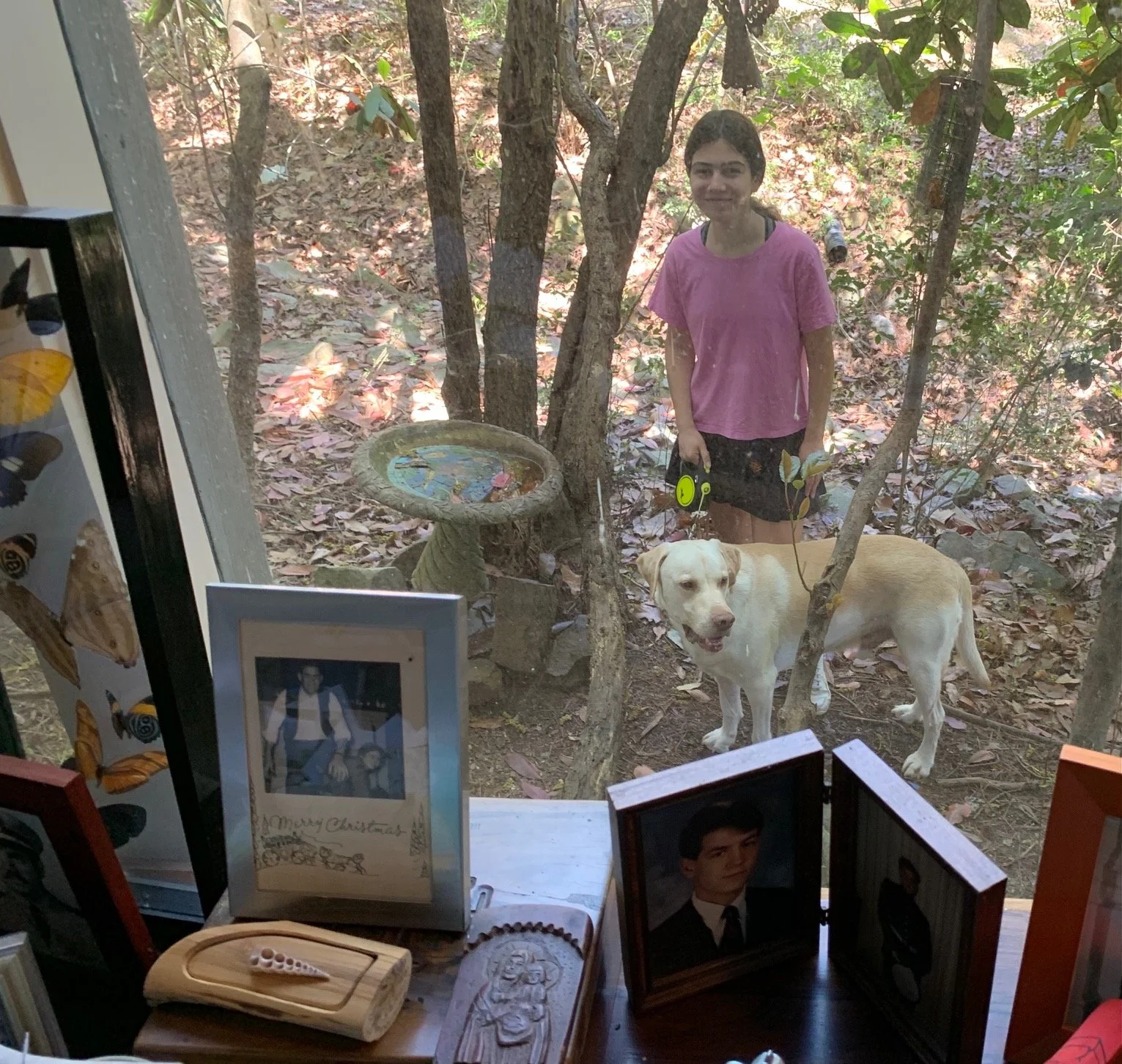
An unfortunate part of our attempt to heal from the coronavirus pandemic was not being able to be physically present with those in pain. We then offered our presence through words. Some of the most moving stories were of those who thought outside the box and went into cars with signs, honked, or sent love through a glass window.

Joanna.    Joannaseibert.com

Easter Forgiveness

Easter Forgiveness

Guest Writer: Eve Turek

“Father, forgive them, for they do not know what they are doing.”—Luke 23:34a.

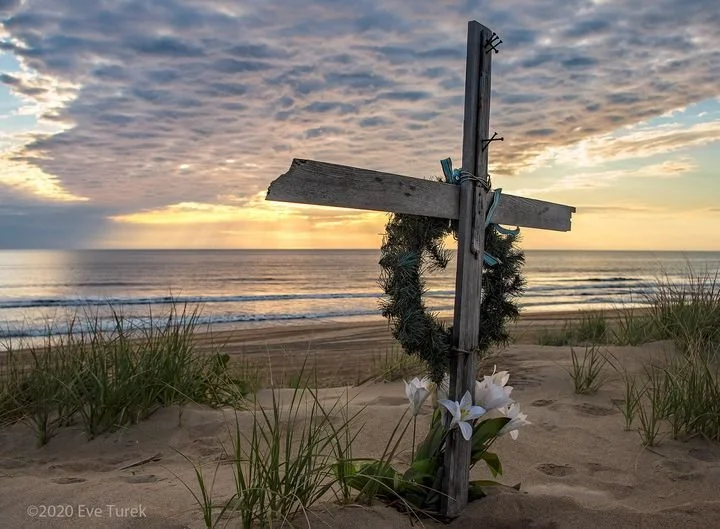
This photograph is from a previous Easter Sunday morning during lockdown. Before daybreak, I went to the ocean and found the empty Cross waiting at the access road. I felt led to go to it.

I’ve been thinking a lot this week about what we Christians sometimes call “Holy Week.” There is so much to consider... where to pause and contemplate? Palm Sunday? Last Supper? Good Friday? Easter Vigil? Easter Morning? This year, what caught my heart (and my breath) was a more profound implication I heard in the Cross: “Father, forgive them; they do not know what they are doing.” 

What got to me was what I didn’t hear. I didn’t hear, Father, forgive them; they are really sorry. Father, forgive them; they know better now and will never do this again. Father, forgive them. They are repentant. Father, forgive them. They are so ashamed. Nope.

I heard something like this: Oh, Father, forgive them; they just don’t get it. Father, forgive them. They are so clueless (bless their hearts). Father, forgive them... not because they know, but because they don’t know. They really don’t know.

This is why, at rock bottom, when people ask me what I believe and what I stand for, I tell them I am in Love with God to my core, in Love with His Son Jesus, and in Love with His Spirit because He loved us first. To whom much is forgiven, that one loves much. That’s why I focus so much on Love. I’m forgiven, and I was forgiven even before I knew better, did better, or wanted better. I was forgiven not because I was sorry, but because He is Love.

 And once I really got hold of that truth, God had hold of my heart. And He’s never let go...thank God. Because He sustains this Love, I can walk in Love and forgiveness.

That’s what Easter means to me this year. He is Risen... not only 2,000+/- years ago, but risen in me. Coincidentally, the Easter season once again coincided with the day I first made a conscious, deliberate commitment to God: April 1, 1973. Many years ago. I was 16 years old. Somehow, I knew the decision meant everything would change. And it did. 

I still had my times when I walked away from the best I knew, but God was faithful even when I wasn’t. It was His faithfulness that brought me back to my best self. And that Love is why I am STILL His today.

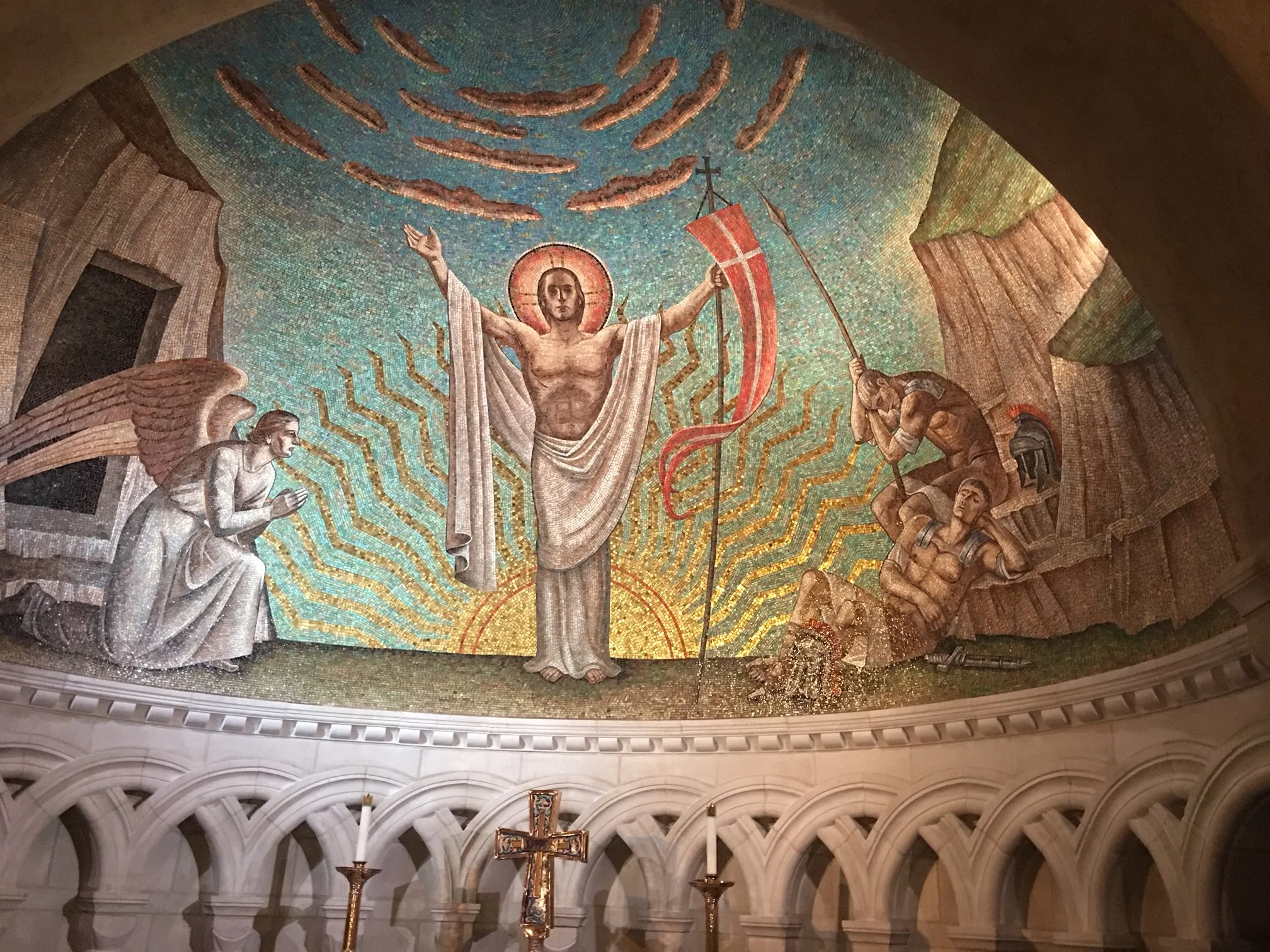
Resurrection Chapel, National Cathedral

Eve Turek

Joanna. joannaseibert.com   https://www.joannaseibert.com/